Area Guide

San Pedro de Alcántara

San Pedro de Alcántara — Marbella

San Pedro de Alcántara is the most genuinely Spanish town on the western Costa del Sol — a place with its own history, its own civic identity and its own daily rhythm that has survived sixty years of the Marbella luxury market developing around it without losing its essential character. With a population approaching 37,000 and a growing international community, it provides something increasingly rare on this coast: authenticity, in a location five minutes from Puerto Banús and equidistant between Marbella and Estepona.

01

Overview

Overview of San Pedro de Alcántara

San Pedro de Alcántara is a town — in the full, proper sense of the word — in a way that most addresses covered in these guides are not. It has a central square, a church, a town hall, a police station, a market, a high street of pedestrianised shops and cafés, schools, medical facilities, sports clubs, an industrial area and an increasingly sophisticated beachside residential zone. It is, administratively, part of the Marbella municipality, but in character and in the daily experience of living here, it functions as its own entirely self-contained community.

This completeness is San Pedro's defining quality. For the large surrounding network of residential communities that use it as their local hub — Guadalmina, La Quinta, Los Arqueros, La Heredia, El Madroñal, La Zagaleta and others — San Pedro provides everything that those prestigious but exclusively residential estates do not have on-site: food shops, pharmacies, banks, hairdressers, specialists, schools, the weekly market, the spontaneous coffee and the familiar face of the shopkeeper who knows your order. The town services an area well beyond its own boundaries and is well aware of the role it plays.

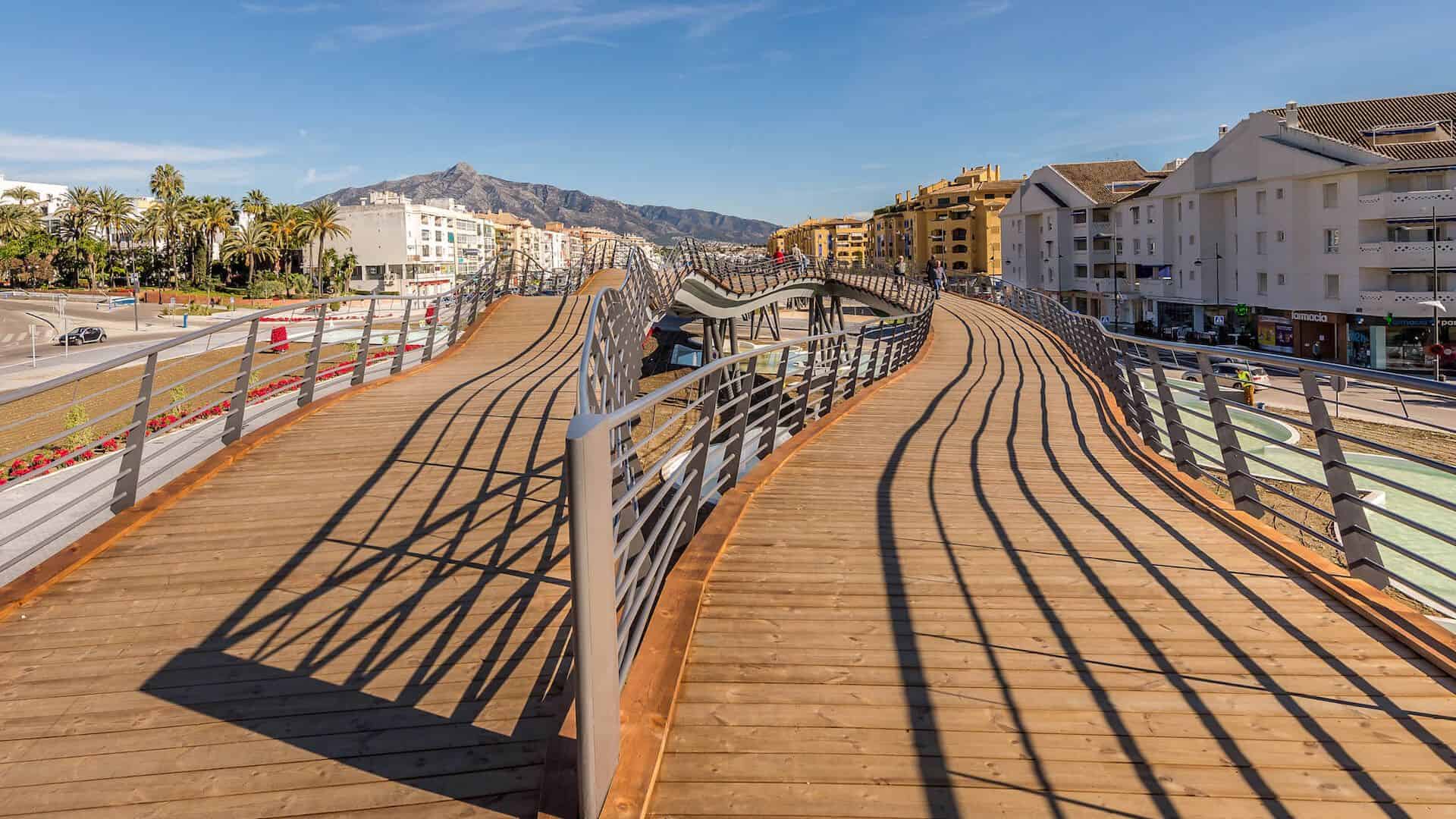
In recent years, San Pedro has also undergone a genuine qualitative transformation of its own — one that is distinct from the luxury market development happening around it. The Boulevard, a remarkable piece of urban infrastructure completed in 2012, transformed the town's relationship with the sea. The beachside districts of Nueva Alcántara, Cortijo Blanco and Jade Beach have attracted a new generation of design-conscious buyers who want Marbella-quality living at San Pedro prices. The old town has seen a renaissance in its restaurant and café scene. San Pedro is growing up, without losing what made it worth discovering in the first place.

02

Location & Access

7 min

to Puerto Banús

15 min

to Marbella centre

20 min

to Estepona

45 min

to Málaga Airport

San Pedro de Alcántara location

San Pedro de Alcántara sits on the A-7 coastal road approximately 11 kilometres west of Marbella town centre, between Puerto Banús to the east and Estepona to the west. Puerto Banús is 4.8 kilometres — approximately seven minutes — making San Pedro the most convenient base on the western coast for those who want access to the marina without living within its noise and energy. Estepona is around 20 kilometres west, 20–25 minutes. Benahavís village and the inland golf estates are 6 kilometres north via the A-397 valley road.

The AP-7 motorway runs parallel to the north of the town and provides fast access in both directions: Málaga Airport is approximately 45 minutes east, Gibraltar Airport around 60 minutes west. The town's own road network is a conventional urban grid — straightforward to navigate once familiar, occasionally congested on the N-340 in peak summer, generally well served by the AP-7 bypass for longer journeys.

San Pedro has better public transport connections than most other areas covered in these guides — regular bus services run along the coastal road in both directions, and within the town itself most daily errands can be completed on foot or by bicycle. For residents of the beachside districts, the promenade provides a car-free connection to the town centre. This walkable and bikeable quality is one of San Pedro's practical advantages over the more spread-out residential zones it serves as a hub for.

03

History

San Pedro de Alcántara has a more recent and more deliberately planned founding than most towns on the Costa del Sol. Its origin is not a Roman settlement, a Moorish village or a fishing community that evolved over centuries, but an intentional act of 19th-century agricultural colonisation. In 1857, the Spanish general and statesman Manuel Gutiérrez de la Concha — the Marqués del Duero — founded a model agricultural colony on this stretch of coastal plain, with the specific aim of converting underused agricultural land into a productive and populated community.

The colony attracted farmers from Estepona and Marbella who established their households around the sugar cane, wheat and grape cultivation that the Marqués envisioned. The town's grid plan, its central square and its civic institutions — the church, the town hall, the market — were all established as part of that original vision rather than growing organically over time. The founding ethos of San Pedro as a working, civic community rather than a leisure destination has persisted, in some form, throughout its history.

The arrival of the larger Marbella luxury market in the 1960s and 1970s inevitably transformed the area around San Pedro, but the town itself retained its Spanish character and its role as a local service centre for the coastal zone. Construction of larger residential complexes and beachside developments began in earnest in the 1970s and 1980s, and the town's population grew substantially through those decades. The pedestrianisation of the main shopping street — the Marqués del Duero, known affectionately as the Calle del Medio — and the construction of the Boulevard in 2012 marked the beginning of a new phase: a genuine urban improvement programme that has given San Pedro a quality of public space commensurate with its population and its growing ambitions.

04

The Town Centre

San Pedro de Alcántara town centre

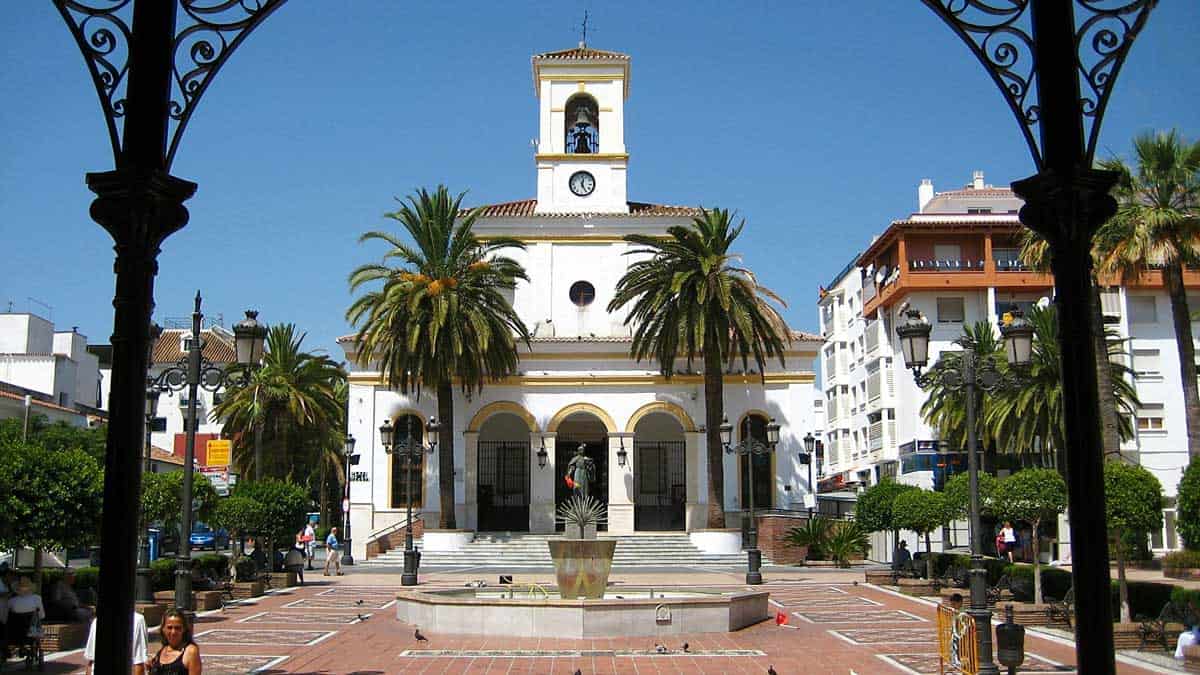
The historic town centre of San Pedro occupies the northern part of the urban area — the section above the Boulevard, centred on the Plaza de la Iglesia and the pedestrianised Marqués del Duero shopping street. This is where the authentic daily life of the town unfolds: the morning market in the indoor mercado, the schoolchildren's routes, the retired Spanish residents who occupy the same café tables they have occupied for twenty years, the Thursday street market that brings vendors and buyers from across the western Costa del Sol.

The Marqués del Duero — the Calle del Medio — is one of the more genuinely pleasant shopping streets in the wider Marbella area precisely because it is a working high street rather than a luxury retail corridor. Fashion shops, shoe shops, bakeries, pharmacies, banks, opticians, the legendary La Soberana ice cream parlour with its chairs set out in the middle of the street — these are the businesses of a real town serving real residents, and the atmosphere is correspondingly warm and human in a way that the designer boutique zones cannot manufacture.

The central square, the Plaza de la Iglesia, is the social heart of old San Pedro — the church to one side, the town hall in view, and a ring of cafés whose terraces fill from mid-morning onward. The square hosts the town's festivals, its outdoor concerts and its Christmas celebrations, functioning as the civic stage for a community that still has genuine civic life. For international residents new to this part of Spain, the experience of actually living in a functioning Spanish town — rather than in a residential development that happens to be in Spain — is one of San Pedro's most consistently valued qualities.

05

The Boulevard

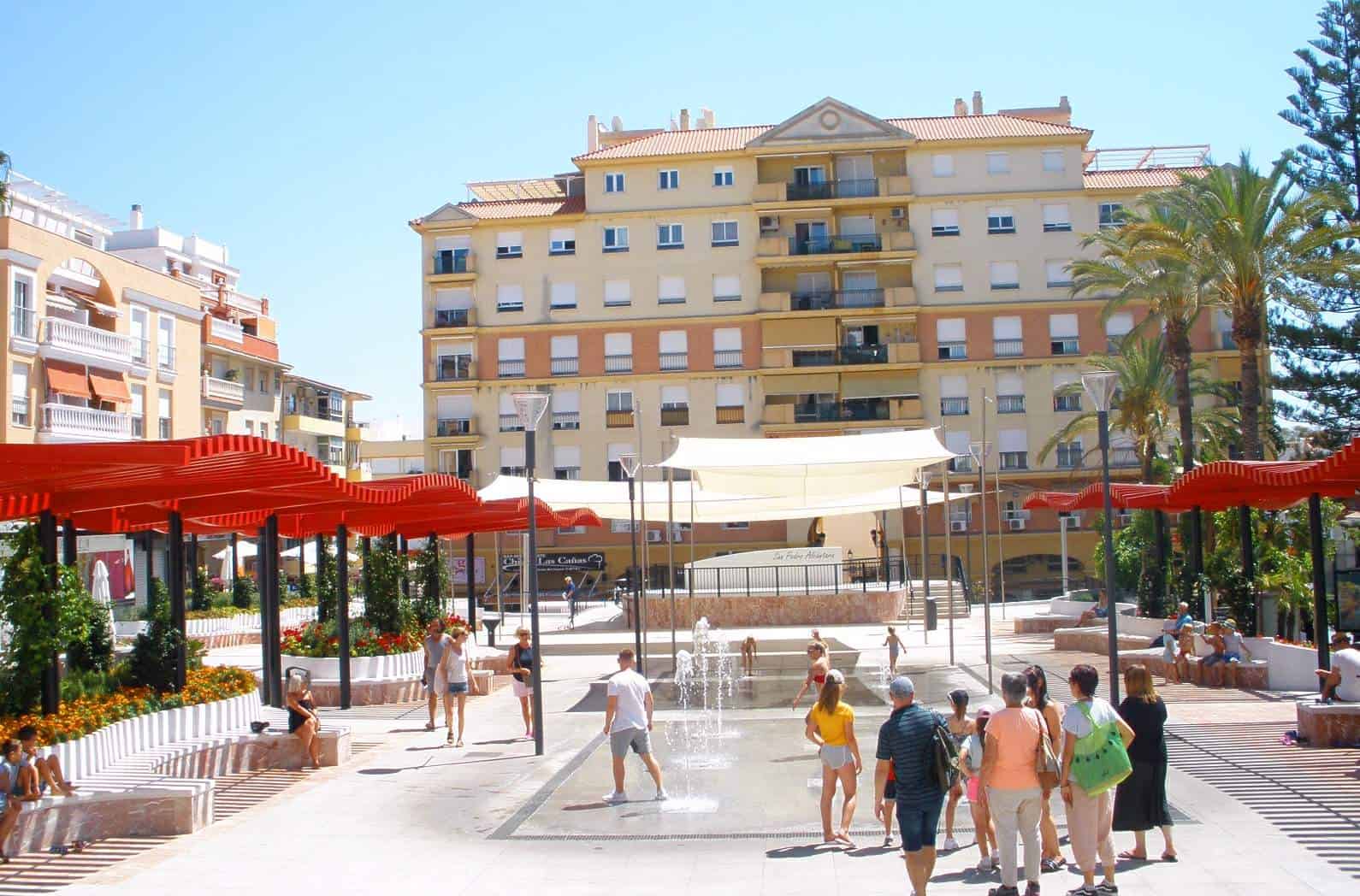
The Boulevard de San Pedro Alcántara is one of the most significant pieces of public urban infrastructure built on the Costa del Sol in the past two decades — and one of the least discussed outside of the area itself. Completed in 2012, it was constructed above the tunnel through which the A-7 coastal motorway passes beneath the town, transforming what was previously a traffic barrier between the old town and the sea into 54,000 square metres of landscaped public space: cycling lanes, walking paths, children's playgrounds, fountains, an outdoor amphitheatre for 500 people, fitness stations, skate areas and three restaurants whose terraces overlook the green space.

The Boulevard's effect on San Pedro's quality of life was immediate and profound. It physically reconnected the town centre with the beachside districts, making the relationship between the two halves of San Pedro walkable and bikeable for the first time. It created a public social space of genuine quality in a municipality that had historically lacked one. And it signalled — in the language of urban investment — that San Pedro was taking its own future seriously rather than simply serving as a supporting act for the more glamorous zones around it.

For residents and property buyers, the Boulevard functions daily as an extended living room. Weekend morning cyclists, families with young children, joggers, dog walkers, market-goers — the Boulevard is active throughout the week and not merely on summer weekends. It is, in its own way, one of the most compelling reasons to buy in San Pedro rather than in a more prestigious but less genuinely urban address on the coast.

06

San Pedro Playa

San Pedro Playa beachside district

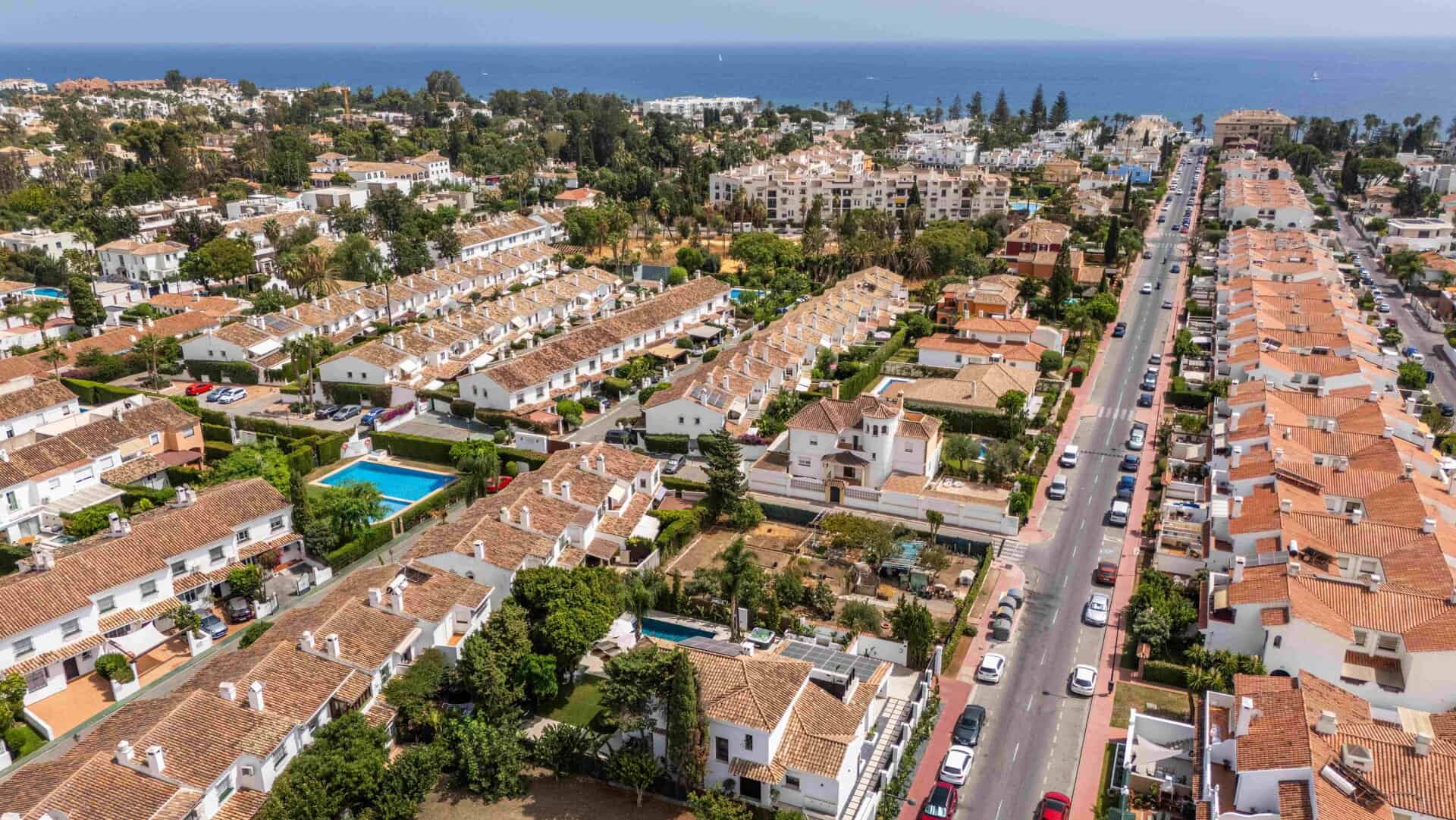
San Pedro Playa — the collective name for the beachside districts south of the Boulevard — has undergone the most significant transformation of any part of the town in recent years, driven by new development of a quality that has reframed the entire beachside market. Where once it was primarily older apartment stock and modest residential buildings, it now contains some of the most design-forward contemporary residential development in the wider Marbella area at price points that are genuinely competitive with comparable quality in Nueva Andalucía or Marbella East.

Nueva Alcántara is the primary beachside residential grid — a structured network of streets between the Boulevard and the sea containing a mix of older apartment buildings, contemporary new-build complexes, villas and townhouses. It is the most densely developed part of the beachside zone and the most active market. Properties here benefit from walkable beach access, proximity to the promenade, and the full amenity infrastructure of the town centre behind them. Nueva Alcántara is where most buyers find the best balance of value, quality and lifestyle in San Pedro.

Cortijo Blanco is a leafy, relatively low-density residential zone west of Nueva Alcántara, characterised by larger gardens, more established planting and a noticeably quieter character. Its villas and townhouses on tree-lined streets provide a more private, garden-oriented alternative to the more urban Nueva Alcántara environment. Popular with families and with buyers who want the beachside lifestyle at a slightly more removed distance from the animation of the Boulevard.

Jade Beach is the most architecturally ambitious and most recently developed of the beachside zones — a contemporary residential precinct of striking design that has raised the quality ceiling for the area considerably and attracted buyers who previously might not have considered San Pedro as a serious option. Frontline and near-frontline apartments and penthouses here represent the top end of the San Pedro beachside market.

Linda Vista Baja and Castiglione, further west along the coast, are more established and quieter beachside zones with a character closer to Guadalmina Baja — mature vegetation, lower density and an understated residential atmosphere that appeals to buyers who want sea proximity without any trace of tourist development.

07

Property Types

San Pedro offers the widest range of property types, ages and price points of any single area covered in these guides — a direct consequence of being an actual town rather than a planned residential zone. From traditional Andalucian apartments in the old town centre to five-star-spec contemporary villas on the beachfront, the spectrum here encompasses virtually the full range of what is available in the western Marbella property market.

Town centre apartments in the old town north of the Boulevard are primarily older stock — 1970s and 1980s construction with the traditional character of Spanish urban apartments. Many have been renovated to modern standards, and the price-to-location ratio for well-presented units here is among the best in the municipality. These appeal to buyers who want to live genuinely within walking distance of all daily amenities and who value the authentic Spanish environment of the old town.

Beachside apartments and penthouses in Nueva Alcántara and Jade Beach span a wide quality range — from older complexes whose primary asset is their position to purpose-built contemporary developments of architectural ambition. The best new-build penthouses in the beachside zone, with large terraces and sea views, are competitive with comparable product anywhere on the western Costa del Sol.

Villas and townhouses are found throughout the beachside districts and in the residential zones immediately adjacent to the town — ranging from modest townhouses in gated communities to substantial contemporary builds on the beachfront. The beachfront villa positions in Nueva Alcántara, Cortijo Blanco and Jade Beach represent the most significant and irreplaceable properties in the San Pedro market, and several have undergone recent development to standards that would satisfy the most demanding buyers at a fraction of comparable positions further east.

08

Property Prices

From €150K

entry (old town apt)

€400K–€1.5M

mid-range (beachside)

€5M+

top end (beachfront)

San Pedro de Alcántara represents consistently strong value relative to the other areas covered in these guides, and this value proposition has been a primary driver of the market's momentum over the past five years. Buyers who compare quality beachside product in San Pedro against comparable properties in Marbella East or the Nueva Andalucía golf valley consistently find that San Pedro delivers equal or superior specification for meaningfully lower prices.

In the old town, apartments begin from approximately €150,000 for older resale stock and progress to €350,000–€500,000 for well-renovated or contemporary units in the best positions. In the beachside districts, prices range from around €250,000 for older apartments in Nueva Alcántara to €800,000–€1.5M for quality contemporary units and penthouses with sea views. Townhouses in Cortijo Blanco and comparable beachside zones typically range from €400,000 to €1M depending on size and finish. Beachfront villas are individually priced and have traded from approximately €2M for older properties to €4M–€6M for recently completed or comprehensively renovated builds in prime positions.

The price appreciation trend in San Pedro has been among the strongest on the western Costa del Sol over the past five years, as buyers have increasingly recognised the combination of genuine townscape, beachside quality and value that the area offers. Analysts who track the wider Marbella market consistently identify San Pedro Playa as one of the most actively appreciating sub-markets in the municipality.

09

Rental Market

San Pedro has one of the most active and diversified rental markets in the western Marbella area, sustained by several distinct demand streams simultaneously. Short-term holiday rentals in the beachside districts attract a broad range of visitors — families looking for beach proximity at a value price point relative to Marbella East or Puerto Banús, longer-stay guests who want access to a real Spanish town alongside the beach, and buyers conducting due diligence before purchasing who want to spend time in the area. Occupancy rates in well-managed beachside properties through the May–October window are strong.

The long-term rental market benefits directly from the concentration of international schools in and around San Pedro. Laude San Pedro International College, within the town, generates consistent academic-year demand from families relocating to the area. Additional demand comes from professionals working in the western Costa del Sol's business community, from individuals in the process of completing a purchase, and from the growing cohort of remote workers who have identified San Pedro as a practical and pleasant year-round base. Monthly rents for quality two-bedroom apartments in the beachside districts range from approximately €1,200 to €2,500; well-presented villas command €2,500 to €5,000 or more. Standard VFT licensing applies for short-term holiday lets.

10

Investment

San Pedro de Alcántara is one of the most compelling investment propositions in the wider Marbella area for a buyer focused on capital appreciation combined with rental yield. The gap between its current pricing and that of comparable quality in the adjacent areas to the east — Nueva Andalucía, Marbella East, the Golden Mile — remains meaningful, and the forces that are closing that gap are structural and consistent: improving urban quality, rising beachside development standards, growing international buyer recognition, and the broader Marbella market's sustained upward momentum.

The beachside districts — Nueva Alcántara and Jade Beach in particular — have demonstrated the strongest appreciation trend and are likely to continue doing so as the quality of new development continues to raise the general standard. For buyers looking for a combination of genuine rental income and medium-term capital growth, well-positioned beachside apartments in San Pedro consistently outperform the return profile of more expensive comparable assets in better-known zones.

The town's role as a service hub for a large surrounding residential catchment — La Zagaleta, La Quinta, Los Arqueros, Guadalmina, El Madroñal — means its underlying commercial and residential demand is supported by a population base that extends well beyond its own residents. This makes San Pedro's property market more structurally resilient than a purely residential address of comparable size, and gives it a year-round depth of activity that purely holiday-oriented coastal markets do not enjoy.

11

Lifestyle & Character

Lifestyle in San Pedro de Alcántara

The daily rhythm of San Pedro is unlike that of any other area covered in these guides because it is defined by ordinary life — the school run, the market run, the morning coffee in the plaza, the Thursday market, the spontaneous encounter with a neighbour. These are the rhythms of a functioning town, and for residents who have come from Marbella's more exclusively residential zones, the experience of living within them rather than driving through them is immediately and consistently valued.

The Boulevard, in particular, has given San Pedro a daily outdoor life that transforms how the town is experienced. Morning joggers, afternoon cyclists, children in the play areas, café terraces filling and emptying — the 54,000-square-metre public space is used continuously throughout the day, in every season. It connects the old town and the beach, provides a social meeting point independent of any commercial venue, and gives the area a quality of public life that the gated communities and resort zones around it simply cannot offer.

What San Pedro provides — and what buyers who choose it over its more glamorous neighbours are explicitly choosing — is the completeness and normality of a real Mediterranean town combined with the full infrastructure of the luxury Costa del Sol within five to fifteen minutes in any direction. The ice cream at La Soberana on the Calle del Medio, the fresh fish at the indoor market, the evening aperitivo in the plaza — these are experiences that cannot be had in La Zagaleta or on the Golden Mile, and for a growing number of buyers they represent the most important quality the western Costa del Sol has to offer.

12

Beaches & Promenade

The Playa de San Pedro de Alcántara is a wide, sandy, Blue Flag-rated beach running for several kilometres along the town's Mediterranean frontage. It is calmer and less commercially developed than many comparable beaches further east toward Marbella, and the quality of the water and the sand — clean, gently shelving, reliably Blue Flag — makes it one of the most family-friendly stretches of coast in the western municipality.

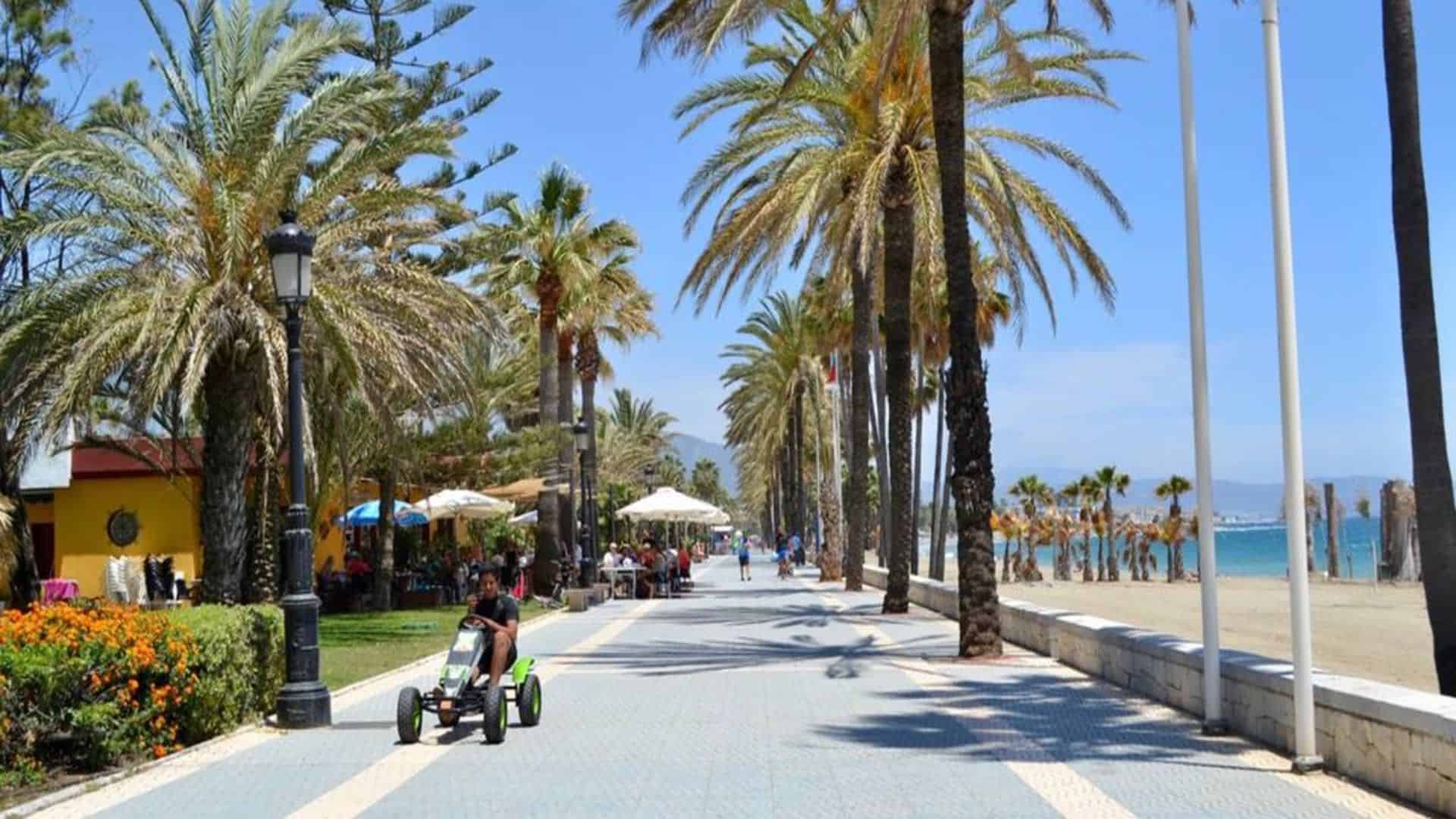
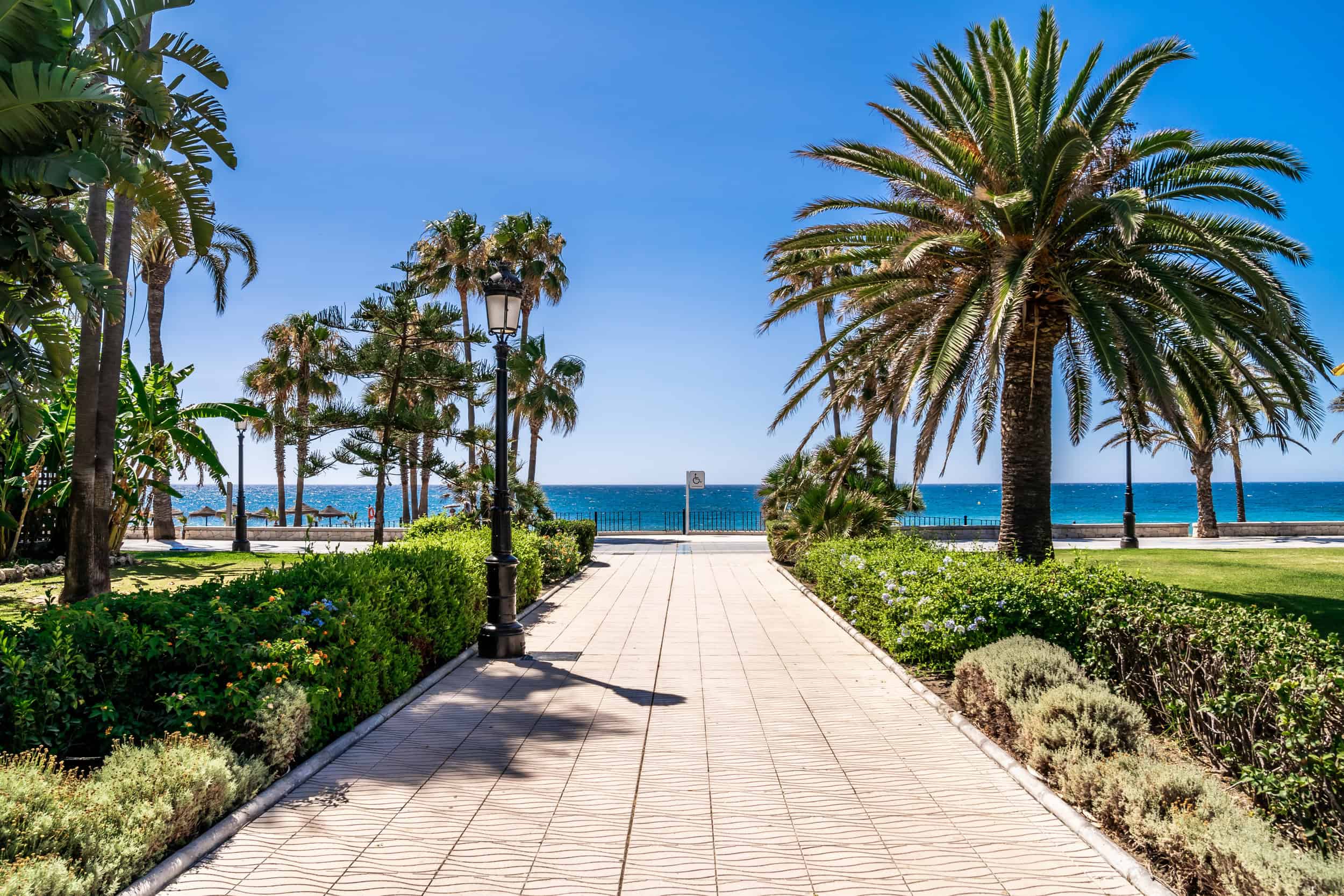
The Paseo Marítimo de San Pedro — the promenade — runs the full length of the beach and connects seamlessly with the Boulevard inland. Palm trees, benches, cycling lanes and a continuous succession of chiringuitos and beach bars make the promenade one of the most pleasant daily walking routes in the area. On a weekday morning in October or March, when the tourists have gone and the beach belongs to the residents, it has a quality that the summer crowds make temporarily invisible but never entirely displace.

The beach clubs along the San Pedro frontage range from the established — Alabardero Beach Club is one of the most well-known, combining beach service with a restaurant and events programme — to simpler chiringuitos serving freshly grilled fish in the traditional Costa del Sol style. The range means that different occasions call for different choices within the same beach zone, which is one of the more practical aspects of the San Pedro coastal offer.

13

Sports & Leisure

San Pedro has a sports infrastructure that is more developed and more locally oriented than most other areas covered in these guides — a direct consequence of being a real town with a real population that demands genuine local sports provision.

The municipal sports centre is well equipped with indoor and outdoor facilities, a swimming pool, padel courts, athletics track and fitness areas — all available at municipal rates that are accessible to the full range of the population. Several private sports clubs, tennis clubs and padel facilities operate within and immediately adjacent to the town. The Boulevard's own fitness stations and cycling lanes add a further layer of daily activity infrastructure.

Golf at the Real Club de Golf Guadalmina is five minutes west. The Nueva Andalucía Golf Valley — Los Naranjos, Las Brisas, Aloha — is approximately fifteen minutes east. The Benahavís golf estates are accessible in a similar timeframe north via the valley road. San Pedro occupies a uniquely central position relative to the entire golf infrastructure of the western Costa del Sol, which is a practical advantage for resident golfers who want variety across multiple courses without committing to any single club's neighbourhood.

The Boulevard skate park, the promenade cycling network, the beach itself and the climbing walls in Boulevard Park all reflect a town that takes active leisure seriously as a civic value — not merely as a luxury amenity. For families with children of all ages, this range of accessible, low-cost outdoor activity is one of San Pedro's most consistently appreciated qualities.

14

Dining & Shopping

The dining scene in San Pedro spans the full range from authentic Andalucian tapas bars to high-quality contemporary restaurants, and it is one of the most genuinely locally rooted food cultures of any area on the western Costa del Sol. The town's permanent Spanish population supports a restaurant scene that is not dependent on tourist seasons, and the quality of the best addresses here — using fresh local produce, serving at reasonable prices, operating year-round — gives the area a culinary authenticity that the more visitor-oriented zones cannot match.

The indoor market provides the fresh ingredient infrastructure: fish, meat, vegetables, local cheeses and charcuterie every morning. The Thursday street market — one of the largest and most varied on the coast — draws buyers from across the western Costa del Sol for clothing, produce, plants and household goods. La Soberana on the Calle del Medio remains the most beloved local institution: handmade ice cream served from street-side tables, a meeting point for the whole town across all generations.

For more formal dining, San Pedro's restaurant scene has developed substantially in recent years. Several well-regarded addresses have opened in the old town and along the beachside, serving contemporary Mediterranean cuisine alongside the established tapas bars and fish restaurants. Puerto Banús, seven minutes east, provides the full luxury dining and retail spectrum for those who want it; the combination of the two — everyday local dining in San Pedro, occasional evenings in Puerto Banús — is the standard pattern for most resident households in the area.

Shopping in San Pedro is comprehensive for daily needs. The Calle del Medio provides the pedestrianised high street; several supermarkets (Mercadona, Lidl, and others) serve the residential population; La Colonia shopping centre and Centro Comercial Guadalmina provide additional retail. For luxury retail, Puerto Banús is seven minutes away.

15

Schools & Education

San Pedro de Alcántara has the most complete school infrastructure of any single town in the western Marbella area — encompassing both the Spanish state system and an international school of strong reputation, with additional options accessible within 15–20 minutes.

Laude San Pedro International College is the primary international school within the town, offering a British curriculum from ages 2 to 18. It has a strong academic reputation, well-developed pastoral care and a diverse international student body that reflects the wide range of nationalities living in the area. Its position within San Pedro means the school run for town-centre and beachside residents is genuinely short — often walkable or a single-traffic-light drive. For families in the surrounding residential estates (La Quinta, Los Arqueros, Guadalmina), it is typically 15–20 minutes. Its waiting lists, while not as extreme as English International College in Marbella East, are active and early application is advisable.

The Spanish state school system is well represented in San Pedro — multiple colegios and institutos serving the local population — and for Spanish or bilingual families these provide a high-quality and genuinely local education within the town. Atalaya Colegio Internacional, approximately 10 minutes west, provides a well-regarded bilingual alternative with a Spanish-English curriculum. Aloha College in Nueva Andalucía (IB) is around 20–25 minutes east.

16

Healthcare

San Pedro has its own public health centre serving the local population — Centro de Salud San Pedro Alcántara — providing primary care and specialist consultations within the town. Several private clinics operate within and immediately adjacent to the town, including Clínica del Río which is well regarded among the international resident community for its accessible private GP and specialist services.

For hospital-level care, Hospiten Estepona is approximately 20 minutes west. Hospital Costa del Sol — the main public hospital for the western Marbella area — is around 20–25 minutes east. Hospital Ochoa and Hospital Quirón Salud in central Marbella are approximately 25–30 minutes. The range and proximity of healthcare options accessible from San Pedro is strong relative to most other areas covered in these guides, reflecting both the town's central position in the western municipality and its own primary care infrastructure.

17

Who Lives Here

San Pedro de Alcántara has one of the most diverse resident populations of any area on the western Costa del Sol — a genuine mix of local Spanish residents, long-established international communities, and a rapidly growing influx of buyers drawn by the town's improving quality and its value relative to Marbella's more prestigious zones. Approximately 30% of the town's registered population are foreign nationals, from over 150 nationalities — one of the broadest demographic profiles of any town in Spain.

The British and Irish communities are substantial and long-established, concentrated particularly in the beachside districts and the surrounding residential zones. Scandinavian — Swedish and Norwegian — communities are strongly represented, overlapping with those in Guadalmina and the wider western area. Colombian and Moroccan communities have grown in recent years and are now significant parts of the town's social fabric, contributing to the cultural diversity that gives San Pedro its particular and appealing cosmopolitan character. Spanish residents from Marbella, Málaga and other Andalucian towns remain a strong majority and the foundation of the town's authentic character.

The buyer profile for new properties in San Pedro has evolved noticeably over the past five years. Younger buyers — in their thirties and forties, often with children or considering starting families, frequently remote workers or entrepreneurs — have discovered San Pedro as a first-choice address rather than a second-best alternative to Marbella. The combination of value, authentic town life, international school access and beach proximity is a compelling formula for this demographic, and their arrival has accelerated the general quality improvement of the beachside zone and the restaurant scene simultaneously.

18

Buying in San Pedro

Buying in San Pedro is more straightforward than in the more exclusive zones to the east or in the inland estates of Benahavís. The market is more liquid, more diverse in price point, and more actively represented on open property portals. This accessibility means that buyers can search more systematically, compare a broader range of options and reach informed purchase decisions more quickly than in off-market-dominated areas like Guadalmina Baja or La Zagaleta.

The key purchase decision in San Pedro is the choice between the old town and the beachside districts, and within the beachside, the choice between the zones (Nueva Alcántara versus Cortijo Blanco versus Jade Beach). Each offers a different balance of animation, space, proximity to the sea and price point. Buyers who have not yet spent meaningful time in each zone are strongly recommended to do so before deciding — the practical difference in daily experience between an old town apartment above the Boulevard and a Jade Beach beachfront penthouse is significant, and is not fully captured by the property listings alone.

Due diligence for San Pedro properties is straightforward but necessary. The town centre has older apartment stock of varying legal and structural quality — a building survey on older properties is advisable. The beachside districts have been developed more recently and with greater planning rigour, but the same standard legal checks apply. Independent legal advice from a Marbella-area solicitor is essential.

Standard Andalucían purchase costs apply: 7% transfer tax on resale, 10% VAT on new build, plus notary, registry and legal fees — approximately 10–12% of the purchase price. We are happy to guide you through the full process.

Current properties available in San Pedro de Alcántara:

Verdin Property

Interested in San Pedro de Alcántara? Let's talk.

Get in touch