
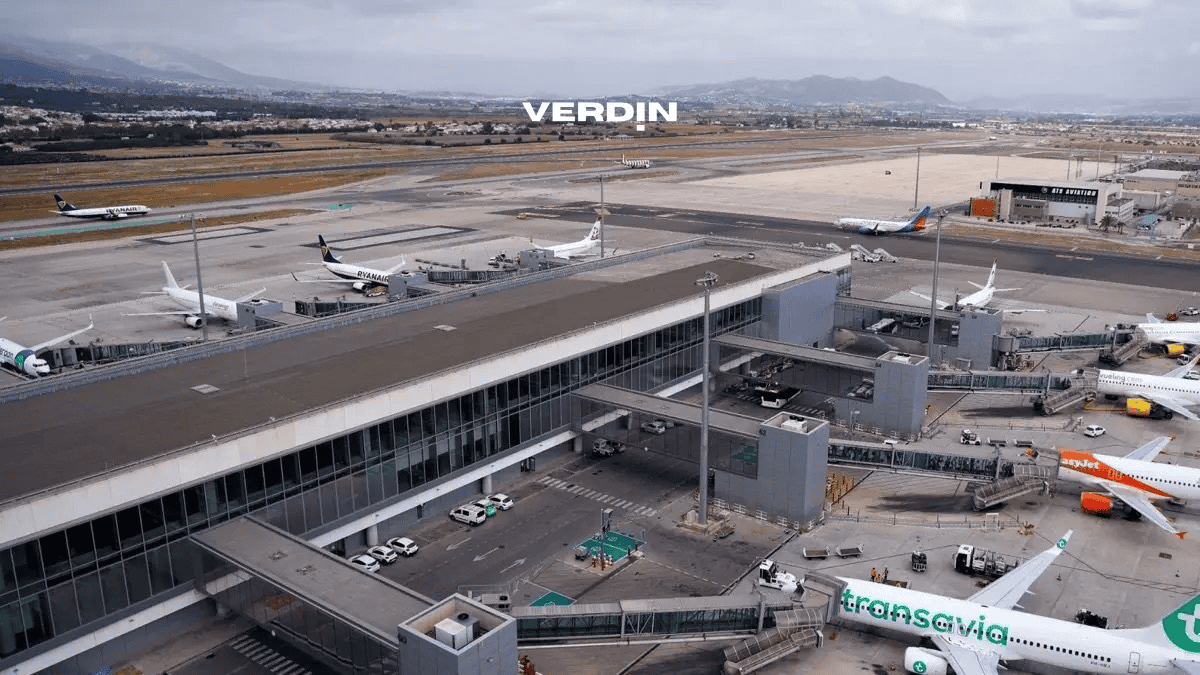
Malaga-Costa del Sol Airport just closed its strongest year on record. Over 26.7 million passengers passed through in 2025 — a 7.4% increase on the previous year — cementing its position as Spain’s fourth-busiest airport and Andalusia’s primary international gateway. It now handles 80% of the region’s non-domestic air traffic.
And it is set to nearly double in size.
For international buyers considering property on the Costa del Sol, airport connectivity is rarely an afterthought. A home here is only as accessible as the journey to it. The planned expansion of Málaga Airport is one of the most significant infrastructure developments to affect the region’s property market in a generation.
What Is the Málaga Airport Expansion?
The project forms part of Aena’s DORA III national infrastructure plan, which allocates €13 billion across Spain’s airport network. Málaga receives €1.5 billion — the third-largest share in the country, behind only Madrid-Barajas and Barcelona-El Prat. Spain’s Transport Minister confirmed the commitment as a direct reflection of Málaga’s growing strategic importance.
The terminal footprint will expand from 80,000 to 140,000 square metres. Terminal 1 and the existing non-Schengen piers will be demolished and replaced with a new centralised border control pier. Key capacity increases include:
- Security screening: +112%
- Departure passport control: +515%
- Non-Schengen boarding zones: +381%
- Annual passenger capacity: from ~27 million to 36 million
When Will Málaga Airport Expansion Be Completed?
The design phase begins in 2026. Construction is scheduled for 2028–2029, with completion expected by 2031. The airport will remain fully operational throughout the entire process.
How Will the Málaga Airport Expansion Affect Property on the Costa del Sol?
It Resolves the Post-Brexit Bottleneck for UK Buyers
British buyers consistently represent the largest foreign nationality purchasing property in Marbella and the wider Costa del Sol. Post-Brexit, they travel as non-Schengen passengers — facing separate queues, distinct passport control, and constrained boarding infrastructure. The 515% expansion of departure passport control and 381% increase in non-Schengen boarding zones directly addresses this. For a buyer who visits four or five times a year, smoother transit is a meaningful quality-of-life improvement.
It Opens the Door to New Buyer Nationalities
Málaga already connects to over 130 destinations. The expanded terminal creates capacity for airlines to add routes to the Middle East, North America, and Asia-Pacific — markets where interest in Costa del Sol property has been growing steadily. Direct connections to Dubai, Riyadh, or US East Coast hubs would materially change the accessibility equation for these buyer segments.
Airport Investment Correlates with Property Value Growth
Málaga’s passenger numbers grew from roughly 20 million in 2019 to nearly 27 million in 2025 — a period that coincided with one of the strongest phases of price appreciation in the Costa del Sol’s history. Expanding capacity to 36 million extends that trajectory through the end of the decade. Improved connectivity, higher visitor volumes, and stronger international demand are a well-documented combination in property markets globally.
Marbella’s Accessibility Advantage Deepens
The airport sits approximately 45 minutes from the Golden Mile via the AP-7, yet already connects to over 130 international destinations. The expansion strengthens this proposition without altering what makes Marbella itself appealing — its scale, its lifestyle, and its sense of place remain unchanged.

Frequently Asked Questions
How much is being invested in Málaga Airport? €1.5 billion, as part of Aena’s €13 billion DORA III national infrastructure plan. It is the third-largest airport investment in Spain, after Madrid and Barcelona.
How far is Marbella from Málaga Airport? Approximately 45 minutes by car via the AP-7 motorway, depending on traffic and your exact destination on the Costa del Sol.
Will the airport expansion affect property prices in Marbella? Improved airport infrastructure has historically correlated with stronger property market performance. Expanding capacity to 36 million annual passengers supports continued international demand and reinforces the long-term investment case for the Costa del Sol.
What does the expansion mean specifically for UK buyers? Post-Brexit, British travellers use non-Schengen facilities. The expansion increases departure passport control capacity by 515% and non-Schengen boarding zones by 381% — directly addressing the main friction point for UK visitors and property owners.
Will the airport stay open during construction? Yes. Aena has confirmed the airport will remain fully operational throughout the construction period, which runs from 2028–2029 through to the 2031 completion.
Which areas of Marbella benefit most from the expansion? Marbella East — including areas such as El Rosario, Santa Clara, and Las Chapas — is closest to the airport corridor and has seen the strongest concentration of new institutional investment in recent years. That said, improved connectivity benefits the entire Costa del Sol.
Should You Factor This Into Your Buying Decision?
Property markets price in infrastructure improvements well before completion. The announcement alone has already influenced how institutional investors view the Costa del Sol — the concentration of major hotel and residential projects committing to Marbella East is not coincidental.
For buyers evaluating the market today, the airport expansion is not in itself a reason to buy. The lifestyle, climate, security, and community are the reasons to buy. But it is a reason to feel confident that Marbella’s accessibility — already strong — will only improve through the end of the decade and beyond.
If you would like to discuss how this affects specific areas or property types, our team is happy to advise.