
Area Guide
Guadalmina
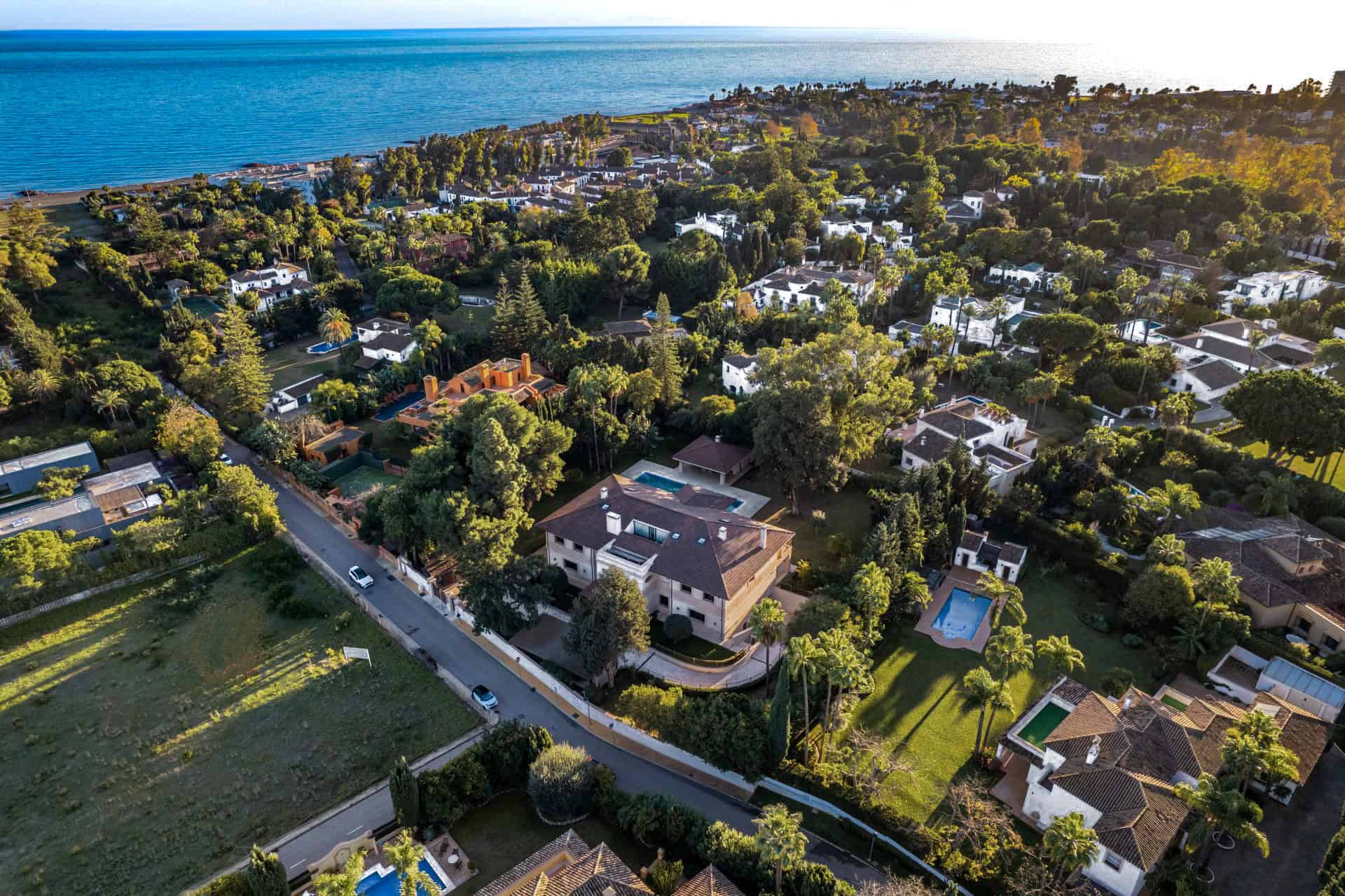
Guadalmina is one of the Costa del Sol's most quietly distinguished residential areas — a place where discretion has been the defining quality since European high society first discovered it in the 1950s. Divided by the coastal road into two complementary personalities, Guadalmina Baja offers aristocratic beachside living of genuine rarity, while Guadalmina Alta wraps itself around the two courses of Marbella's oldest golf club in a leafy, elevated setting. Neither performs for visitors. Both simply exist, with considerable elegance.
Overview
Guadalmina is a residential area in the western part of the Marbella municipality, bordered by the Guadalmina River to the west — which gives the area its name — and connected to San Pedro de Alcántara to the east. It is administratively part of the Marbella municipality but has a distinct identity shaped by its own history, its golf club heritage and a social character that is more rooted and understated than the better-known luxury zones further east.
The A-7 coastal road divides the area into two clearly distinct zones: Guadalmina Baja to the south, extending from the road to the Mediterranean with grand tree-lined avenues and substantial beachfront properties; and Guadalmina Alta to the north, rising into the hillside around the North Course of the Real Club de Golf Guadalmina. The commercial area between the two, clustered around the junction of the coastal road and the golf club access, provides the everyday services — pharmacies, supermarkets, cafés, shops — that anchor the community's practical daily life.
What sets Guadalmina apart from comparable residential zones on the Costa del Sol is a combination of age, restraint and genuine historical depth. The area was established in the late 1950s by a small group of discerning individuals who were drawn precisely by what was not there — no tourist infrastructure, no noise, no competition for attention. The community that formed around those founding buyers has maintained that character across seven decades. The trees are old, the plots are large, the avenues are wide and quiet, and the atmosphere is of a place that has been lived in well for a very long time.
Location & Access
5 min
to San Pedro de Alcántara
15 min
to Puerto Banús
15 min
to Estepona
45 min
to Málaga Airport
Guadalmina sits directly on the A-7 coastal road between San Pedro de Alcántara to the east and Estepona to the west. San Pedro — with its full range of everyday services, weekly market and local character — is approximately five minutes east. Puerto Banús is around 15 minutes in the same direction. Estepona is roughly 15 minutes to the west. Benahavís village and the inland golf estates are approximately 6 kilometres north along the Benahavís valley road, accessible in around 10–15 minutes.
The AP-7 motorway runs parallel to the north and provides fast access to Málaga Airport in approximately 45 minutes. Gibraltar Airport is around 55 minutes to the west, making Guadalmina well positioned for residents who travel between both. The area's coastal location and flat terrain make it more straightforwardly accessible than the inland hillside estates, and the internal road network of both Baja and Alta is easy to navigate.
Within the area, the Guadalmina Baja avenues extend south from the A-7 in a structured grid, wide enough for comfortable driving and lined with mature trees that create the distinctive character of the area. The beach is walkable from most properties in Baja. Guadalmina Alta, north of the A-7, is hillside in character and requires a car for movement between properties, the commercial area and the golf club, but distances are short and the roads well maintained. A car is essential for daily life in both zones.
History
The name Guadalmina derives from the river that rises in the Serranía de Ronda and flows south to the sea — it carries Arabic roots reflecting the Moorish heritage of the region. The wider area has a history reaching back to the Phoenicians and Romans, who left archaeological traces along this stretch of the Málaga coast. But the modern story of Guadalmina begins in the mid-twentieth century with a single act of vision.
In the late 1930s and 1940s, the land now occupied by Guadalmina Baja was sugar cane plantation — flat, fertile and overlooked. The transformation came when Basque entrepreneur Norberto Goizueta, sailing along this stretch of coastline, spotted the land from the sea and recognised what it could become. Together with the Marqués de Soriano, he set about creating Marbella's first golf course on the site of those sugar cane fields. The Real Club de Golf Guadalmina South Course opened in 1959 — the year that also saw the opening of the Hotel Guadalmina — and in doing so established Guadalmina as the original point of convergence between golf and luxury residential life on the Costa del Sol.
The social history that followed reads like a guest list from another era: the Duke of Windsor, Henry Ford, the Agnelli family, Sean Connery, Aristotle Onassis, Stavros Niarchos — names associated with power, wealth and a particular kind of mid-century European sophistication — were drawn here by the combination of the golf, the beach, the privacy and the Hotel Guadalmina. Audrey Hepburn and film director Mel Ferrer owned a villa here during their marriage. Princess Soraya, the ex-Empress of Persia, was among the residents. The area hosted the Spanish Golf Championship in 1965, the first of many professional tournaments that consolidated its golfing reputation.
The North Course opened in 1973, designed by Folco Nardi, completing the two-course estate that defines Guadalmina's golf infrastructure today. Development of the residential areas continued steadily through the 1970s and 1980s, and the community that forms today — rooted, international, quietly affluent — is a direct continuation of the social fabric laid down in those founding decades.
Guadalmina Baja
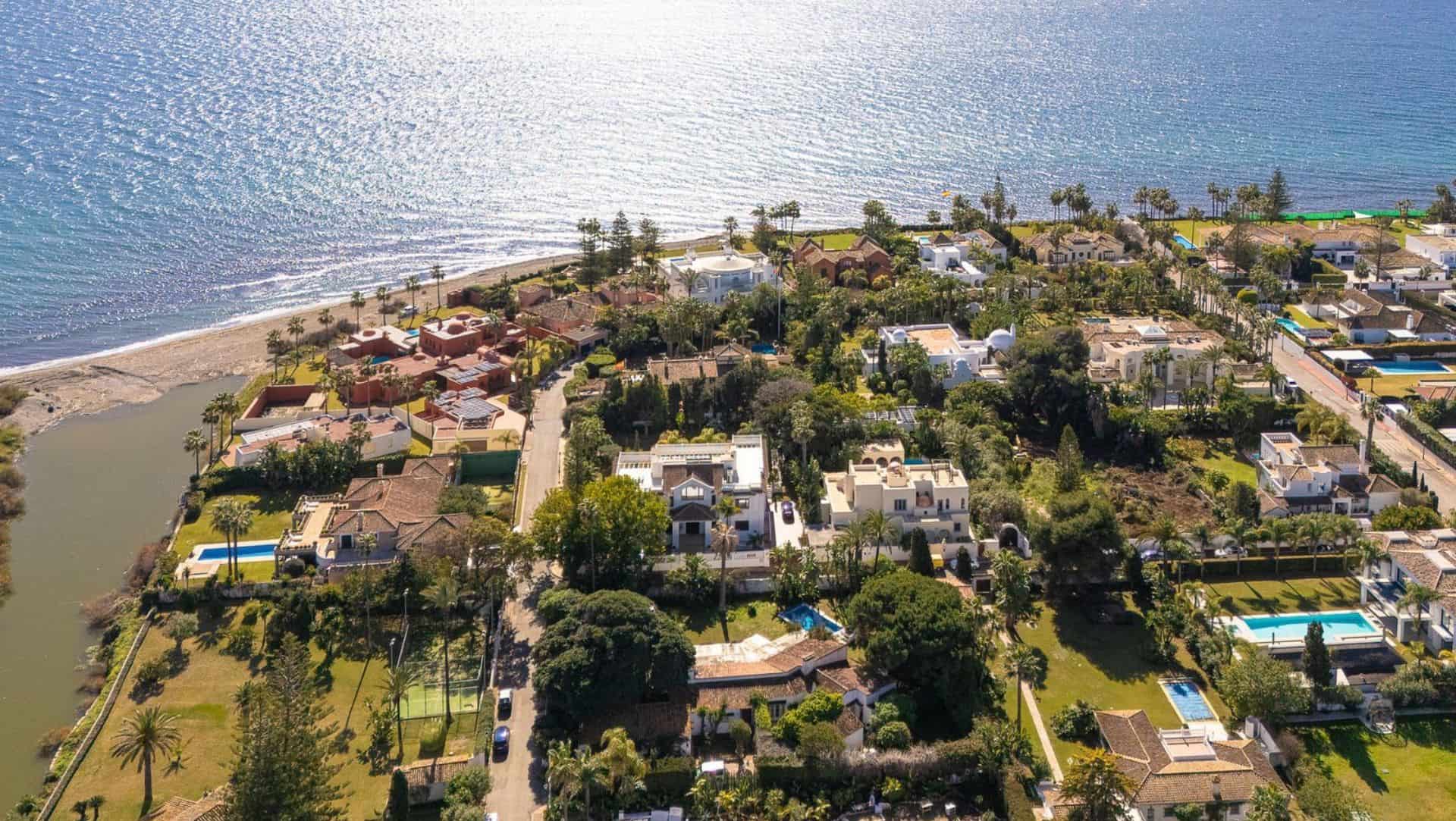
Guadalmina Baja is the older, more prestigious and more immediately distinctive of the two zones. Its defining quality is immediately apparent on entering the avenues: the tree canopy. Decades-old pine and eucalyptus trees line the wide residential streets and, in the most established sections, have grown to form a near-continuous overhead shade that absorbs the sound of the outside world and creates a microclimate of remarkable calm. Walking through the avenues of Guadalmina Baja in the early morning or late afternoon is an experience that bears almost no resemblance to any other beachside residential environment on the Costa del Sol.
The area extends south from the A-7 to the beach in a relatively flat, structured grid of avenues — named alphabetically in the older sections — lined with substantial villas on generous plots. Low-rise planning regulations have been consistently maintained, meaning virtually all properties enjoy sea views or at minimum sea glimpses from their terraces, and there are no apartment towers to interrupt the sightlines. The beach itself is accessed directly at the end of the southernmost avenues, giving those closest to the waterfront a genuinely walkable relationship to the sea.
The character is aristocratic in the specific sense of the word: old-fashioned, unhurried, and entirely comfortable with its own distinction. It is not a place that markets itself or performs for visitors. The properties here are among the most significant and irreplaceable beachside addresses on the entire western Costa del Sol, and those who own them tend to hold on to them for decades. The off-market rate of transactions in Guadalmina Baja is among the highest of any zone in the wider Marbella area.
Guadalmina Alta
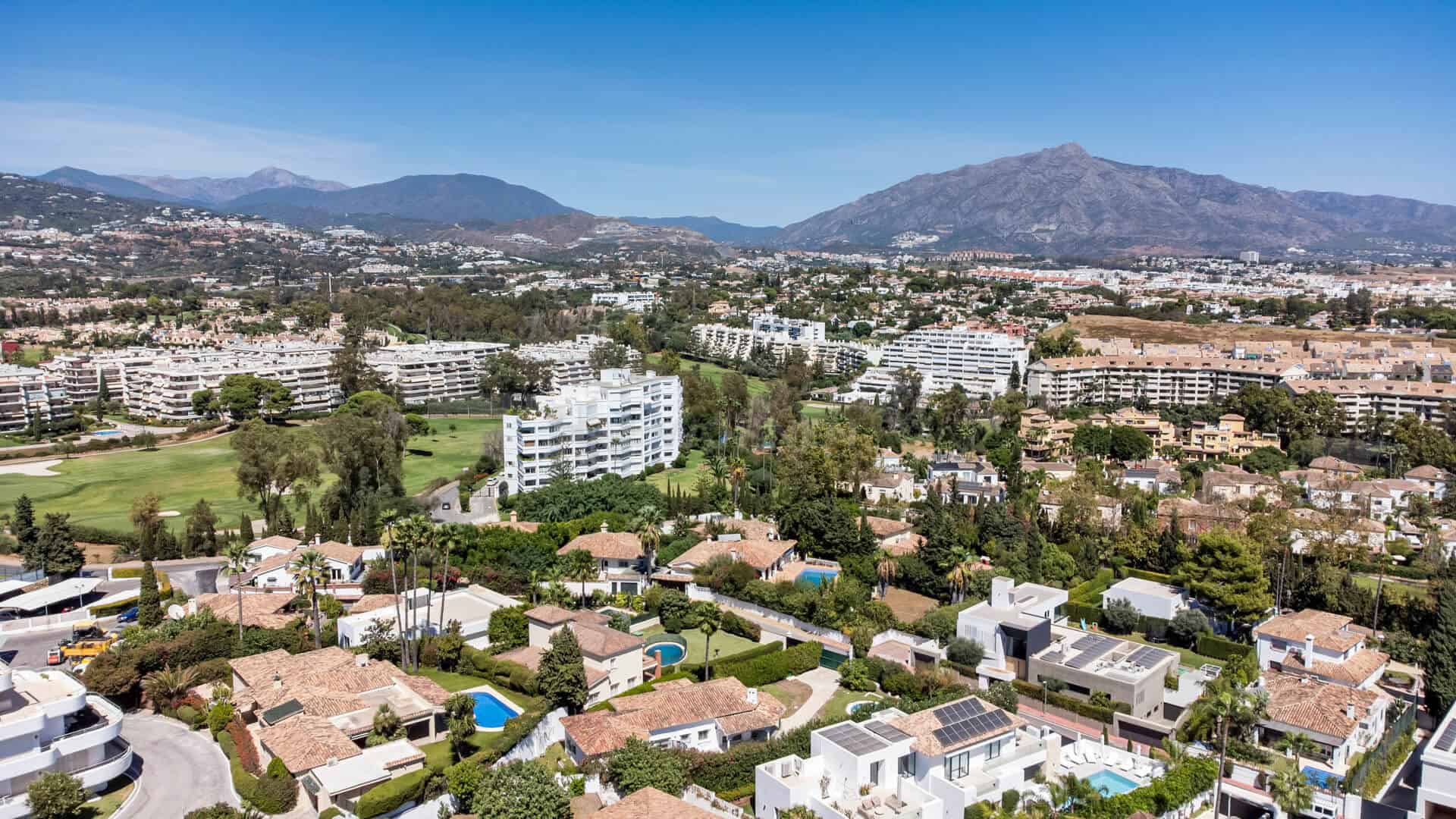
Guadalmina Alta occupies the hillside north of the A-7, wrapping around the North Course of the Real Club de Golf Guadalmina in a well-maintained residential environment that offers a genuinely different proposition from its southern neighbour. Where Baja is oriented toward the beach and the sea, Alta is oriented toward the golf and the hills — and the buyers who choose it are typically making that preference explicit.
The area has a more varied property stock than Baja — a mix of villas, townhouses and apartments at different price points — and a more active transaction market. Golf-frontline positions bordering the North Course are the most desirable within Alta, offering direct fairway access and the particular quality of having the golf course as your immediate landscape. Well-maintained communal areas, tree-lined streets and a generally well-managed residential character give the zone a comfortable, established atmosphere.
Alta is also more practical for daily life than Baja in one specific respect: the commercial area around the golf club entrance provides immediate access to supermarkets, pharmacies, restaurants and services without needing to drive further afield. For families with children, several international schools are easily accessible, and the proximity of San Pedro de Alcántara adds further practical infrastructure within five minutes. The overall impression is of a neighbourhood that works well for year-round living without requiring any compromise on quality of environment.
The Golf Club
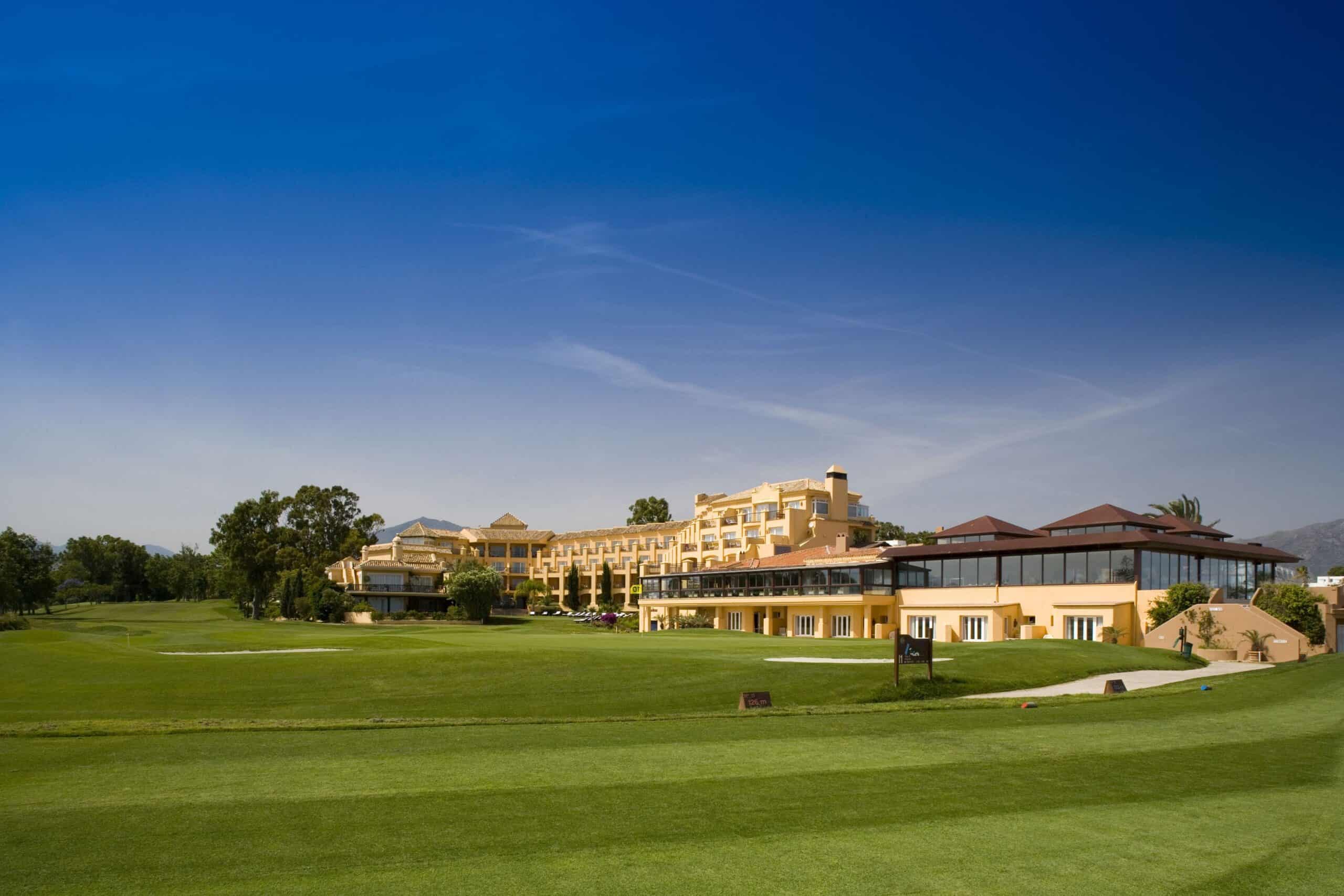
The Real Club de Golf Guadalmina is the oldest golf club in Marbella and holds a foundational place in the history of golf on the Costa del Sol. Founded in 1959, it predates every other course in the municipality and carries with it a social history and a club culture that newer, more commercially oriented golf developments simply cannot replicate. Membership is valued not only for the golf but for the continuity of community that comes with belonging to an institution that has been at the centre of this neighbourhood's social life for over sixty years.
The club operates two distinct 18-hole courses. The South Course — the original, laid out across the flat coastal plain of what was formerly sugar cane fields — is one of the most unusual layouts on the Costa del Sol. Its southernmost holes run along the beach itself, making it one of the very few courses in Spain where the sea is a genuine hazard and an aesthetic presence simultaneously. A par-72 parkland-links hybrid, it is a pleasurable and varied test that rewards local knowledge and consistency over power. The course was extended in the 1980s and remains in excellent condition.
The North Course, designed by Folco Nardi and opened in 1973, climbs into the hillside above the A-7 and provides a more elevated, more demanding experience. Its higher terrain delivers views across the coastal plain to the sea, and the course's undulating design makes it a favourite for players who want a more physically engaging game than the flat South Course provides. Guadalmina Alta's residential development wraps around the North Course, and frontline positions here are among the most consistently desirable in the area's property market.
The clubhouse, with its terrace overlooking the South Course, is a genuine social hub for both Baja and Alta residents — functioning as a restaurant, bar and meeting point that keeps the community connected across the seasons. The club's long history of hosting national and international tournaments — from the Spanish Championship in 1965 through numerous subsequent events — gives it a competitive heritage that active golfers appreciate alongside its more social dimensions.
Property Types
The property stock in Guadalmina reflects the age and character of the two zones it spans.
Guadalmina Baja is primarily a villa market of considerable distinction. The properties here are large, set on generous plots — often 1,500 m² to 3,000 m² or more in the most established avenues — with mature gardens, private pools and the accumulated planting of decades. The architecture spans the full history of the area: traditional Mediterranean and Andalucian-influenced villas from the 1960s and 1970s sit alongside properties that have been comprehensively renovated in recent years, as well as occasional new builds on plots that have become available through demolition or consolidation. Beachfront and first-line positions at the southern end of the avenues are exceptionally rare and command prices that reflect their irreplaceability. Low-rise planning regulations mean that no apartment towers have broken the residential scale — every property in Guadalmina Baja is a house, and that consistency is part of the area's fundamental value.
Guadalmina Alta has a more varied stock. Golf-frontline villas bordering the North Course are the most prestigious, and the finest examples — well-maintained or recently renovated properties with direct fairway access and good views — are as desirable as comparable addresses anywhere in the western Marbella area. Behind the frontline, a mix of townhouses in gated communities and apartment complexes of varying ages provides more accessible price points. Several newer developments have been built in Alta in recent years, raising the general quality standard and attracting buyers who want contemporary interiors and community amenities without sacrificing the address.
Property Prices
From €300K
entry (Alta apartment)
€1M–€4M
mid-range (villa)
€10M+
top end (Baja beachfront)
Pricing in Guadalmina spans a wide range, reflecting the fundamental difference between Baja and Alta and the variety of property types within each zone. Guadalmina Baja commands a significant premium over Alta in all comparable categories, reflecting the coastal position, the plot sizes, the maturity of the tree canopy and the historical prestige of the address.
In Guadalmina Alta, apartments and townhouses begin from around €300,000 for older resale stock in established complexes. Golf-frontline villas range broadly from €800,000 for properties needing renovation to €3M–€4M for well-finished contemporary builds in the best positions. In Guadalmina Baja, the entry point for a detached villa is approximately €1.2M–€1.5M for older properties in secondary avenues; well-maintained midrange villas in established positions trade from €2M to €4M. Beachfront and first-line positions in the southern avenues — those with direct or near-direct beach access, large plots and mature gardens — are among the most illiquid assets on the coast, trading infrequently and at prices that reflect genuine scarcity. The finest examples have sold above €8M–€10M.
The Guadalmina market overall has appreciated steadily over the past decade, tracking the wider Marbella market but with less volatility — a function of the low turnover rate and the deep-pocketed, long-horizon ownership profile of the Baja zone in particular.
Rental Market
The rental market in Guadalmina is more modest in volume than the busier zones of Marbella and Puerto Banús, reflecting both the low turnover of Baja properties and the quieter, more residential character of the area. That said, demand from a specific and discerning tenant profile is consistent: families wanting a beach-walking lifestyle in a calm environment, golfers seeking extended stays near the club, and buyers in the process of completing on a purchase who want to live in the area while their transaction proceeds.
Short-term holiday rentals in Guadalmina Baja attract tenants who are specifically looking for a quieter alternative to the more animated beach areas further east. Well-presented villas with mature gardens and proximity to the beach command good summer weekly rates. The VFT licensing regime applies; compliance must be confirmed before any investment purchase intended for holiday letting.
Long-term rentals are most active in Guadalmina Alta, where the proximity to Laude San Pedro International College and other schools creates a consistent academic-year demand from families. Monthly rents for well-presented three and four-bedroom villas in Alta range from approximately €2,500 to €5,000. In Baja, long-term rental supply is thin — most owners use their properties personally or keep them within the family — but demand, when supply appears, is consistently strong.
Investment
Guadalmina Baja is one of the most capital-secure addresses on the Costa del Sol. The combination of structural supply scarcity — there are no new plots available and no development path that could fundamentally alter the character of the area — deep-pocketed, long-horizon ownership, and the kind of reputational permanence that comes from seven decades of consistent prestige, creates an asset class that holds its value with exceptional reliability. It is not the highest-yielding market on the coast but it is among the most fundamentally sound.
For investors approaching Guadalmina with a renovation or upgrading strategy — acquiring older Baja villas in need of modernisation and investing in bringing them to contemporary specification — the market has been rewarding. The combination of a historic Baja address, a large plot and a comprehensively renovated interior is consistently compelling to high-end buyers, and the gap between the price of an unrenovated property and its post-renovation equivalent is wide enough to justify the investment in most positions.
Guadalmina Alta offers a more conventionally accessible investment proposition — more liquid, more varied in price point, and with the additional driver of the golf club social infrastructure sustaining demand from a consistent buyer and tenant profile. New builds in Alta, particularly those in golf-frontline positions or with the best views, have performed well in recent years and are likely to continue doing so as the general quality level of the residential stock rises.
Lifestyle & Character
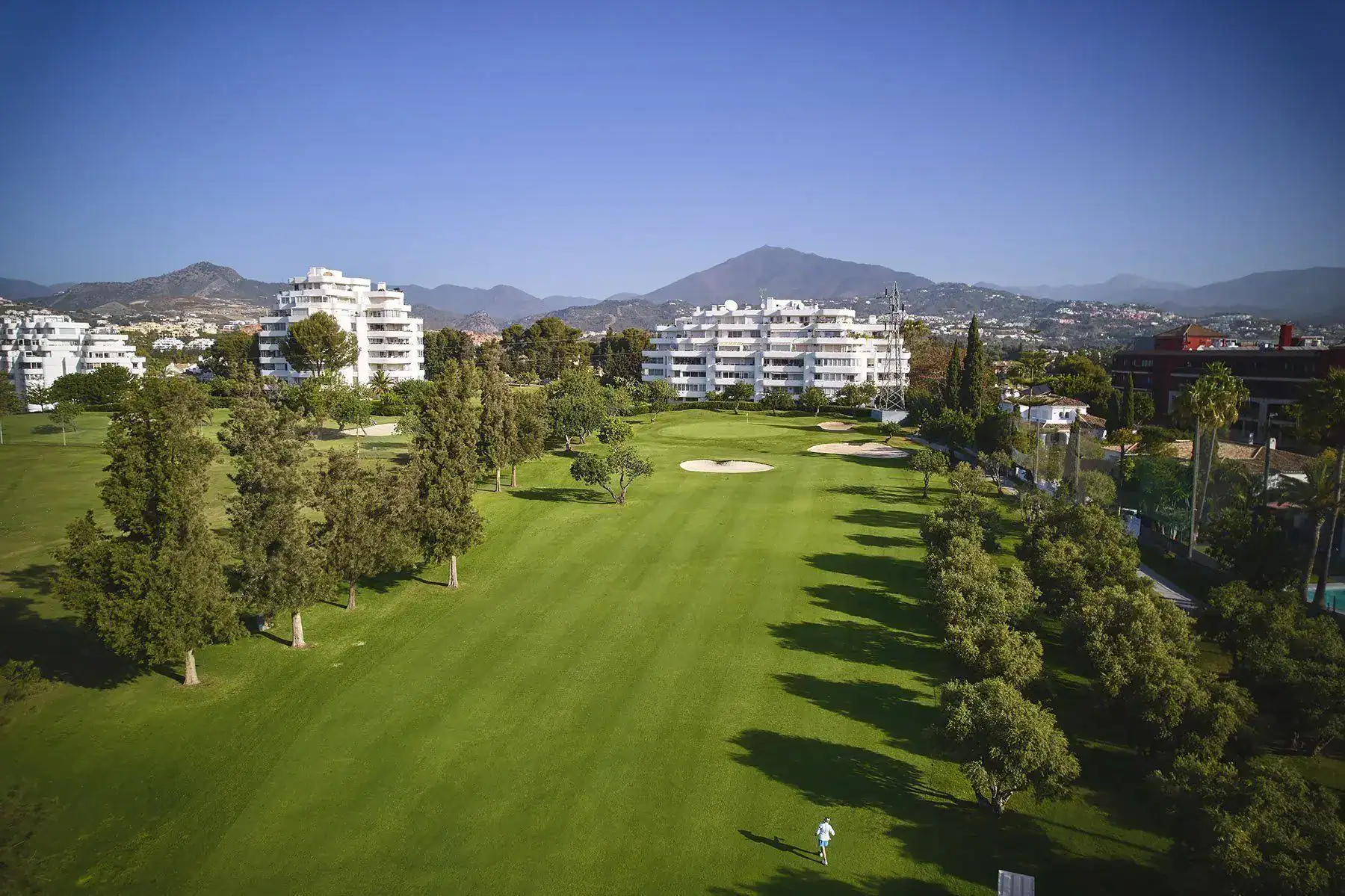
The character of Guadalmina is defined by restraint — a word that carries, in this context, genuine positive meaning. There is no performance here. No beachfront promenade lined with supercars and designer boutiques, no summer crowds pushing through narrow marina streets. What Guadalmina offers instead is the particular quality of a genuinely private residential community that has been consistently inhabited, cared for and held in esteem by the same kind of person across multiple generations.
Life in Guadalmina Baja revolves around the beach, the garden and the golf club. Mornings on the avenue end at the sand; afternoons in the garden with the particular shade of those old trees; evenings at the club terrace or at one of the restaurants in the commercial area or San Pedro. There is nothing forced or curated about any of this — it is simply how days unfold when the infrastructure for a good life has been in place for sixty years and has been well maintained throughout.
In Guadalmina Alta, the golf club serves as the primary social node — the post-round lunch, the Saturday competition, the club events calendar that gives the year its rhythm. The proximity of San Pedro de Alcántara — genuinely Spanish in character, with its own market, its own restaurants and its own civic life — gives Alta residents an authentic local anchor that the more internationally focused communities further east sometimes lack. Walking to San Pedro for a coffee, or taking children to the beach at La Playa de la Constitucion, are genuinely local activities in a way that walking to Puerto Banús is not.
Beaches & Nature
Guadalmina's beach is one of its greatest assets — a long, wide stretch of sand at the southern end of the Baja avenues that benefits from the same low-rise, low-density character as the residential zone behind it. It is quieter and less developed than the beaches further east toward San Pedro and Marbella, and that relative lack of commercial development is valued by residents who have specifically chosen this area for its absence of tourist animation.
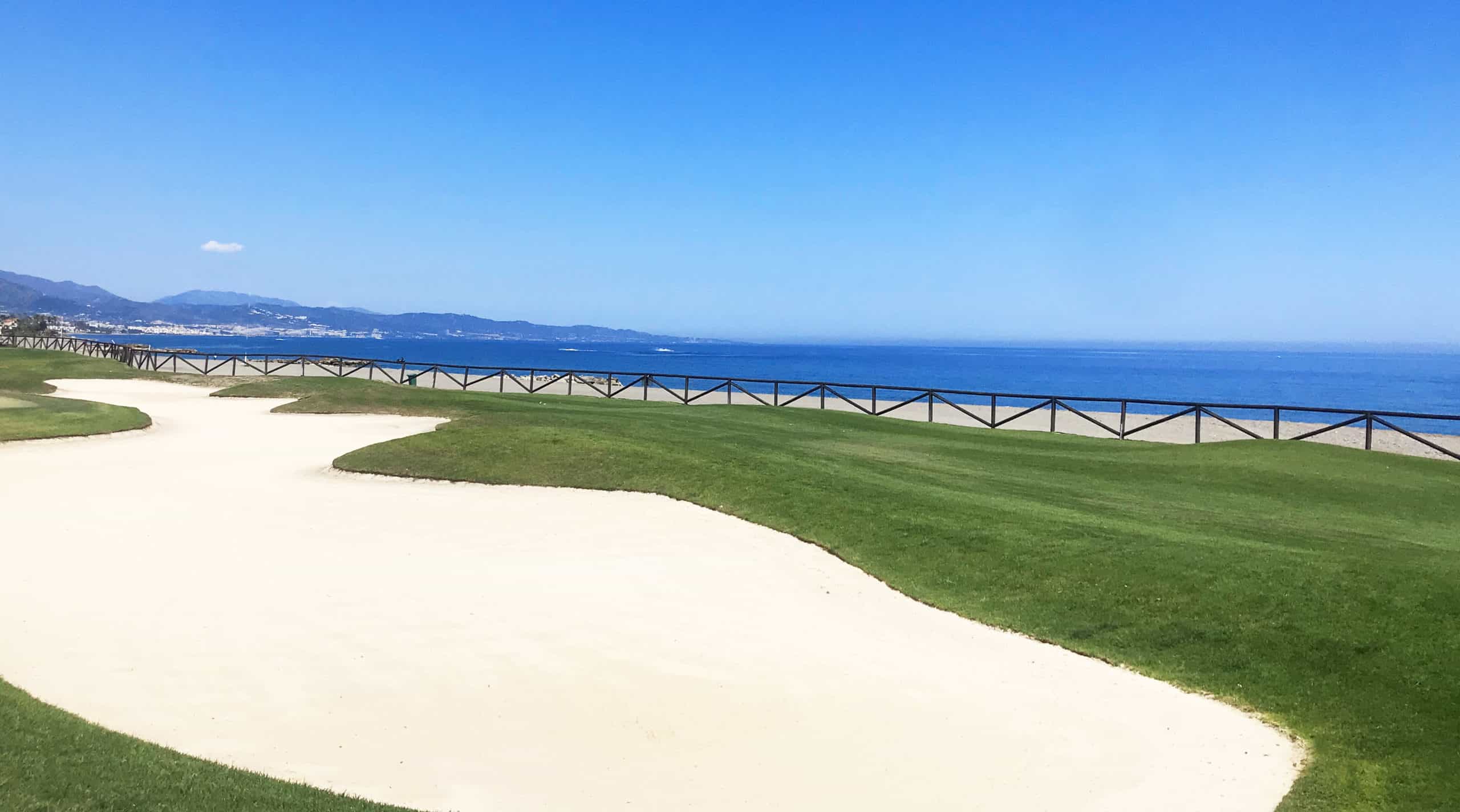
The South Course of the golf club runs along the beach itself at its southernmost stretch, creating the unusual and genuinely beautiful effect of golf fairways meeting the Mediterranean — one of the very few places in Spain where this occurs. The combination of the golf course, the beach and the tree-lined avenues creates a landscape character that is immediately distinctive and impossible to recreate anywhere else on the coast.
The Guadalmina River — named as Europe's shortest river in some accounts — flows south through the area and into the sea at the western boundary, creating a small but distinctive natural feature at the edge of the community. The wider natural environment, including the lower reaches of the Benahavís valley to the north, provides walking and cycling routes accessible within a few minutes of most Guadalmina properties. The Sierra Bermeja mountain range, visible to the north and northwest, provides a dramatic backdrop to the coastal plain.
Sports & Leisure
The Real Club de Golf Guadalmina is the primary leisure infrastructure of the area and is used by the great majority of the active resident community. Beyond golf, the club's facilities include tennis courts, a swimming pool and a well-run social programme that generates a consistent calendar of events, competitions and social occasions throughout the year.
The surrounding area has a strong network of tennis clubs and padel courts, concentrated in the adjacent residential zones of El Paraíso, Atalaya and Valle del Sol. The wider western Marbella sports infrastructure — the racquet clubs of San Pedro, the beach clubs along the New Golden Mile and the golf courses of the Benahavís municipality — is all accessible within 15–20 minutes. For more active outdoor enthusiasts, the cycling and walking routes along the coast path and into the Benahavís valley provide good options within easy reach.
The Hotel Guadalmina — which was under renovation to be transformed into a five-star property at the time of writing — will, when completed, add a further spa, pool and leisure offer directly adjacent to the golf club and the Baja residential area. Its reopening is anticipated to be a significant positive event for the area's profile and property values.
Dining & Amenities
The Guadalmina commercial area — clustered around the golf club access road where it meets the A-7 — provides the core everyday amenity infrastructure: a supermarket, pharmacies, banks, cafés, a post office and a small selection of restaurants and bars. This modest but functional commercial zone is sufficient for most routine daily needs and is valued by residents for its proximity within the area.
The golf clubhouse restaurant and terrace is the area's most reliable and most used dining address — accessible, well-run and with the inherent social quality of a venue that is also the community's primary gathering space. Beyond that, San Pedro de Alcántara — five minutes east — provides a full restaurant and bar scene with a strong local Spanish character: genuine tapas bars, fish restaurants, the weekly Thursday market, and an old town that is currently undergoing a renaissance as the wider Costa del Sol market has rediscovered its authentic charm.
Puerto Banús, 15 minutes east, provides the full international restaurant and luxury retail experience for those who want it. Estepona, 15 minutes west, has its own old town dining scene and is growing in quality and ambition. Benahavís village, 15 minutes inland, is the destination for a special meal in an authentically Andalucian setting. Guadalmina residents describe their relationship with all of these destinations as one of easy, optional access — close enough for a regular evening out, far enough not to intrude on daily life.
Schools & Education
Guadalmina is well positioned relative to the international school network of the western Costa del Sol. Laude San Pedro International College — a well-regarded British curriculum school for ages 2–18 — is located in San Pedro de Alcántara, approximately five minutes east and the most practically convenient option for families in both Baja and Alta. Its proximity makes it the most common school choice for resident families and means the school run is among the shorter of any residential area covered in these guides.
Atalaya Colegio Internacional, offering a bilingual Spanish-English curriculum, is approximately 10 minutes west. Aloha College in Nueva Andalucía (IB) is around 20–25 minutes east. For families with older children considering boarding, Sotogrande International School is under an hour west. The range of schools available within a comfortable daily commute from Guadalmina is genuinely comprehensive, and the specific proximity of Laude San Pedro is a meaningful practical advantage for families comparing Guadalmina with more inland or easterly addresses.
Healthcare
Healthcare provision for Guadalmina residents draws primarily on the network of San Pedro de Alcántara and the wider western Marbella area. Several private clinics and GP practices are located in San Pedro, accessible in under five minutes. Hospiten Estepona is approximately 15 minutes west. Hospital Costa del Sol in Marbella is around 25–30 minutes east. Hospital Ochoa and Hospital Quirón Salud Marbella are approximately 30–35 minutes. All major private hospital facilities are reachable within a manageable timeframe, and private health insurance — standard for the international resident community — provides fast access to specialist care.
Who Lives Here
The Guadalmina resident community is one of the most genuinely multigenerational on the Costa del Sol. Families who discovered Baja in the 1960s and 1970s — initially Spanish Madrid families attracted by the beach, then Scandinavian and British buyers drawn by the golf and the climate — have in many cases been here across three generations. Grandchildren who spent their childhood summers in Guadalmina Baja have bought their own properties here as adults. This depth of generational continuity gives the area a social cohesion and an authentic community identity that newer developments cannot manufacture.
The Scandinavian presence is particularly notable and long-established — Swedish and Norwegian families account for a significant proportion of the Guadalmina Baja ownership base, and the social fabric of the area has a distinctly Northern European quality in its values: straightforward, outdoor-oriented, unpretentious about wealth. British buyers are equally well represented, as are Spanish families from Madrid and other major cities who have maintained Guadalmina as a seasonal base across the decades.
In recent years, the buyer profile has broadened modestly — Middle Eastern buyers, American families and younger European buyers attracted by the combination of value and heritage have all arrived in small but growing numbers. The overall demographic is older-skewing than the more dynamic markets of Nueva Andalucía or Puerto Banús, but the area's school proximity and family-friendly character are drawing an increasing cohort of younger families who are discovering what their parents or grandparents found here decades earlier.
Buying in Guadalmina
Buying in Guadalmina — particularly in Baja — requires an understanding that the finest properties in this area are rarely formally listed and almost never appear in open portal searches. The ownership profile of Guadalmina Baja is characterised by long tenure and deep attachment: owners who have held their properties for decades, often with emotional connections that run across generations, do not advertise their intention to sell until it is definite and often prefer to sell to known buyers through established relationships. The right agent relationship — with someone who knows the area intimately and maintains long-term vendor relationships — is not simply helpful in this market but often essential to accessing the best properties at all.
Due diligence in Guadalmina follows standard Spanish residential practice, with some specific considerations. Many of the older Baja villas were built in the 1960s and 1970s under planning frameworks that differ from today's requirements, and their legal status should be carefully verified — including IBI records, catastral registration and any outstanding community obligations. The Marbella planning legacy is not as acute an issue here as in some other parts of the municipality, but professional legal review is non-negotiable. A solicitor with direct Guadalmina and western Marbella experience is strongly recommended.
The Hotel Guadalmina's planned transformation into a five-star property is a relevant factor for buyers in the Baja zone in particular — the hotel's reopening at a higher quality level is widely expected to be positive for the surrounding property values. The timeline should be tracked as part of any purchase decision in the immediate vicinity.
Purchase costs follow the standard Andalucían framework: 7% transfer tax on resale, 10% VAT on new build, plus notary, registry and legal fees — approximately 10–12% of the purchase price. We are happy to guide you through every stage of the process.
Current properties available in Guadalmina:
Showing 0 properties
No properties found.
Verdin Property
Interested in Guadalmina? Let's talk.