Area Guide

Marbella

Marbella — Costa del Sol

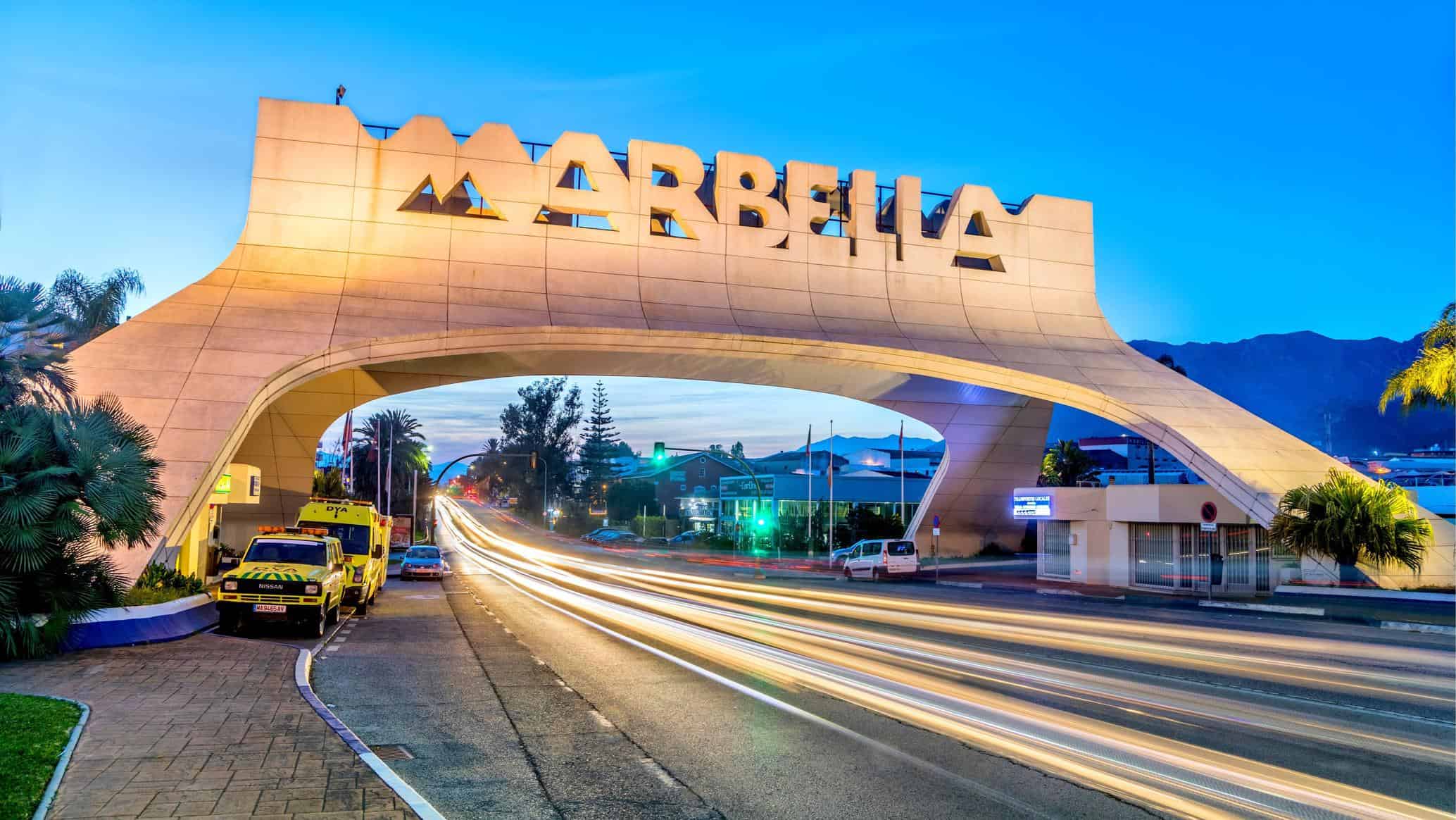
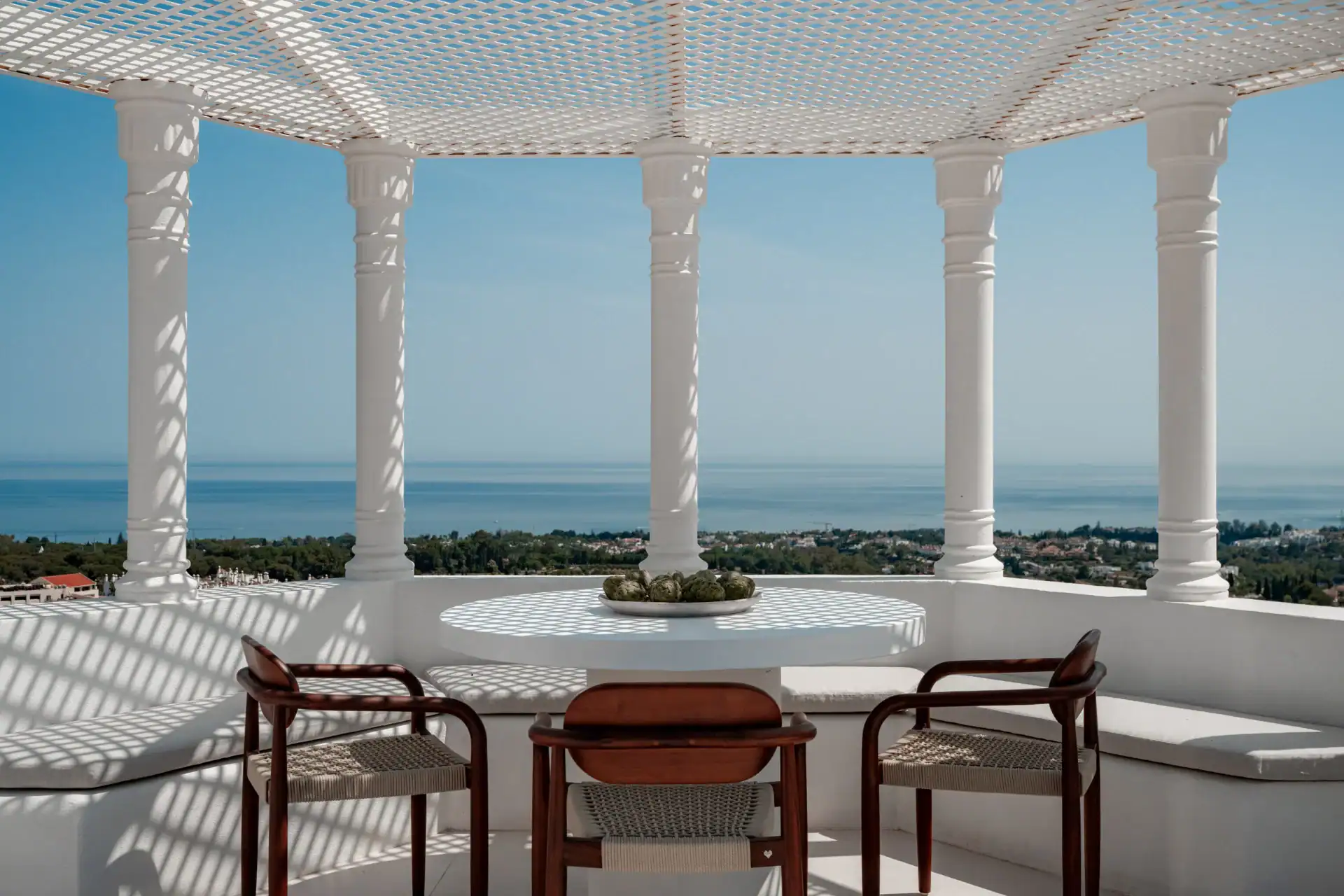
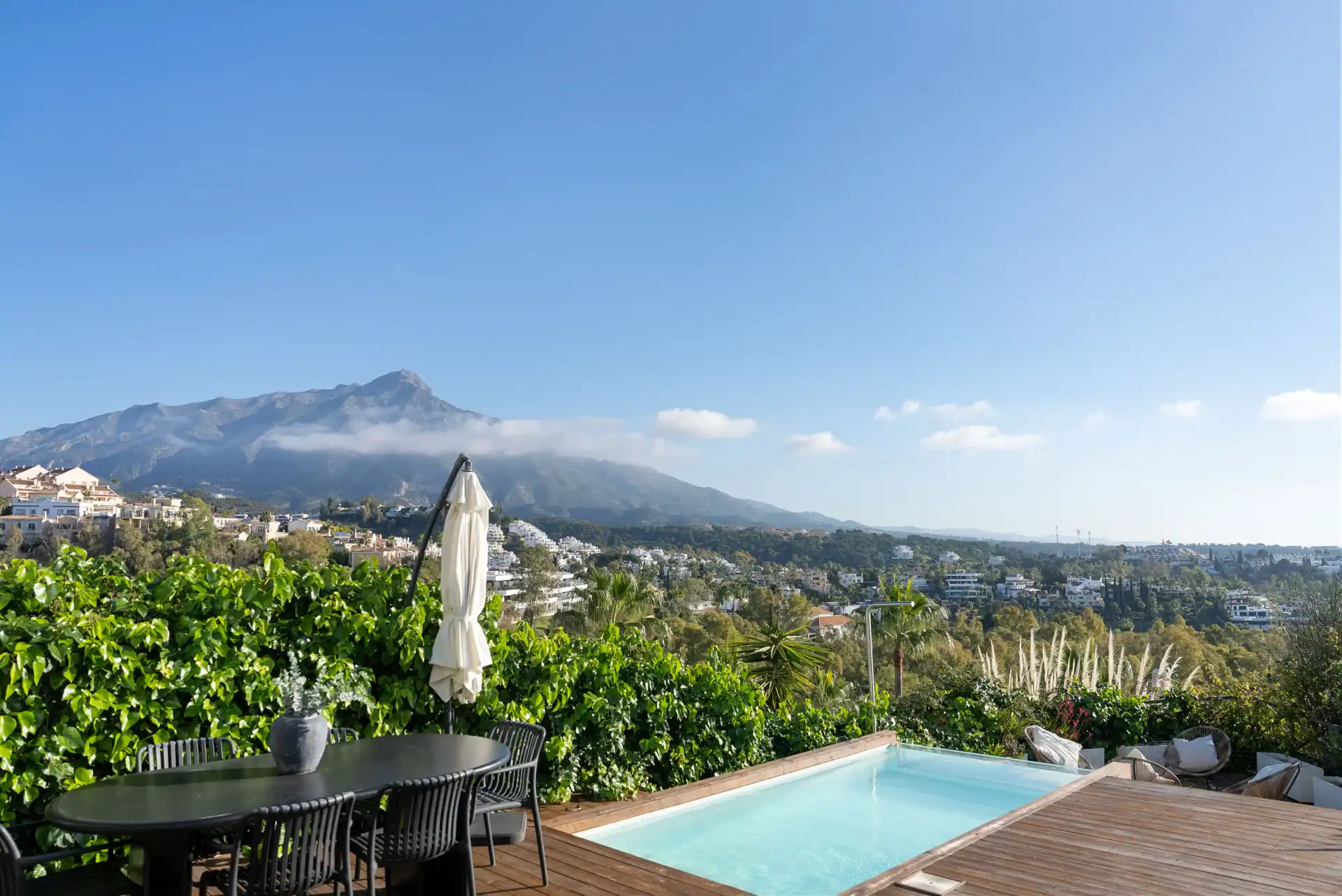
Marbella is the undisputed jewel of the Costa del Sol — a city that has spent more than six decades perfecting the art of luxurious coastal living. Backed by the Sierra Blanca mountains and facing south onto the Mediterranean, it combines genuine Andalucian character with world-class infrastructure, drawing residents and investors from across Europe and beyond.

01

Overview

Overview of Marbella

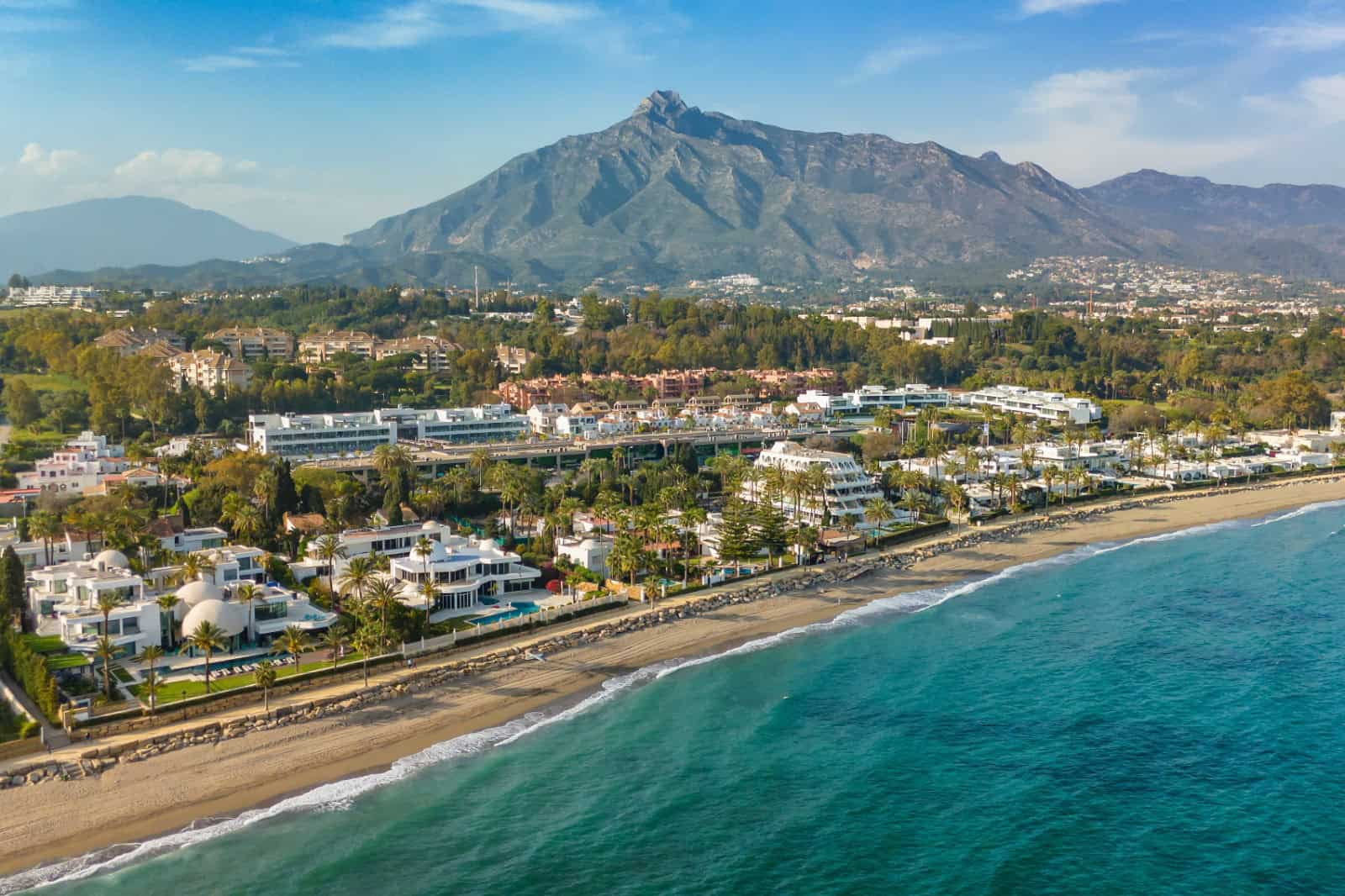
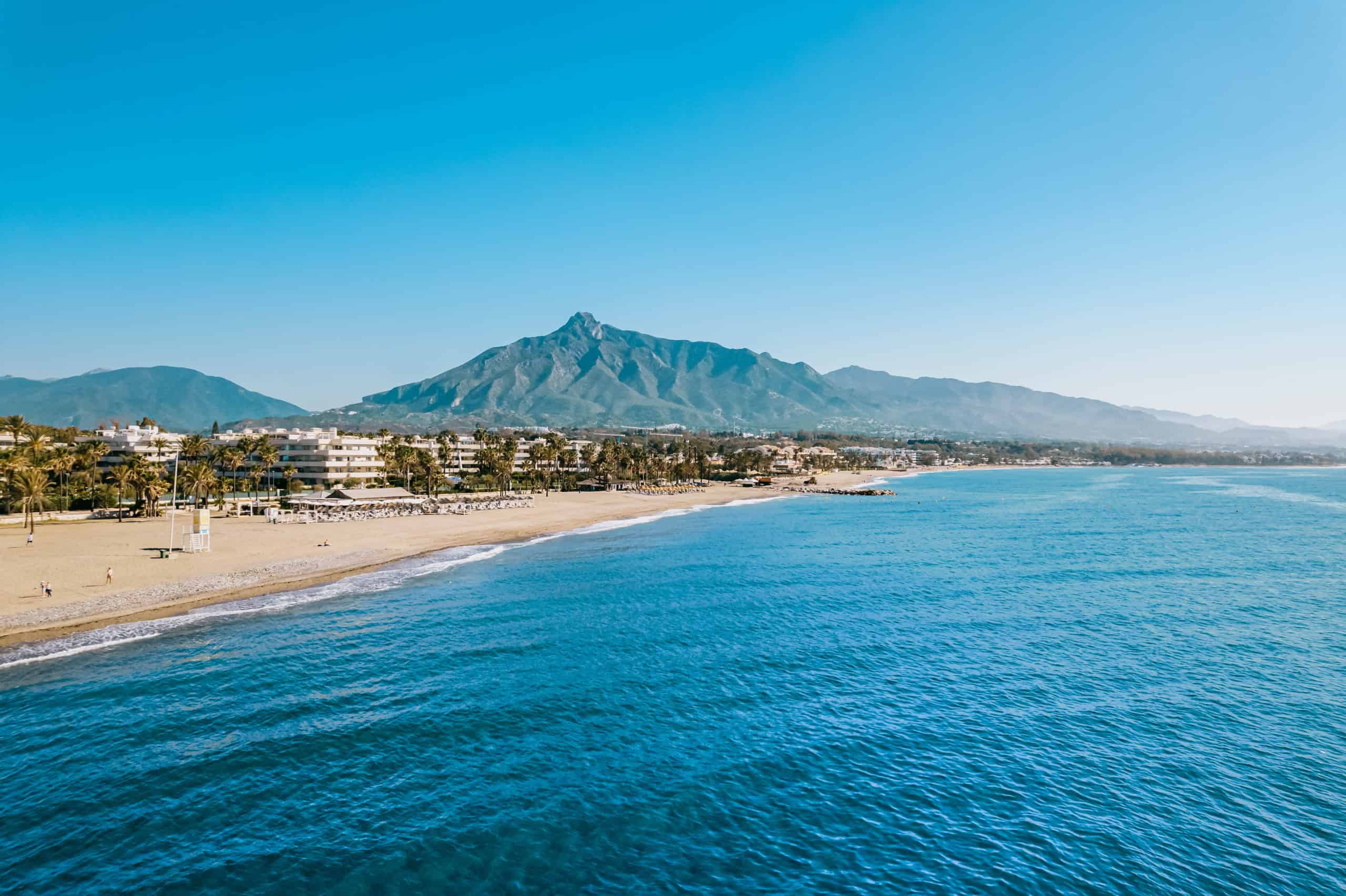
Marbella is the best-known resort on the Costa del Sol and one of the most recognisable luxury addresses in Europe. Located on the southern tip of Spain, it faces directly south onto the Mediterranean and is backed by the impressive Sierra Blanca mountain range, whose highest peak rises above 1,200 metres. The result is a microclimate that delivers over 320 days of sunshine annually — warm winters, long summers, and very little rain.

What sets Marbella apart from other sun-belt destinations is the completeness of its offer. This is not simply a beach resort. It is a fully functioning international city with a deep school network, specialist healthcare, world-class golf, a mature cultural life, and a property market that has attracted serious wealth for more than sixty years. The infrastructure here supports a permanent, year-round life — not just a seasonal one.

The municipality stretches approximately 27 kilometres along the coastline and encompasses a wide range of distinct neighbourhoods, from the historic Casco Antiguo to the glamorous Golden Mile, the marina at Puerto Banús, and the golf valleys of Nueva Andalucía. Each has its own character and price point, giving buyers a genuinely varied set of options within a relatively compact area.

02

Location & Access

45 min

to Málaga Airport

1 hr

to Gibraltar Airport

27 km

of coastline

320+

sunny days per year

Marbella location and access

Marbella sits at the western end of the Costa del Sol, between Fuengirola to the east and Estepona to the west. The AP-7 motorway runs parallel to the coast and provides fast, direct access to Málaga, Gibraltar, and all surrounding towns. The A-7 coastal road offers a more scenic alternative through the various urbanisations.

Málaga Airport (AGP) is approximately 60 kilometres to the east — around 45 minutes by road under normal conditions — and is one of the busiest airports in Spain, with direct connections to most major European cities and a growing number of intercontinental routes. Gibraltar Airport is around 80 kilometres to the west, approximately one hour, and provides an additional option particularly for UK travellers. Those with access to private aviation will find Málaga convenient for larger aircraft and Jerez a useful alternative.

Within the municipality, getting around requires a car. Public transport exists but is limited in frequency and coverage. Marbella's geography — a linear coastal city — means most residents drive between zones, and traffic in peak summer months on the N-340 requires patience. The AP-7 toll road bypasses most congestion and is strongly recommended for regular use.

03

History

History of Marbella

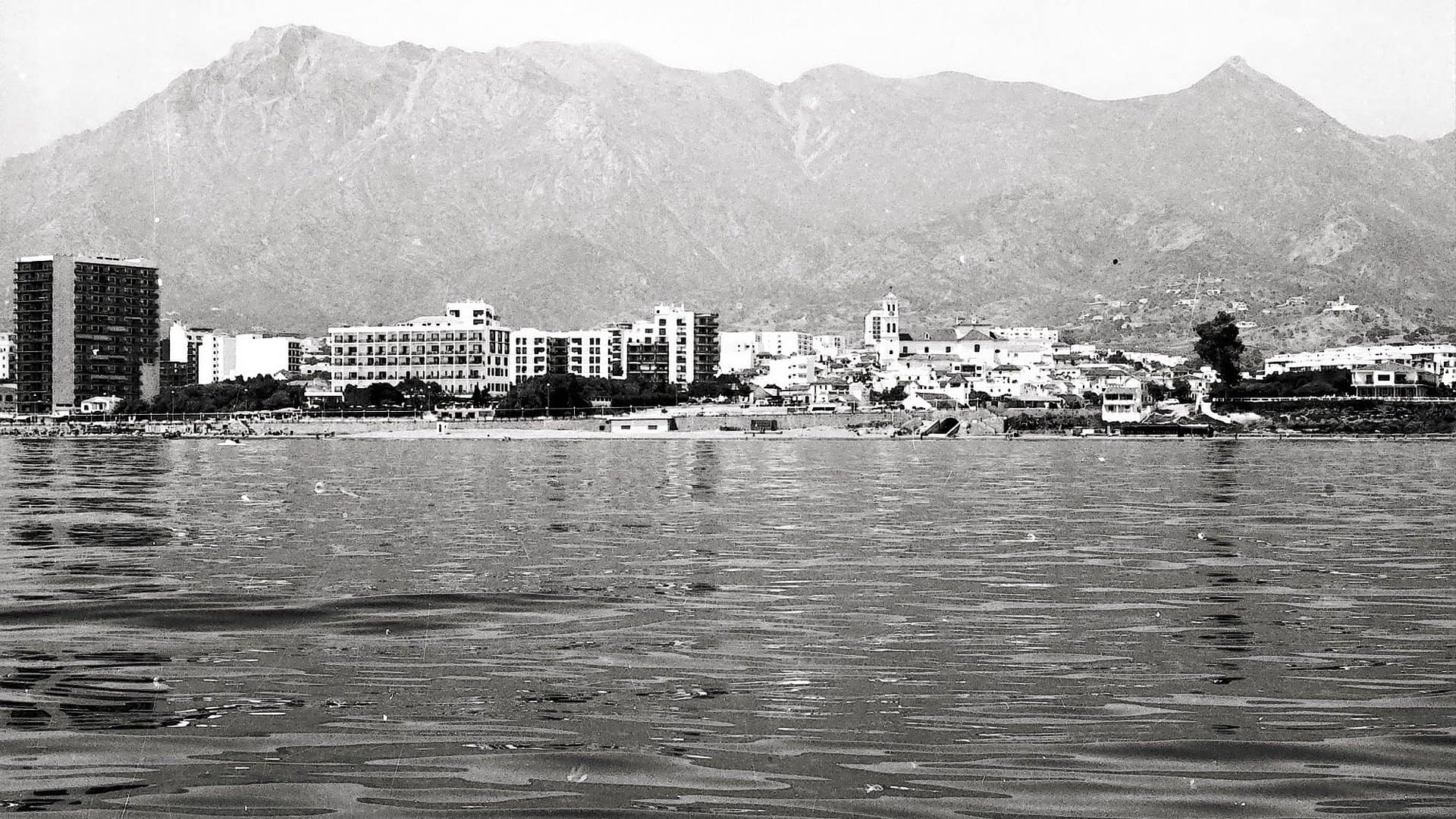
Human settlement in the Marbella area dates to approximately 700 BC, when Phoenician traders established a presence along this stretch of coastline. The Romans later developed the area more substantially, and traces of their occupation — baths, mosaic floors, agricultural remains — have been uncovered at various sites within the municipality. The Moorish period left perhaps the most visible imprint: the labyrinthine street plan of the Casco Antiguo, the castle remnants visible from the old town, and the whitewashed architecture that defines so much of the character of the centre.

The modern chapter of Marbella began in 1954, when Prince Alfonso von Hohenlohe opened the Marbella Club Hotel on what would become the Golden Mile. It was a deliberate act of place-making: Hohenlohe invited the European aristocracy, film stars and industrialists to stay, establishing almost immediately the association between Marbella and a certain kind of glamorous, discreet, high-society leisure. By the 1960s and 1970s that reputation was firmly set, and Marbella had become a fixture on the international luxury circuit alongside St Tropez, Capri and Portofino.

The decades that followed brought both growth and turbulence. The 1980s and 1990s saw rapid development and, ultimately, a well-documented period of political corruption that left a complicated urban planning legacy. Since then, Marbella has worked steadily to regularise that legacy and has matured considerably — today it is a more serious and complete city than at any point in its history.

04

The City Today

Today Marbella is a fully functioning international city of around 150,000 permanent residents — a number that rises significantly in the summer months. The gastronomic scene is genuinely world-class, anchored by Michelin-starred restaurants and a depth of international dining that rivals any European city of comparable size. The private school network is one of the most comprehensive on the peninsula. The property market remains among the most active and resilient in Spain.

The pandemic represented a structural turning point. For many high-net-worth individuals, Marbella stopped being a place to visit for a few weeks each summer and became a place to build a life around permanently. That shift brought a new wave of year-round residents — executives, entrepreneurs, families with children in international schools — and with them stronger wellness infrastructure, better restaurants, more sophisticated retail, and a cultural calendar that now runs through the winter months.

The city has also become measurably more international in its demographic. Buyers and residents now arrive from an increasingly broad range of countries — the traditional British, Scandinavian and German communities have been joined by significant numbers from the Middle East, the United States, and Latin America. This internationalisation has, if anything, strengthened the market's resilience and added further depth to the social fabric of the city.

05

Neighbourhoods

Marbella neighbourhoods

Understanding Marbella's distinct neighbourhoods is essential to finding the right property. Each zone has its own character, price range, and lifestyle profile.

The Golden Mile
The most prestigious address in Marbella, stretching west from the town centre toward Puerto Banús. Wide tree-lined boulevards, palatial villas, and two of the finest hotels in Europe — Marbella Club and Puente Romano — define this strip of coastline. Sierra Blanca, rising into the hills directly above, offers dramatic sea and mountain views from some of the most architecturally significant villas on the coast. Nagüeles, La Carolina and Rocío de Nagüeles are established residential communities within this zone.

Marbella Centre & Old Town
The historic heart of the city — the Casco Antiguo — is a genuine Moorish old town with a maze of narrow streets, whitewashed walls and a central square, the Plaza de los Naranjos, that has been the social heart of Marbella for centuries. The surrounding town centre offers the best concentration of restaurants, boutiques and everyday amenities, with a long seafront promenade connecting east to west. Apartments here appeal strongly to those who want to walk to everything.

Puerto Banús
The marina district, technically within the Marbella municipality, is one of the most visited destinations on the entire Mediterranean coast. Superyachts, designer boutiques — Chanel, Hermès, Louis Vuitton all have stores here — beach clubs, and a concentration of restaurants make this the most animated corner of Marbella. Property here tends toward apartments and penthouses in well-maintained marina-front complexes.

Nueva Andalucía
Inland from Puerto Banús, the golf valley of Nueva Andalucía is the most densely developed residential area in the municipality. It contains some of the best-known golf courses on the coast — Los Naranjos, Las Brisas, Aloha — and a mix of villas, townhouses and apartment complexes across a wide range of price points. It consistently offers more space and value than the Golden Mile while remaining a short drive from it.

Marbella East
The eastern end of the municipality encompasses Elviria, Las Chapas, El Rosario, Los Monteros and Río Real — well-established residential areas with wide sandy beaches, a concentration of international schools, and a more relaxed atmosphere than the western zones. The world-famous Nikki Beach club is here, as is the five-star Hotel Los Monteros.

06

Property Types

Property types in Marbella

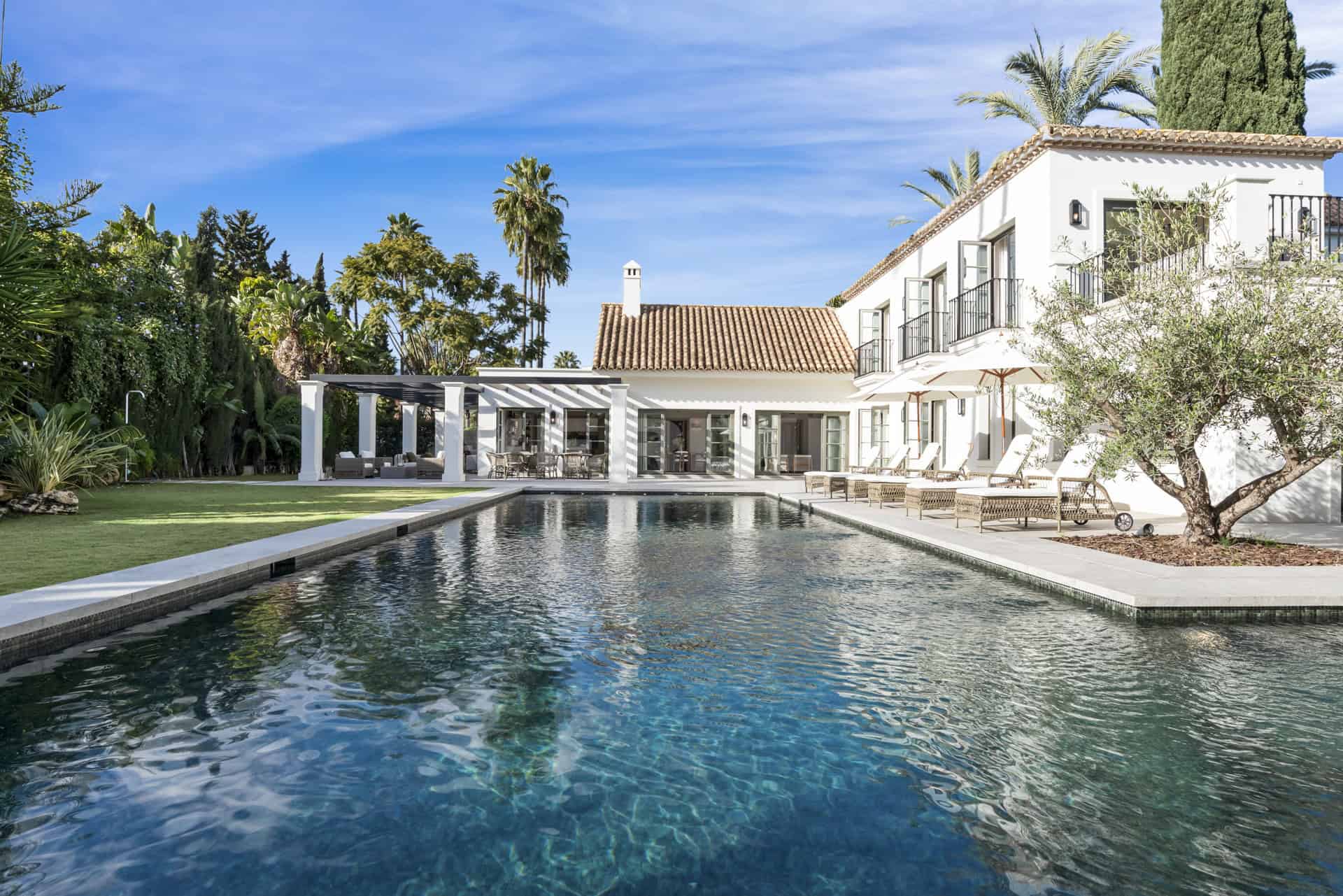
Marbella offers the full spectrum of residential property, from studio apartments in gated communities to 3,000 m² trophy villas on the Golden Mile — a range that accommodates both the first-time buyer on the Costa del Sol and the ultra-high-net-worth collector of international real estate.

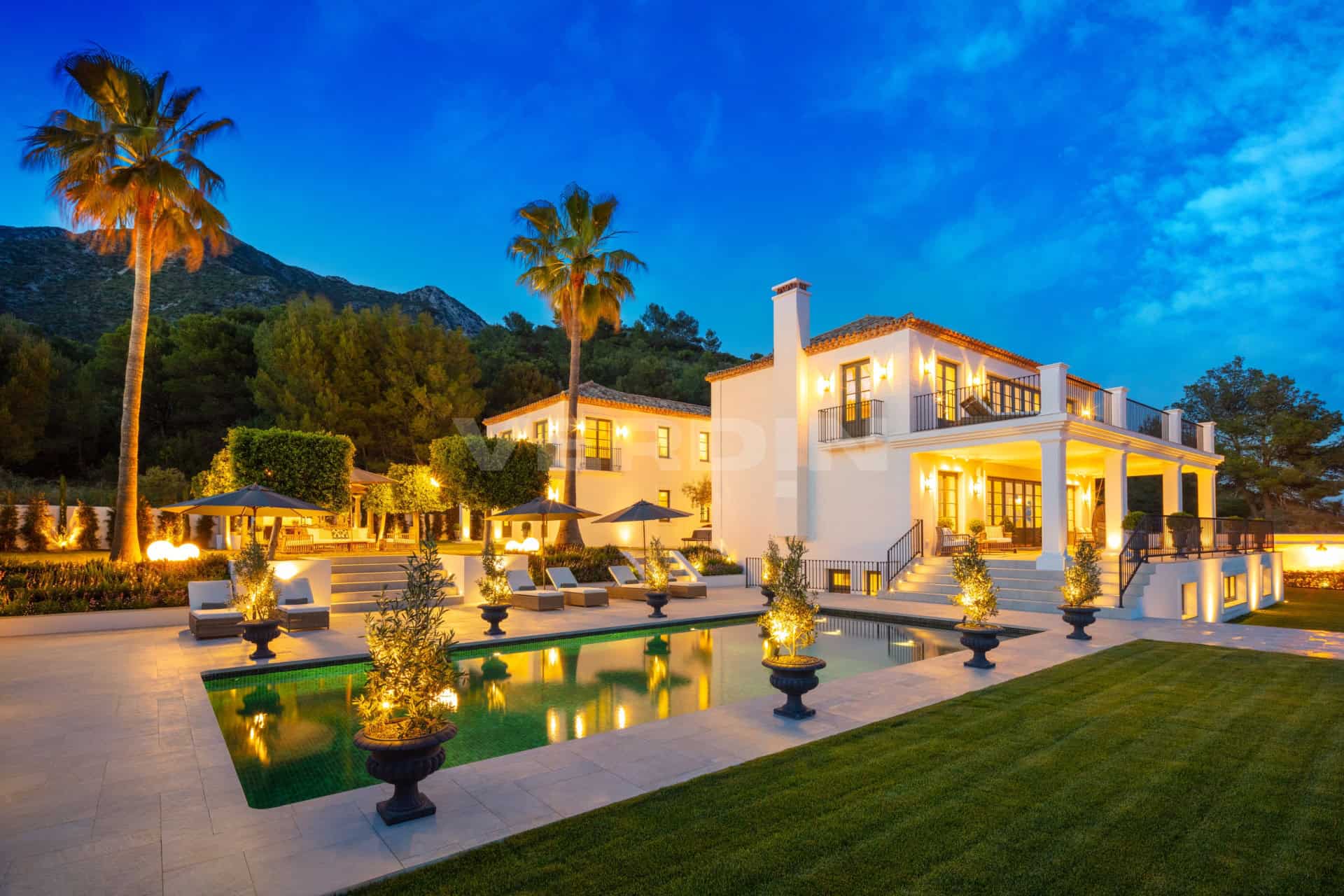
Detached villas dominate the aspirational end of the market. They range from traditional Andalucian cortijos with terracotta roofing and mature gardens to boldly contemporary builds with infinity pools, home automation and panoramic sea views. The Golden Mile and Sierra Blanca concentrate the most significant trophy properties, while Nueva Andalucía and Marbella East offer comparable quality at more accessible price points.

Apartments and penthouses represent the majority of transactions by volume. Quality varies considerably — from 1970s resale stock in need of renovation to entirely new-build complexes with resort-style amenities, rooftop pools and concierge services. New developments in recent years have raised the standard considerably, and the best new-build penthouses in sought-after locations now command prices that would previously have been associated only with standalone villas.

Townhouses and semi-detached villas occupy a popular middle ground, typically found within gated communities with communal gardens and pools. They appeal particularly to families and part-time residents who want the feel of a house without the maintenance burden of a large standalone property.

07

Property Prices

From €300K

entry level

€1M–€5M

mid-range

€20M+

top end

Marbella's property market has delivered consistent price appreciation over the past decade, with particularly strong gains since 2020. Entry-level apartments in established areas begin from around €300,000–€400,000. Mid-range villas and quality penthouses in good locations typically sit in the €1M–€5M range. At the top end, Golden Mile and Sierra Blanca properties regularly trade above €10M, with the finest estates reaching €20M or more.

Prices per square metre vary dramatically by zone. Beachfront and Golden Mile properties regularly exceed €10,000/m² for new build, while Nueva Andalucía and Marbella East offer comparable specification at meaningfully lower cost per metre. The new-build premium has narrowed in some areas as quality resale stock has appreciated, and a number of well-renovated older villas now trade at prices that reflect their location and finish rather than their age.

The market has shown strong resilience during periods of wider economic uncertainty — a combination of limited prime supply, consistent international demand, and the fundamental appeal of the lifestyle that underpins values here.

08

Rental Market

Marbella is one of Spain's strongest rental markets, sustained by both short-term holiday demand from May through October and a growing pool of long-term residents — executives, families with children in international schools, and remote workers — who rent year-round. The result is a market with two distinct, complementary income streams.

Short-term holiday rental yields in prime locations are attractive, but the regulatory environment has tightened considerably in recent years. The Junta de Andalucía requires a VFT (Vivienda con Fines Turísticos) licence for all holiday lets, and Marbella's town hall has introduced additional restrictions in certain zones. Any investment purchase intended for short-term rental use should have the licensing position confirmed before exchange.

Long-term rental demand has grown significantly and now provides dependable income even outside peak season. Furnished properties in good condition — particularly those close to international schools or within 10 minutes of the coast — are consistently sought after throughout the year. Monthly rents for quality two-bedroom apartments range from approximately €1,500 to €3,500 depending on location and finish; larger villas can command substantially more.

09

Investment

Investment in Marbella

The fundamentals of Marbella's investment case are well established: a finite coastal supply, sustained international demand, a lifestyle premium that supports pricing resilience, and a track record of outperforming the wider Spanish market across economic cycles. Few comparable European destinations combine those qualities as consistently.

In recent years, the buyer profile has broadened significantly. Beyond the traditional European base of British, German and Scandinavian buyers, Marbella has attracted substantial capital from the Middle East, the United States and Latin America — much of it representing primary or secondary residence purchases rather than speculative investment. This diversification has added depth and resilience to the market.

New-build supply, while growing, has not kept pace with demand in the most sought-after zones, sustaining upward pressure on prices in those areas. The strongest capital appreciation over the past five years has been seen on the Golden Mile and in Sierra Blanca, but well-located properties in Nueva Andalucía and Marbella East have also performed strongly, offering a more accessible entry point into the same long-term story.

10

Lifestyle & Character

Lifestyle in Marbella

Life in Marbella is built around the outdoor, and the rhythm of each day reflects it. Mornings begin on the Paseo Marítimo, where residents run, cycle or walk the 15-kilometre coastal path that connects the Bajadilla marina to San Pedro. By mid-morning, the café terraces of the Old Town are filling; by lunch, beach clubs and waterfront restaurants are in full swing.

What makes Marbella genuinely liveable — as opposed to merely beautiful — is the completeness of its infrastructure. It is intimate enough to feel human-scaled: you will see the same faces, know your neighbourhood, walk to most things. Yet it is substantial enough to support a serious life: top-tier schools, specialist healthcare, international connectivity, and a cultural calendar that runs year-round. Most places that feel this calm do not offer this depth. Most places with this depth do not feel this calm.

The Avenida del Mar, lined with monumental Dalí bronze sculptures and running from the Old Town to the seafront, captures something of Marbella's particular character: cultured, unhurried, and entirely comfortable with the sun. The weekly market at Alameda Park, the beach clubs of Marbella East, the sunset terraces of Puerto Banús — each has its place in a daily life that rarely requires going far to find something worth doing.

Marbella has also developed a strong wellness culture in recent years — world-class pilates studios, a proliferation of running clubs, yoga retreats, and specialist fitness facilities have all arrived in the past decade, reflecting a resident base that lives here year-round rather than merely visiting.

11

Sports & Leisure

Sports and leisure in Marbella

Golf
Golf is woven into Marbella's identity. More than 20 courses lie within comfortable driving distance, spanning a wide range of styles and difficulty. In Marbella East, Marbella Golf and Country Club and Santa Clara Golf are well-established options. In Nueva Andalucía — widely known as the Golf Valley — Los Naranjos, Las Brisas, Aloha Golf and La Quinta provide a concentration of quality courses that is hard to match anywhere on the Costa del Sol. The area consistently rates as one of the finest golf destinations in Europe.

Water Sports
The Puerto Deportivo in the town centre is the main hub for maritime activity — sailing, deep-sea fishing, jet skiing, paddleboarding and yacht charters. Puerto Banús marina serves as the departure point for many superyacht itineraries. Conditions in the Strait of Gibraltar, reachable in under an hour, offer some of the best sailing waters in the western Mediterranean.

Tennis & Padel
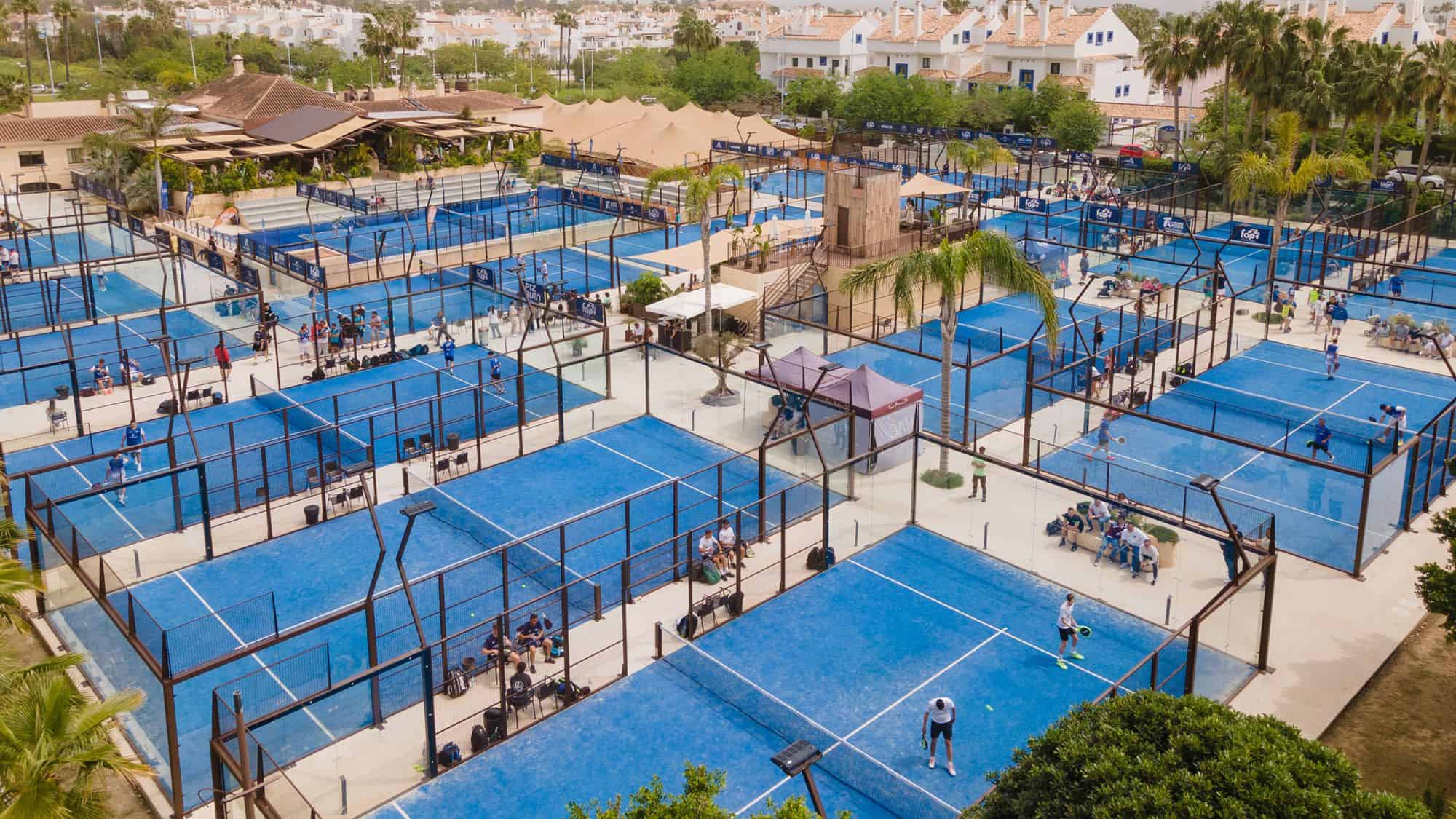
The Puente Romano Beach Resort houses one of the most prestigious tennis facilities in Europe, historically hosting ATP events and offering year-round coaching. Padel has exploded in popularity over the past decade and courts are now found across virtually every residential complex and sports club in the municipality.

Hiking & Cycling
The Sierra Blanca provides a dramatic backdrop for both activities, with marked trails climbing to panoramic viewpoints. On clear days, views extend to Morocco across the Strait. The coastal cycle path connecting Marbella to San Pedro and Estepona is flat and well-maintained, and increasingly well used by residents year-round.

12

Beaches & Nature

Beaches near Marbella

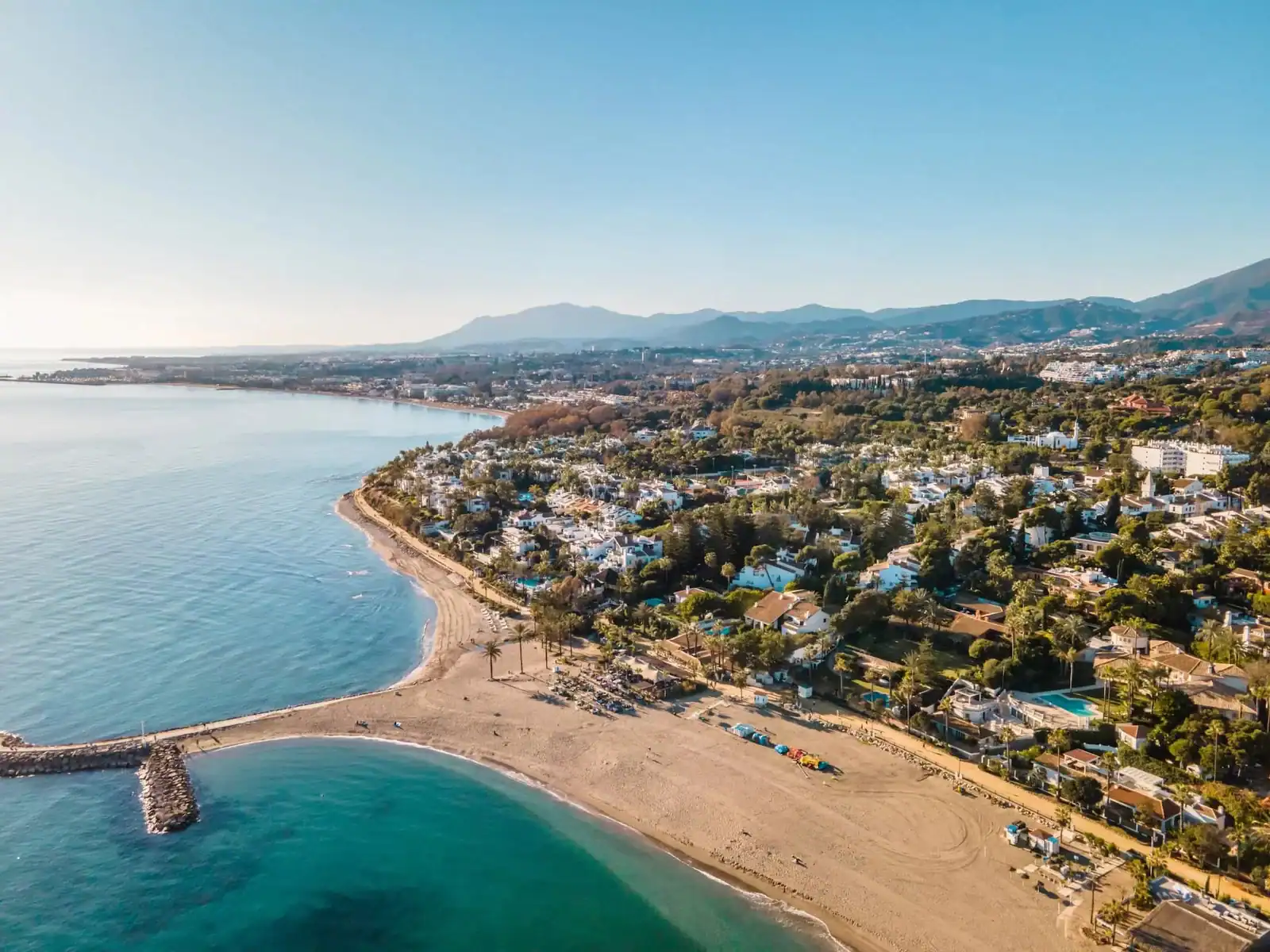
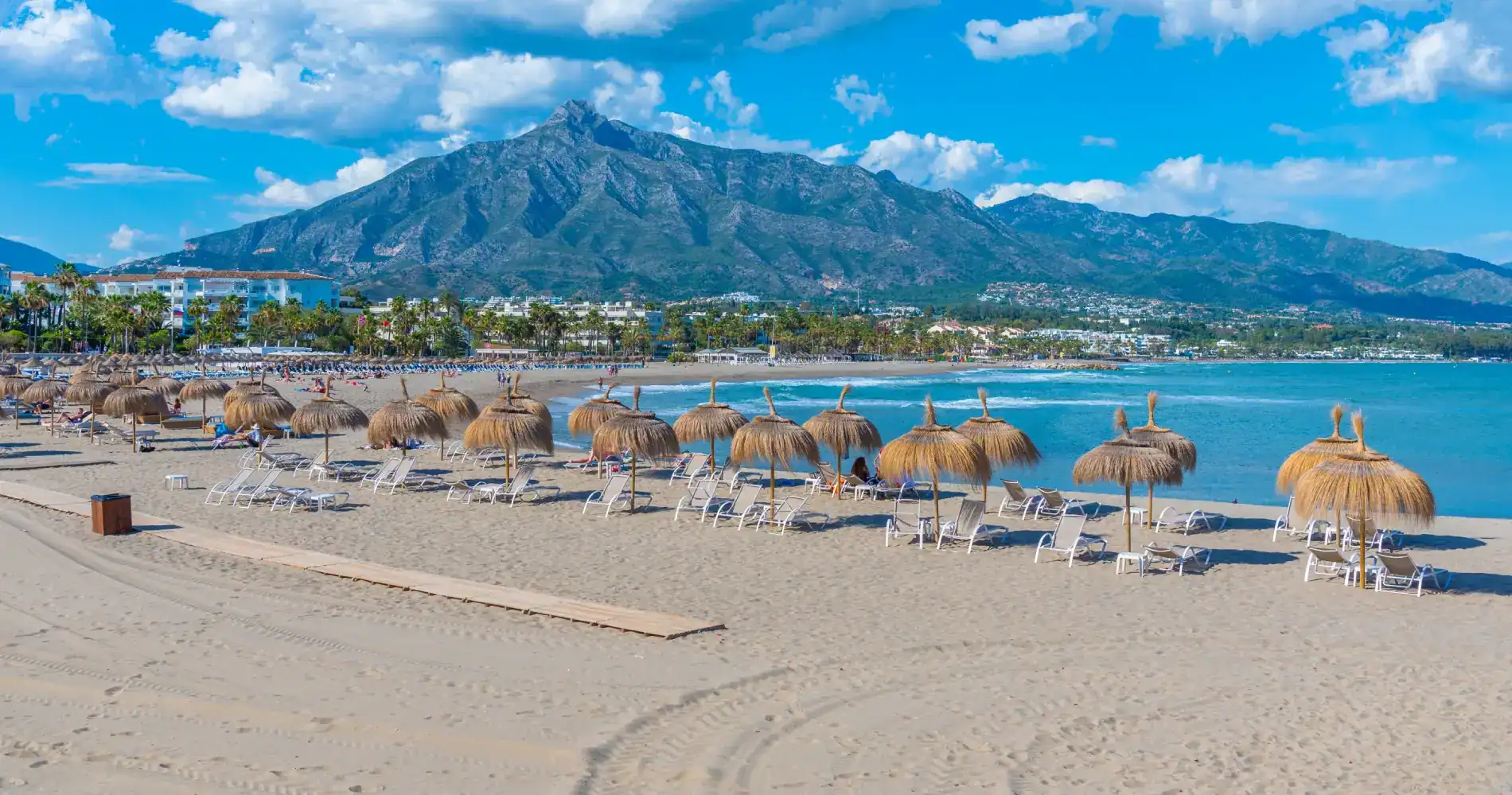
Marbella's 27-kilometre coastline encompasses beaches of genuinely different characters, from wide undeveloped strands in the east to animated chiringuito-lined urban beaches in the town centre. Water quality throughout is consistently rated Blue Flag.

In Marbella East, Las Chapas and Elviria offer wide sandy beaches in a relatively undeveloped setting, popular with families. The naturist beach at Artola — backed by protected coastal dunes — is one of the most scenic on the coast. Closer to the town centre, Playa de la Fontanilla and Playa Venus are backed by the promenade and provide the most animated beach experience in the municipality, with numerous chiringuitos serving fresh sardines grilled on espetos (traditional bamboo skewers).

The Golden Mile frontage is largely occupied by hotel and private beach clubs, while around Puerto Banús the beaches combine natural beauty with the energy of the marina. Nikki Beach, one of the world's most recognisable beach club brands, is located in Marbella East and draws an international crowd throughout the summer.

Inland, the Sierra Blanca natural park offers marked hiking routes through cork oak and pine forest, with views south to the coast and north into the Serranía de Ronda. The contrast between the coast and the mountain interior — reachable in under 30 minutes — is one of the less obvious but genuinely distinctive qualities of living in this part of Andalucía.

13

Dining & Shopping

Marbella's restaurant scene has developed dramatically over the past fifteen years and now stands comparison with any European city of its size. The Old Town concentrates the most authentic Andalucian cooking — traditional tapas bars, fresh fish restaurants, sherry-led bodegas — alongside more contemporary addresses. Skina, a two Michelin-starred restaurant tucked into a narrow Old Town alley, is among the finest tables in southern Spain. The Dani García group operates several restaurants on the Golden Mile, including Leña Marbella and Lobito de Mar.

The Paseo Marítimo and Puerto Banús provide an almost continuous stretch of international dining options — Japanese, Peruvian, Italian, modern European — catering to an international resident population with correspondingly international tastes. Beach clubs, particularly in the summer months, are destinations in their own right, with DJs, international guest chefs and production values that go well beyond food and drink.

Shopping ranges from the designer boutiques of Puerto Banús — Chanel, Hermès, Louis Vuitton, Dior and most major luxury houses have stores here — to the independent boutiques and artisan markets of the Old Town. El Corte Inglés in the town centre provides a comprehensive department store for everyday needs. For larger-scale supermarket shopping, several Mercadona and Carrefour stores are distributed across the municipality.

14

Schools & Education

Marbella has one of the most developed international school networks on the Spanish coast — a direct consequence of its large and long-established resident expatriate population. For families considering relocation, the quality and variety of schooling available is one of the city's most significant practical assets.

English International College (EIC) in Marbella East is one of the most established British curriculum schools on the Costa del Sol, catering to ages 2–18. Aloha College in Nueva Andalucía offers the International Baccalaureate and has a strong academic reputation and a broad international student body. Laude San Pedro International College provides a British curriculum across primary and secondary. Swans International School in Sierra Blanca offers a smaller, more intimate environment with British curriculum teaching.

Les Roches Marbella is a campus of the globally ranked Swiss hospitality management university — relevant for families whose children are approaching university age and considering the hospitality sector. The German School of Marbella and several Spanish-language private schools complete a genuinely broad offer.

The concentration of quality international schooling within the municipality is one of the primary reasons families choose Marbella for permanent relocation rather than a holiday base. It is also one of the factors that sustains long-term rental demand in school-adjacent areas throughout the academic year.

15

Healthcare

Healthcare provision in Marbella is strong by any European standard. The Hospital Costa del Sol, located on the eastern approach to town, is a modern public hospital serving the general population and providing a wide range of specialist services. It operates to a high standard relative to comparable facilities in Spain and is the primary emergency facility for the western Costa del Sol.

The private sector is well developed and well used by the international community. Hospital Ochoa in the town centre is the main private hospital, offering a broad range of specialist consultations, diagnostics, surgery and maternity services. A number of independent specialist clinics, private GP practices, and concierge medical services operate across the municipality. Dentistry, physiotherapy, aesthetic medicine and mental health services are all well represented.

For complex specialist treatment, Málaga city's university hospital network — under an hour away — provides a higher level of specialist resource. Private medical insurance is strongly recommended for non-residents and easily obtained.

16

Safety & Security

Marbella is a safe city with low crime rates relative to comparable Spanish urban centres. The municipal police maintain a visible presence throughout the town centre and along the seafront, particularly during the summer months. The National Police and Guardia Civil complement this coverage across the wider municipality.

Most residential developments in the mid-to-upper price ranges are gated communities with 24-hour security, controlled access and CCTV. In the higher price brackets — Golden Mile villas, Sierra Blanca, and developments adjacent to La Zagaleta — private security is standard, and many individual properties feature sophisticated alarm, monitoring and access control systems.

As with any coastal city that attracts wealth and tourism, opportunistic petty crime exists and awareness is sensible in busy public areas, particularly around the port and in peak season. Residential areas are generally very calm.

17

Who Lives Here

Marbella's permanent population is one of the most genuinely international of any city in Europe. British residents have been established here for decades and remain the largest expatriate community, with a presence across all price brackets from Marbella East to the Golden Mile. Scandinavian communities — particularly Swedish and Norwegian — have an equally long history in the area, concentrated notably in Nueva Andalucía and around the golf courses.

German, Dutch, Belgian and wider Central European buyers have consistently been among the most active in the market. Russian and Ukrainian communities were significant through the 2000s and 2010s; that profile has shifted more recently. In their place, and alongside the established European base, Marbella has seen a marked influx of Middle Eastern, American and Latin American buyers — many purchasing primary residences rather than holiday homes, and bringing with them a different set of expectations around service, privacy and amenities.

The Spanish local population maintains a strong and grounded presence, particularly in the Old Town and the eastern barrios. Marbella has not, unlike some comparable resort towns, lost its local identity to tourism and expatriate life — it remains a real city as much as a luxury destination, and that balance is one of its most enduring qualities.

18

Family Life

Family life in Marbella

Marbella works exceptionally well for families. The international school network is the backbone of expatriate family life and the primary anchor that keeps families here long-term. The outdoor lifestyle — beaches, sports, parks, the promenade — means children grow up with an unusually active and varied daily existence, and the year-round climate makes that possible in a way that is simply not achievable in northern Europe.

The beach areas in Marbella East are particularly well suited to younger children — calmer, wider, and less animated than the town centre beaches. The Parque de la Represa provides green open space close to the town centre. Sports infrastructure for children is extensive: almost every residential community has tennis and padel courts, numerous academies offer golf, swimming, football and horse riding, and the school sports programmes are well developed.

The social fabric of family life in Marbella is perhaps its most underrated quality. A community of families from dozens of countries — connected through schools, sports clubs, and the rhythms of daily life in a compact city — creates a warm and integrated environment. Expatriate parents frequently remark that their children develop a social ease and an international outlook that would be harder to achieve anywhere else.

19

Buying in Marbella

Buying property in Marbella requires local knowledge. The market moves quickly in premium zones, the quality and legal standing of properties varies considerably, and a significant proportion of the most desirable transactions — particularly at the top end — never appear on open portals. Understanding which areas suit a particular lifestyle, which developments have strong community management, and which properties carry unresolved planning legacy issues is the difference between a sound purchase and a complicated one.

Purchase costs in Spain typically add 10–12% to the agreed price: transfer tax at 7% for resale properties, VAT at 10% for new build, plus notary, land registry and legal fees. It is strongly advisable to appoint an independent lawyer — independent of both the developer and the selling agent — and a gestor familiar with the Marbella market. Non-resident buyers will also need a NIE (Número de Identificación de Extranjero) before completing.

Mortgage finance is available to non-residents, typically up to 60–70% LTV, and a number of Spanish and international banks are active in this market. Those purchasing with cash should factor in the bank's anti-money-laundering requirements, which require full documentation of the origin of funds. Community fees in gated developments vary considerably and are worth understanding before purchase — some of the more amenity-rich complexes carry significant monthly charges.

The short-term rental licensing framework has tightened in recent years and should be reviewed carefully for any investment purchase. We are happy to guide you through each stage of the process.

Current properties available in Marbella:

Showing 28 properties

Verdin Property

Interested in Marbella? Let's talk.

Get in touch