Area Guide

The Golden Mile

The Golden Mile — Marbella

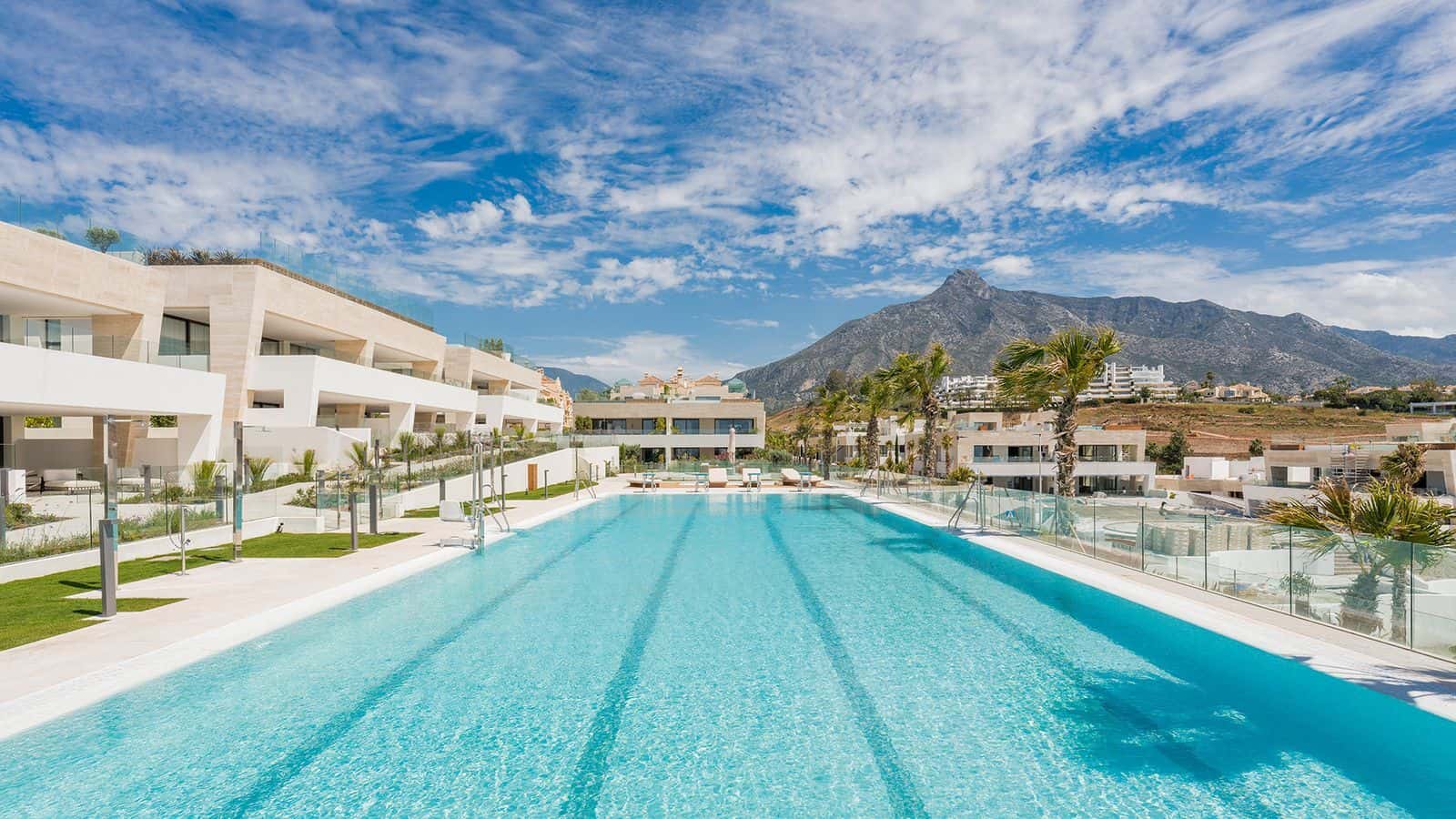
The Golden Mile is where the story of modern Marbella began — and seventy years on, it remains the most coveted address on the Costa del Sol. A six-kilometre corridor connecting Marbella town centre to Puerto Banús, it encompasses beachfront estates, palatial hillside villas, two of Europe's most celebrated resort hotels, and some of the finest private residences on the Mediterranean. This is not simply a luxury address. It is the benchmark against which all others on this coast are measured.

01

Overview

Overview of the Golden Mile, Marbella

The Golden Mile is Marbella's most prestigious address — not merely by convention, but by the weight of its history, the calibre of its properties, and the extraordinary concentration of exceptional institutions it contains. It is the strip of coastline and hillside between Marbella town centre and Puerto Banús where the modern luxury story of the Costa del Sol was written, and where it continues to be lived at the highest level.

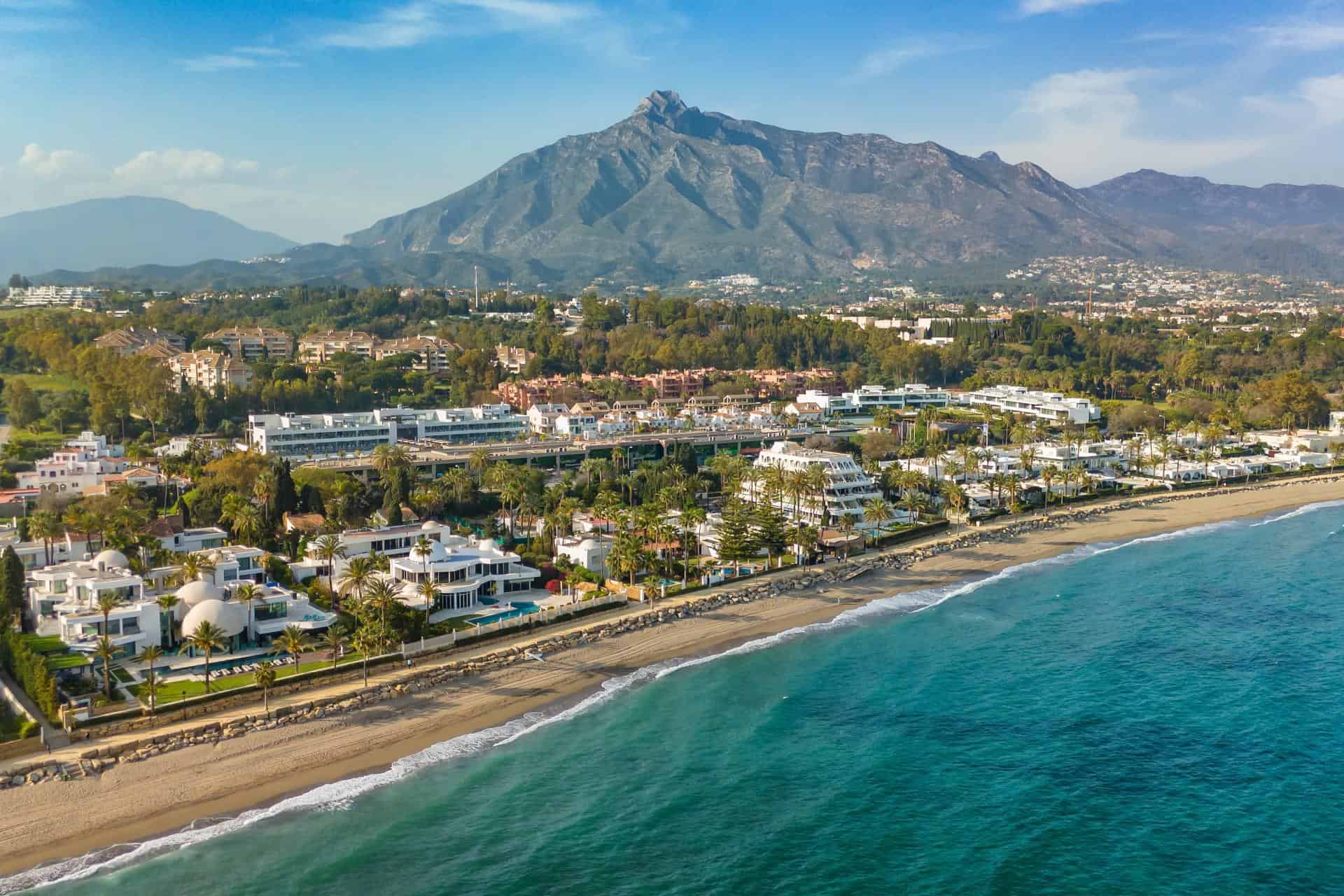
Unlike most luxury addresses, which derive their prestige from a single quality — position, exclusivity, or association — the Golden Mile commands its status on multiple fronts simultaneously. On the beachside, it offers some of the finest direct Mediterranean frontage in Spain. Rising into the hills above, it contains some of the most architecturally significant and private villa estates in Europe. Along its central boulevard, two five-star Grand Luxe hotels — the Marbella Club and Puente Romano — provide a level of hospitality infrastructure that defines the area's social character as much as any private residence.

The term itself — La Milla de Oro — was coined not by the hotels or the developers but by Roy Boston, the German entertainer behind the Alhambra del Mar project, who recognised that the kilometre-by-kilometre concentration of luxury along this stretch was unlike anything else in southern Europe. That observation remains as accurate today as when it was first made.

02

Location & Boundaries

6.5 km

length of the corridor

5 min

to Puerto Banús

5 min

to Marbella centre

40 min

to Málaga Airport

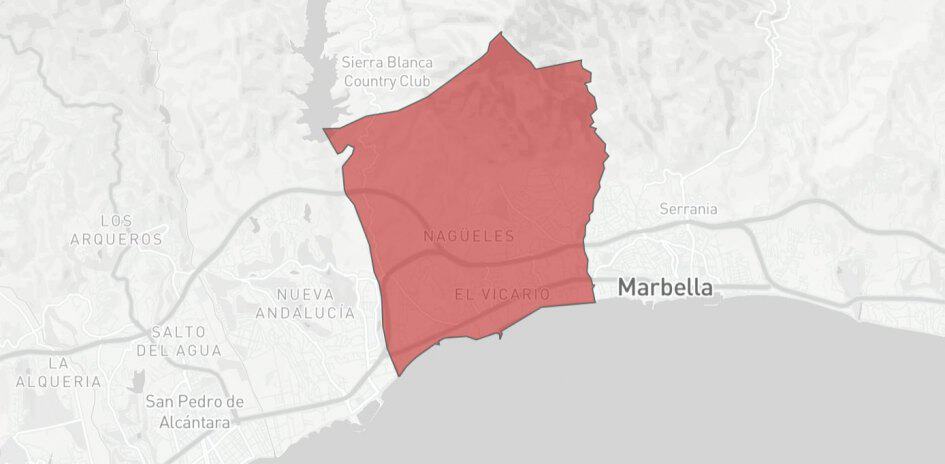
Golden Mile location map

The Golden Mile runs west from the Pirulí — the distinctive copper sculpture that marks the western boundary of Marbella town centre — to the entrance of Puerto Banús, a distance of approximately 6.5 kilometres along the N-340 coastal road. Its boundaries, however, extend well beyond that central corridor. The area is commonly understood to include the beachside communities immediately south of the N-340, the hillside urbanisations between the road and the AP-7 toll motorway, and the elevated developments rising into the lower slopes of the Sierra Blanca above the AP-7 — notably Sierra Blanca and Cascada de Camoján.

This layered geography — beach, road, hill, mountain — means the Golden Mile encompasses meaningfully different environments within a relatively compact area. A beachfront villa in Santa Margarita and a hilltop estate in Cascada de Camoján both carry a Golden Mile address, yet they offer entirely different relationships to the landscape, the sea and the levels of privacy available.

Connectivity is excellent in all directions. The N-340 provides direct coastal access to Marbella town centre and Puerto Banús, both within five minutes. The AP-7 runs parallel to the north and provides fast access to Málaga Airport in approximately 40 minutes. Gibraltar Airport is around an hour to the west. The area's position between the two most animated parts of the Marbella municipality — the old town to the east, Puerto Banús to the west — means residents have everything within easy reach while remaining in one of the quietest and most private stretches of the coast.

03

History

History of the Golden Mile

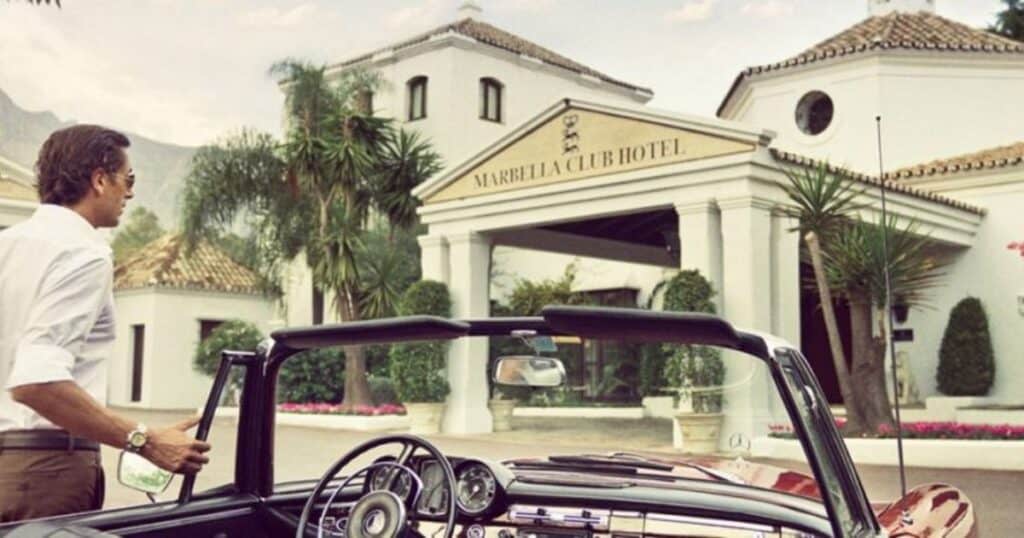
The Golden Mile's story begins in 1954, with a single act of visionary hospitality. Prince Alfonso von Hohenlohe-Langenburg, an aristocrat of German and Spanish heritage who had settled in Marbella after the Second World War, acquired the Santa Margarita estate on the coastal road west of the town and transformed it into the Marbella Club Hotel. His intention was deliberate: to create a destination so refined, so removed from the pressures of post-war Europe, that the continent's most distinguished families would have no reason to look anywhere else for their summer.

They came. Ava Gardner, Deborah Kerr, Omar Sharif, Sean Connery, Cary Grant, Liza Minnelli — the guest list of the early Marbella Club reads as a roll call of mid-century glamour. The Bismarcks, Rothschilds, Thurn und Taxis, Metternichs and Thyssen-Bornemisza families built or acquired villas along the road. The Puente Romano Hotel opened in the 1970s and quickly became as celebrated as the Marbella Club itself. The name La Milla de Oro — coined by Roy Boston to describe the concentration of luxury along this corridor — entered the lexicon of European high society.

The most monumental addition came when the late King Fahad of Saudi Arabia constructed his summer residence here: a palace of some 20 hectares, its design modelled closely on the White House in Washington. The King Abdul Aziz Mosque, commissioned by Prince Salman in the king's honour and designed by Spanish architect Juan Mora Urbano, stands nearby on the N-340 — a landmark visible from the road and one of the most architecturally distinctive buildings on the entire Costa del Sol.

The decades since have brought evolution rather than transformation. New developments of extraordinary ambition have arrived — branded residences, landmark contemporary architecture, estate-level new builds — but the Golden Mile's essential character has remained intact: discreet, beautiful, and thoroughly serious about the quality of private life it offers.

04

Communities & Zones

Communities on the Golden Mile

The Golden Mile contains a range of distinct communities spread across its three elevation bands — beachside, mid-slope and hillside. Understanding the differences between them is essential when considering a purchase here.

Beachside — south of the N-340
The most sought-after and most expensive position. Direct frontline beach communities include Santa Margarita, Las Torres, Oasis Club, Casablanca, Santa Petronila, Puente Romano Beach (private villas and apartments within the hotel complex), Los Verdiales, Alhambra del Mar and Playa Esmeralda. These are among the most coveted addresses in Spain — properties here rarely appear on the open market and change hands predominantly off-market. Prices reflect the scarcity and permanence of a beachfront position that cannot be replicated.

Mid-slope — between the N-340 and the AP-7
The broad band of hillside between the coastal road and the motorway contains a diverse range of communities spanning the full spectrum of the luxury market. La Carolina, El Vicario and Las Lomas de Marbella Club are among the most established villa zones, with mature gardens and generous plots. La Virginia, a particularly charming development of Andalucian-style townhouses and villas, occupies a picturesque position in this band. Altos de Puente Romano, Señorío de Marbella and La Trinidad provide quality apartment and townhouse alternatives at more accessible price points.

Hillside — above the AP-7
The elevated communities above the motorway offer the most dramatic views and the greatest degree of separation from the coast below. Sierra Blanca — one of the most prestigious gated communities in Marbella — contains some of the most architecturally significant and securely private villas in the municipality. Cascada de Camoján, smaller and even more exclusive, offers just a handful of estate-sized properties in a pine-forested setting with views extending south to Africa on clear days. Rocío de Nagüeles, Marbella Hill Club, Imara and Meisho Hills complete the hillside offer, ranging from well-established villa communities to newer developments with panoramic outlooks.

05

Property Types

Properties on the Golden Mile

The Golden Mile's property stock spans a wider range than its reputation for ultra-luxury might suggest — from quality apartments in established mid-slope complexes to trophy beachfront estates that rank among the finest private residences in Europe. Within that range, however, the floor is high: this is not a market where compromise on quality or position is easily forgiven by subsequent buyers.

Beachfront villas and estates represent the apex of the market and the most genuinely irreplaceable asset class on the coast. Direct frontline beach villas with private garden access to the sea are extraordinarily rare — there are only a handful of truly frontline positions on the Golden Mile — and when they do come to market, they attract buyers from across the world. Many have been in the same families for decades and trade entirely off-market.

Hillside villas in Sierra Blanca and Cascada de Camoján are characterised by their scale, their architecture and their relationship to the landscape. Plot sizes in Sierra Blanca are generous, the community infrastructure is exceptional — 24-hour security, immaculate communal spaces, a strong residents' association — and the sea views from the upper sections of the urbanisation are among the finest available from any residential address in the municipality. Contemporary architecture dominates new build here, with glazed facades designed to maximise the panorama.

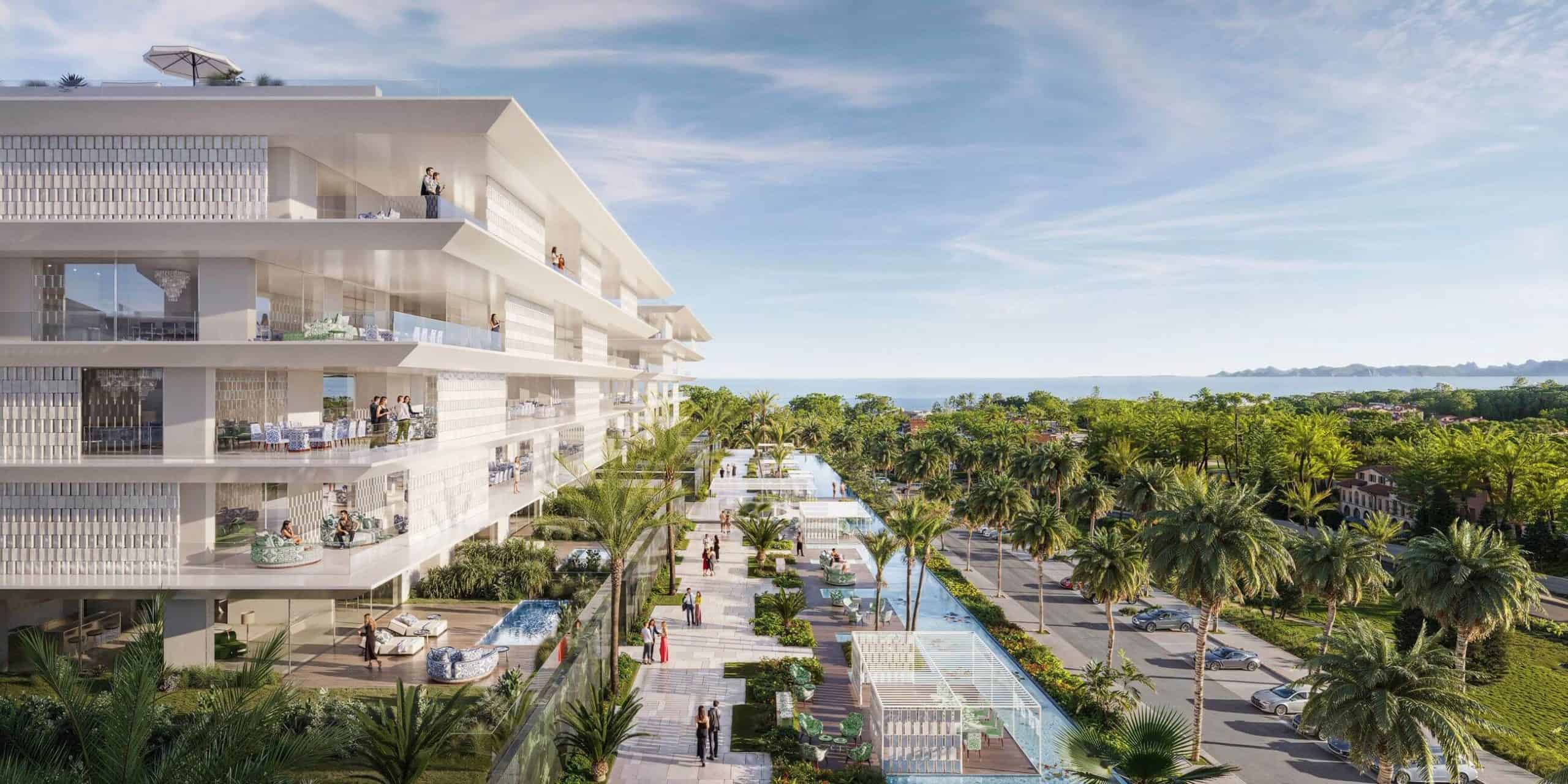
Apartments and penthouses exist throughout the mid-slope band in a variety of quality levels. The best — well-positioned penthouses in well-run complexes with open sea views — represent an accessible entry point into a Golden Mile address for buyers whose priority is location over scale. Branded residences associated with the hotel properties have added a new category at the very top of the apartment market.

Townhouses in established communities such as La Virginia and Las Lomas de Marbella Club offer a characterful and practical alternative to standalone villas — often beautifully maintained, with the security and convenience of a managed community at a more approachable price point.

06

Property Prices

From €800K

entry level (apartment)

€3M–€15M

mid-range (villa)

€30M+

top end (beachfront)

The Golden Mile commands the highest property prices in the Marbella municipality, and among the highest in Spain. Price per square metre in frontline beach positions regularly exceeds €15,000–€20,000 for new build or comprehensively renovated stock. For the rarest beachfront estates, there is effectively no ceiling — transactions above €30M have been recorded, and the most significant properties are priced by negotiation rather than market comparison.

Apartments in well-maintained mid-slope complexes begin from around €800,000 for older resale stock in good condition, rising to €2M–€5M for quality penthouses with open sea views. Hillside villas in Sierra Blanca start from approximately €3M for well-presented older properties and reach €15M or more for the finest contemporary builds with exceptional outlooks. Cascada de Camoján, where properties rarely come to market, operates at the very top of the hillside price range.

Plots are extremely scarce across the Golden Mile as a whole, and those that do appear — typically in the hillside urbanisations — command significant premiums. The combination of scarcity, international demand, and the irreplaceable nature of the finest positions here means the Golden Mile has historically shown strong price resilience through economic cycles, outperforming the wider Spanish market during downturns and accelerating ahead of it in periods of growth.

07

Rental Market

The Golden Mile rental market operates at a level of its own. In high season, well-presented villas with beachside positions or significant hillside views command weekly rental rates that are among the highest on the Costa del Sol — four and five-figure weekly rates are not unusual for the finest properties. The clientele includes European high-net-worth families, corporate groups, entertainment industry figures and those testing the area before committing to a purchase.

Demand for long-term rentals is also strong, particularly among buyers in the process of acquiring a property — transactions on the Golden Mile can take time due to the complexity of the properties and the negotiation involved, and prospective buyers frequently rent in the area while their purchase completes. Executives and senior international employees of companies with regional offices also represent a consistent long-term rental pool.

As across the Marbella municipality, the VFT licence requirement for short-term rentals applies and should be verified before any investment purchase intended for holiday letting. The density of five-star hotels on the Golden Mile also means that competition at the top end of the short-term rental market is more sophisticated here than in most other areas — presentation, management and pricing all need to be to the highest standard to compete effectively.

08

Investment

Investment on the Golden Mile

The Golden Mile represents the most fundamentally sound investment case on the Costa del Sol — not necessarily the highest-yielding, but the most resilient. Its appeal rests on scarcity that is structural rather than cyclical: there is a finite amount of beachfront and a finite number of positions in Sierra Blanca and Cascada de Camoján, and that supply will not increase. Demand, by contrast, has been consistently international and consistently active for seven decades.

Recent years have seen a significant broadening of the buyer profile, with Middle Eastern, American and globally mobile ultra-high-net-worth individuals joining the established European base. This internationalisation has added depth and liquidity to a market that was already strong. The arrival of branded residences — developments associated with five-star hotel operators and international luxury brands — has introduced a new category at the top of the market and further elevated the area's profile with buyers who purchase internationally.

For those considering new build on the Golden Mile, the pipeline of development is carefully constrained by planning regulations, which helps protect the values of existing stock. The most significant new projects on the hillside have pre-sold strongly, often before construction completion, reflecting the confidence of buyers in the long-term trajectory of the area.

09

Lifestyle & Character

Lifestyle on the Golden Mile

The Golden Mile has a character that is difficult to reduce to a single description — it is simultaneously private and sociable, understated and spectacular, rooted in tradition and continuously evolving. Its pace is unhurried. The boulevard promenade between the two hotels, lined with mature palms and running parallel to the sea, sets the tone: this is a place designed for living well rather than performing it.

Morning life here centres on the beach and the coastal path, which runs the full length of the corridor and connects seamlessly into the wider Marbella promenade network. By mid-morning, the terrace at Puente Romano or the Marbella Club garden bar tends to fill with residents — many of whom know each other from decades of shared summers. The social fabric is dense, international and surprisingly intimate given the scale of wealth concentrated here.

Evenings on the Golden Mile are distinctly different from those in Puerto Banús or the old town. The atmosphere is more contained, more private — dinner at one of the hotel restaurants, a cocktail on a private terrace, occasional large-format events in the hotel grounds. There is little of the animated street life of the marina; the Golden Mile does not perform for visitors. It sustains a way of life for those who live it.

A notable recent development has been the arrival of international luxury brands into the Golden Mile's retail and hospitality fabric. Dani García — the Michelin-starred chef who is arguably Spain's most prominent culinary figure — operates multiple restaurants here, anchoring a dining scene that now stands among the finest on the Mediterranean coast.

10

The Iconic Hotels

No account of the Golden Mile is complete without understanding the role its two flagship hotels play — not merely as accommodation, but as the social and cultural infrastructure around which much of the area's life is organised.

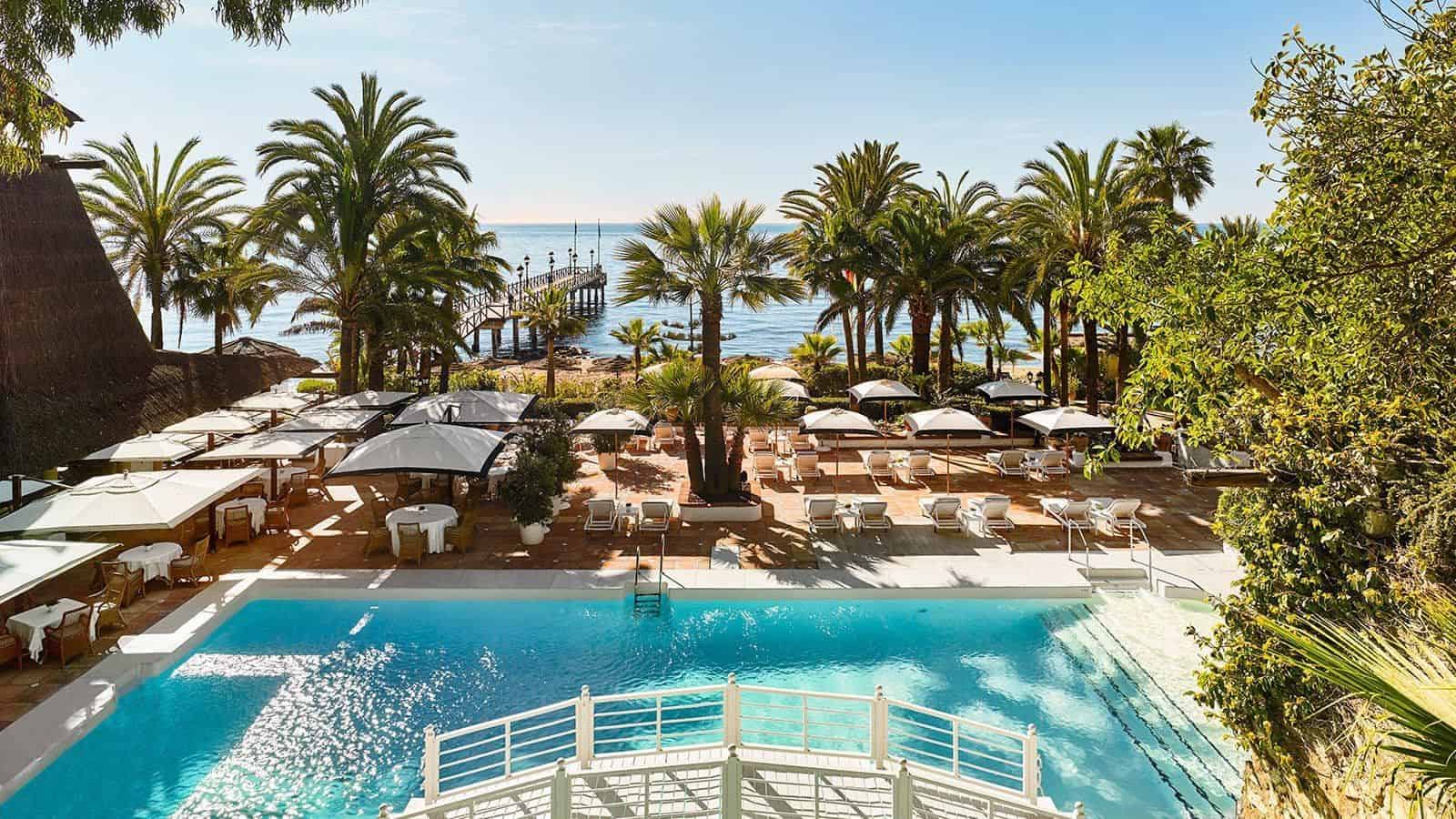
Marbella Club Hotel is where the story began. Founded in 1954 by Prince Alfonso von Hohenlohe-Langenburg on the Santa Margarita estate, it set the template for luxury hospitality in southern Europe: bungalow-style accommodation set in tropical gardens running down to a private beach, impeccable service, complete discretion, and an atmosphere of unhurried elegance that has never gone out of fashion. It is a five-star GL property and a member of The Leading Hotels of the World. Its beach club, restaurants and spa are open to non-residents and serve as genuine social hubs for the Golden Mile community.

Puente Romano Beach Resort opened in the 1970s on an adjacent stretch of the same coastline. Named for the Roman bridge that spans the Río Verde at its heart, it combines a five-star hotel with private villa residences and an extraordinary leisure offer: twelve restaurants and bars — including several of the Dani García group's flagship addresses — the most prestigious tennis facility on the coast, a world-class spa, and a beach club that is one of the most animated on the Golden Mile in the summer months. It is also a five-star GL property and Leading Hotels of the World member.

Both hotels have undergone significant investment and renovation in recent years and now operate at a standard that is competitive with the finest resort properties in Europe. Their presence defines the character of the Golden Mile as much as any private residence on the corridor.

11

Dining & Nightlife

The Golden Mile's dining scene is anchored by the Dani García group, which operates three celebrated restaurants at Puente Romano: Leña Marbella, focusing on fire-cooked meat and produce; Lobito de Mar, a seafood restaurant with a Cádiz-influenced menu; and BIBO Marbella, the group's flagship bistro concept. García holds three Michelin stars across his wider operation and is the most acclaimed Spanish chef currently working on the Costa del Sol. The concentration of his restaurants at a single address on the Golden Mile makes Puente Romano one of the more compelling dining destinations in southern Spain.

Beyond the Dani García group, both hotels offer their own restaurant programmes that sustain quality across multiple formats — from beach lunches to formal dinners. The Marbella Club's restaurant, set in its garden with sea views, is one of the more romantic tables on the coast. Several independent restaurants have also established themselves along the Golden Mile corridor over the past decade, offering Japanese, Italian and contemporary European cuisine to a resident and hotel-guest clientele.

Nightlife on the Golden Mile is sophisticated rather than animated. The hotel bars and late-night terrace events during the summer season provide the principal social context — large-format live music events at Puente Romano, private parties, and the kind of unplanned late evenings that happen when the right combination of people are staying in the right hotel. The more energetic nightlife of Puerto Banús is five minutes away and easily reached.

12

Beaches & Beach Clubs

Beaches on the Golden Mile

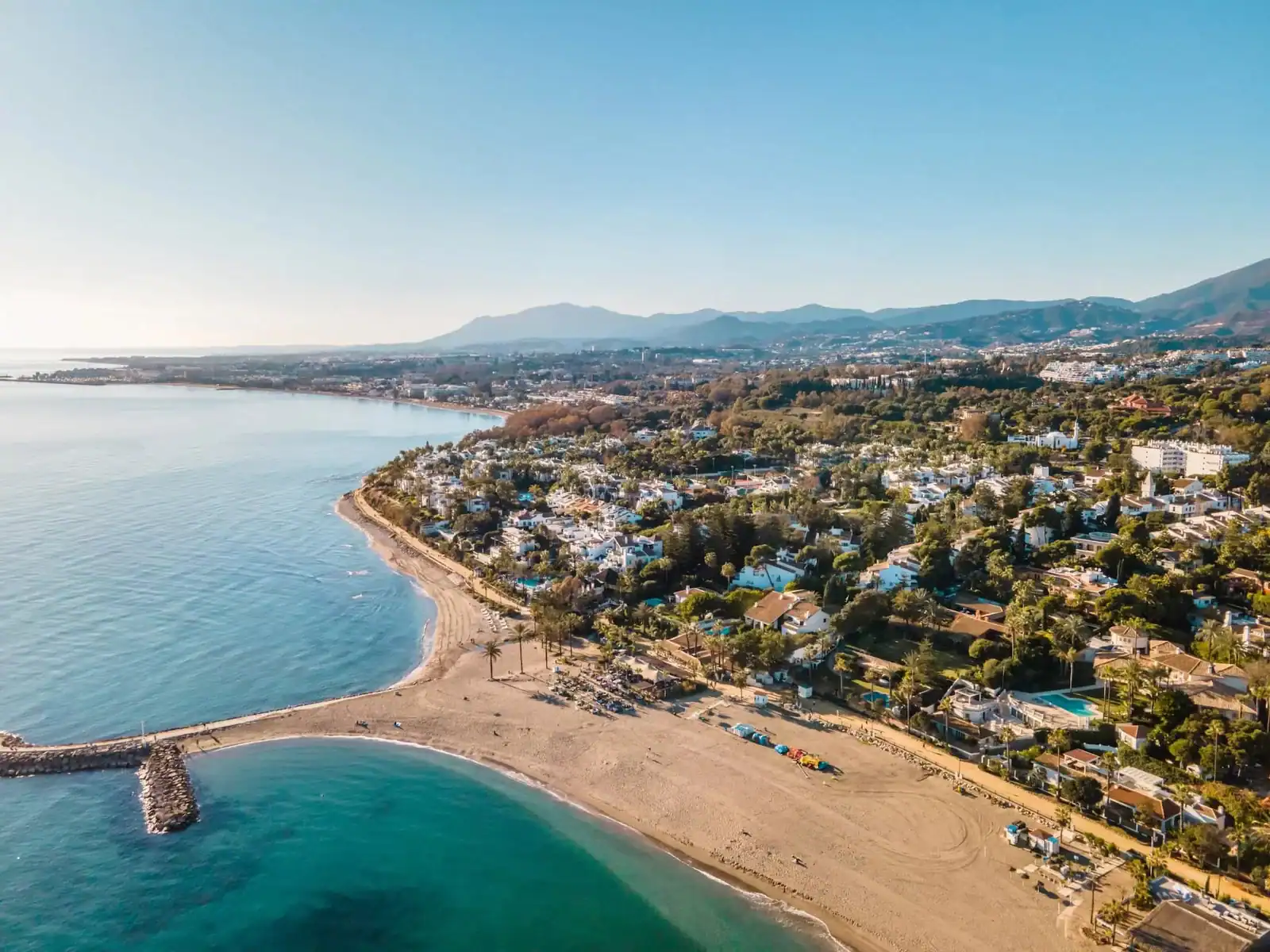
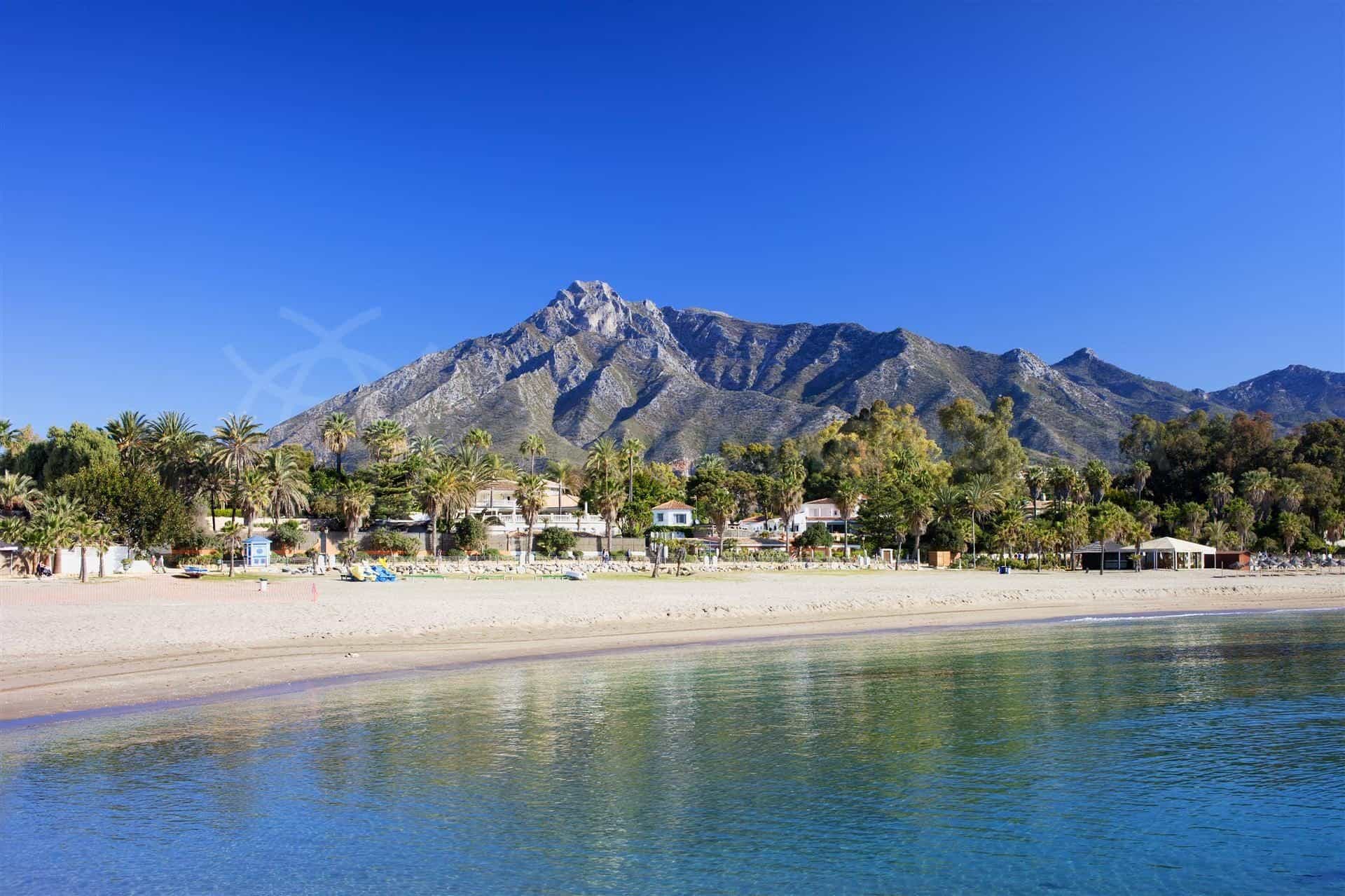
The Golden Mile's Mediterranean frontage is one of its defining assets. The beaches here — Playa Nagüeles and Playa Casablanca being the most accessible public stretches — are wide, well-maintained and consistently rated Blue Flag. The water quality is excellent and the orientation — facing directly south — means they receive sun from early morning to sunset throughout the season.

Much of the beachfront along the Golden Mile is organised around private hotel beach clubs or the gardens of beachfront properties, which means the public beaches are proportionally less crowded than those in the town centre. This relative calm is one of the qualities residents value most — particularly in July and August when the rest of the Marbella coast is at its busiest.

The Marbella Club Beach Club and the Puente Romano Beach Club are the two principal private beach operations and are among the best-run beach experiences on the coast. Both offer high-quality food and drink service, sun bed and cabana rental, and the particular atmosphere that comes from a well-managed, beautifully positioned seafront venue with a clientele that expects — and receives — complete attentiveness.

13

Sports & Leisure

Tennis
The Puente Romano Tennis Club is the most prestigious tennis facility on the Costa del Sol and one of the most celebrated in Spain. It has historically hosted ATP Tour events and offers twelve courts across multiple surfaces — clay, hard and padel — alongside a professional coaching programme. The club is open to hotel guests and residents and functions as one of the more genuinely active social spaces on the Golden Mile outside of the restaurants.

Golf
The Golden Mile itself has no golf courses, but the courses of Nueva Andalucía — Las Brisas, Aloha, Los Naranjos and others — are five to ten minutes away by car. The golf clubs of the valley are used extensively by Golden Mile residents, and many of the area's buyers are golfers who choose the Golden Mile for its lifestyle while playing across the municipal boundary into the Golf Valley.

Water Sports & Marina
Puerto Banús, five minutes to the west, provides the full range of water sports — sailing, jet skiing, deep-sea fishing, paddleboarding — along with yacht charter and berthing for private vessels. The proximity to one of the Mediterranean's best-equipped marinas is a significant asset for Golden Mile residents who use the sea actively.

Wellness & Spa
Both the Marbella Club and Puente Romano operate world-class spa facilities — among the finest in southern Spain — that are accessible to residents as well as hotel guests. These, combined with the growing number of independent wellness studios that have opened in the area over the past decade, mean that the Golden Mile has one of the most complete wellness offers of any residential area on the coast.

14

Landmarks

The Ralli Museum stands adjacent to the Coral Beach Hotel at the eastern end of the Golden Mile and contains one of the most significant collections of Latin American art in Europe, alongside a permanent display of European masters including Salvador Dalí, Joan Miró, Francis Bacon, Man Ray and Marc Chagall. Entry is free of charge — an quietly extraordinary fact given the quality of the collection.

The King Abdul Aziz Mosque, designed by Spanish architect Juan Mora Urbano, is located on the N-340 at the heart of the Golden Mile. Commissioned by Prince Salman in honour of the late King Fahad of Saudi Arabia — whose 20-hectare summer palace sits nearby — it is one of the most architecturally distinctive buildings on the entire Costa del Sol and a visible reminder of the Golden Mile's long association with the highest levels of international society.

The Roman Villa at Río Verde, located just off the N-340 near the Río Verde urbanisation, is one of the more remarkable and undervisited archaeological sites in the Marbella area. The remains of a wealthy Roman residence include beautifully preserved mosaic floors with culinary and domestic themes — an indication of the high status of whoever commissioned them. The site is freely accessible and placed in careful context by its on-site interpretation.

The Puente Romano itself — the ancient Roman bridge that gives the hotel its name — spans the Río Verde within the hotel grounds and remains structurally intact, a quiet piece of genuine antiquity within one of the most modern luxury environments on the coast.

15

Schools & Education

The Golden Mile does not contain schools within its immediate boundaries, but several of the best international schools in the Marbella area are within ten to fifteen minutes by car — a consideration that weighs significantly in the purchasing decisions of families choosing between the Golden Mile and areas further east.

Swans International School in Sierra Blanca is perhaps the most immediately proximate, a British curriculum school with a strong academic reputation set in the hillside immediately above the Golden Mile. Aloha College in Nueva Andalucía — offering the International Baccalaureate to a highly international student body — is approximately ten minutes west. The American College of Marbella and Laude San Pedro International College are also within comfortable reach. For the most extensive range of international schooling, Marbella East is slightly further but accessible within the same school run timeframe.

Families who choose the Golden Mile for a primary or year-round residence — rather than purely for holidays — typically do so having already identified and secured a school place, with Swans or Aloha the most common choices. The school run from the Golden Mile to either is straightforward and a well-established part of daily life for resident families.

16

Healthcare

Healthcare provision for Golden Mile residents draws on the same strong network as the wider Marbella area, with the additional benefit of proximity to the private medical facilities clustered around the town centre. Hospital Ochoa — Marbella's main private hospital — is under ten minutes to the east. Hospital Costa del Sol, the public hospital on the eastern approach to town, is accessible in a similar timeframe.

Several private GP practices, specialist clinics, physiotherapy and dental services operate along the Golden Mile corridor and in the immediately adjacent commercial areas. The medical service offer available within a few kilometres of the Golden Mile is comprehensive by any European standard, and residents of this area typically have private medical insurance that provides fast access to specialist consultations and procedures without waiting time.

Both the Marbella Club and Puente Romano can facilitate access to concierge medical services for their guests and, informally, for the wider resident community — a discreet resource that their long-standing relationships with local specialists make possible.

17

Who Lives Here

The Golden Mile has one of the most internationally distinguished resident profiles of any address in Europe. The historical community — established British, German, Scandinavian and Spanish families who built or bought here in the 1960s through 1980s — forms a foundation of long tenure: many properties have remained in the same families across multiple generations, and it is not unusual for residents to have been summering here for thirty or forty years.

Layered on top of that foundation are newer arrivals: Middle Eastern buyers drawn initially by the long association between the Golden Mile and Gulf royalty, and more recently a significant wave of American and globally mobile buyers for whom this address has entered the consideration set as the European luxury market has internationalised. Celebrities and high-profile public figures from entertainment, sport and business have maintained homes here for decades — the discretion of the area's security and social culture makes it a natural choice for those who need genuine privacy alongside beauty.

The permanent resident community, as distinct from seasonal visitors, has grown considerably over the past five years, reflecting the broader shift toward Marbella as a year-round base rather than a holiday destination. The Golden Mile's own amenity base — the hotels, the restaurants, the beach clubs and the increasingly complete wellness offer — now sustains a quality of daily life in the off-season that was not available a decade ago.

18

Family Life

Family life on the Golden Mile

The Golden Mile works for families in a way that is sometimes underestimated by buyers who associate it primarily with adult luxury. The security of the gated communities — particularly Sierra Blanca — gives children an unusual degree of freedom within a safe environment. The beach is accessible without a car. The hotels' pools, beaches and children's programming provide a self-contained summer infrastructure that removes much of the logistical pressure of family holiday life.

For families who live here year-round rather than seasonally, the school run to Swans or Aloha is the organising rhythm of weekday life, and the social connections formed through those schools create a community layer that exists independently of the hotels and restaurants. The children of Golden Mile families tend to have an unusually international peer group from a young age — a quality that residents who have raised children here consistently mention as one of the more lasting benefits of the choice they made.

Younger children are particularly well served by the combination of safe outdoor space — the gardens of gated communities, the beach, the hotel grounds — and the relative calm of the area compared to town centre Marbella or Puerto Banús. As children grow older, the proximity of both Puerto Banús and Marbella town centre ensures that the social world expands naturally without ever requiring a significant journey.

19

Buying on the Golden Mile

Buying on the Golden Mile requires patience, relationships and a thorough understanding of a market that operates differently from most. The finest properties — particularly beachfront estates and the best-positioned hillside villas — rarely appear on open portals. They change hands through introductions, through agent relationships that have been cultivated over years, and through the kind of off-market conversations that only happen when the right people know what you are looking for. Being visible and credible in this market is as important as having the financial capacity to transact.

The legal and technical complexity of Golden Mile properties is often significant. Many beachfront properties have specific coastal law implications that require careful legal navigation — the Ley de Costas governs the use and ownership of land within defined distances of the waterline, and its application varies depending on the property's history and classification. Older properties in particular may carry planning documentation that requires specialist review. Independent legal advice from a solicitor with specific experience in the Marbella coastal market is essential.

Community infrastructure on the Golden Mile is generally excellent — the established urbanisations are well run, well funded and benefit from residents' associations that take the quality of their environments seriously. Community fees in the premium gated communities reflect the level of service provided and should be understood in full before purchase. In Sierra Blanca in particular, the 24-hour security, immaculate communal maintenance and active community management represent genuine value rather than overhead.

Purchase costs follow the standard Spanish framework: 7% transfer tax on resale, 10% VAT on new build, plus notary, registry and legal fees totalling approximately 10–12% of the purchase price. Given the values involved on the Golden Mile, this component of the transaction is material and should be factored into financial planning from the outset. We are happy to guide you through every stage of the process.

Current properties available on the Golden Mile:

Showing 12 properties

Verdin Property

Interested in the Golden Mile? Let's talk.

Get in touch