Area Guide

Sotogrande

Sotogrande — southern Spain

Sotogrande is one of Europe's most prestigious privately developed residential communities — a 2,500-hectare estate on the southern tip of Spain, built around world-class golf, polo and a marina, and defined by an unhurried, understated luxury that sets it apart from anything else on this coast. Founded in 1962, it has attracted discerning buyers from across the world for over six decades. It is not Marbella. It is its own thing entirely — and for those who understand the difference, there is nowhere quite like it.

01

Overview

Overview of Sotogrande

Sotogrande is a singular address — the only place on the Iberian Peninsula that has, over six decades, cultivated a reputation for polo, golf and discreet luxury on a scale and with a consistency that has no parallel. It is Andalucía's largest privately owned residential development, spanning 2,500 hectares on the southern coast of Spain where the provinces of Cádiz and Málaga meet, just kilometres from Gibraltar and with views across the Strait to the mountains of Morocco.

The concept from the beginning was not a beach resort or a golf community but something more complete: a self-contained world of leisure and residence, planned from scratch by its founders to accommodate the most demanding international buyers within an environment of natural beauty, exceptional sporting infrastructure and a social culture built around shared values rather than shared postcode. That founding vision has proven durable in ways that the 1962 development team could not have fully anticipated.

What Sotogrande offers that no other address in southern Spain can match is a particular quality of life — private, sporting, family-oriented and unhurried — that exists independently of the wider Costa del Sol luxury market. Buyers who choose Sotogrande are not choosing a version of Marbella. They are choosing something deliberately different: more space, less noise, deeper roots, a social calendar built around polo seasons and golf clubs rather than marina crowds and beach clubs.

02

Location & Access

20 min

to Gibraltar Airport

50 min

to Málaga Airport

45 min

to Marbella

2,500 ha

total estate

Sotogrande location and access

Sotogrande is located at the western end of the Costa del Sol, within the municipality of San Roque in the province of Cádiz. It sits on the coast approximately 44 kilometres west of Marbella, at the point where the coast begins its turn toward the Strait of Gibraltar. The AP-7 motorway passes immediately to the north of the estate and provides direct access to Marbella in around 45 minutes and to Algeciras and the ferry connections to Morocco in under 20 minutes.

The proximity to Gibraltar is one of Sotogrande's defining geographical advantages. Gibraltar Airport is approximately 20–25 minutes by road — closer than most airports are to major European cities — and provides a gateway particularly valued by British residents for whom direct connections to the UK are a practical priority. Málaga Airport, around 50 minutes to the east via the AP-7, handles a larger volume of international routes and is the more versatile option for buyers travelling from a wider range of origins.

Within the estate, the road network is organised alphabetically by zone — Zone A for the oldest and most prestigious Costa sectors, through to the newer areas of La Reserva further west. The internal distances are significant: Sotogrande is large enough that residents routinely drive between zones, and a car is essential for all practical purposes. The marina is the nearest thing to a walkable hub, with a compact concentration of restaurants, shops and activity around the port itself.

03

History

History of Sotogrande

The founding of Sotogrande is a story that begins with a Swissair frequent-flier ticket and ends with one of the most consequential acts of place-making on the European Mediterranean coast. In the early 1960s, Freddy Melian — an executive working for the Philippines-based Ayala Corporation, a conglomerate with extensive experience in developing high-end residential communities — was dispatched on a motorcycle journey along the entire Spanish Mediterranean coast with a specific brief: to identify the ideal location for an exclusive resort. The criteria were precise: a stretch of coastline at least a kilometre long, reliable water sources, and convenient proximity to an international airport.

Melian found what he was looking for at Finca Paniagua in San Roque, Cádiz — a large agricultural estate on the coastal plain near Gibraltar. He returned to Manila with his recommendation, and Joseph McMicking, President of the Ayala Corporation, together with his wife Mercedes Zobel de Ayala, committed to the project. The Spanish architect Luis Gutiérrez Soto was engaged to design the development, and by 1962 the first villas were under construction.

The first golf course — the Real Club de Golf Sotogrande, designed by Robert Trent Jones Sr. — opened in 1964 and immediately established the sporting credentials that would define the community. Polo followed, with the Santa Maria Polo Club eventually growing into one of the most prestigious polo venues in Europe. The marina was developed through the 1970s and 1980s, creating the social hub that the residential community needed.

Over the following decades, Sotogrande attracted a particular kind of buyer — understated, internationally mobile, preferring space and sport over glamour and visibility — and in doing so created a social culture that has proven remarkably self-reinforcing. Families who discovered Sotogrande in the 1970s brought their children; those children brought theirs. The generational continuity of many Sotogrande families is one of its most distinctive and least-discussed qualities.

04

Sotogrande Today

Sotogrande today is in the midst of a carefully managed evolution. The original estate — now well into its seventh decade — is being supplemented and upgraded by significant investment, most visibly in the La Reserva district in the western part of the estate. La Reserva Club, with its Tom Fazio-designed golf course, the extraordinary man-made Beach at La Reserva, the Racquet Centre and the Sotogrande International School's expanding campus, represents a new chapter of development that is raising the general standard of the estate while preserving the character that made it distinctive.

The permanent resident population sits at around 6,000, but the true community is seasonal: Sotogrande fills substantially in June, July and August for the polo season, and again for the golf season in spring and autumn. The in-between months are quieter, with a smaller permanent community that tends to be deeply embedded in the local fabric — polo club members, golf enthusiasts, Sotogrande International School families, and an increasing number of remote workers who have recognised that Sotogrande's combination of infrastructure and tranquillity is well suited to year-round living.

The estate is currently undergoing an ownership and governance evolution as well, with infrastructure investment and community management improvements that reflect the ambitions of a new generation of stakeholders committed to positioning Sotogrande alongside the finest residential developments in Europe.

05

Key Areas

Key areas of Sotogrande

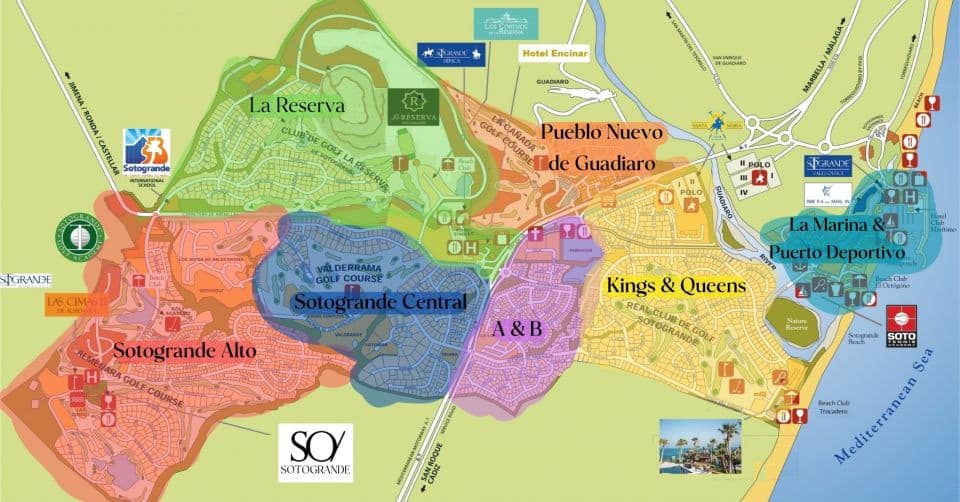
Sotogrande is large enough to contain meaningfully different residential environments. Understanding the distinctions between its main zones is essential for any buyer approaching this market.

Sotogrande Costa — Kings & Queens
The original and most prestigious residential area, laid out in the alphabetical zone system along the coast. The Kings and Queens roads — named for European royalty who were among the earliest residents — are lined with large, established villas set on generous plots beneath mature pine and cork oak trees. This is the heartland of Sotogrande's founding identity: quiet, private, deeply rooted, and among the most desirable addresses on the estate. The Real Club de Golf Sotogrande is here.

Sotogrande Alto
The elevated interior section of the estate, rising into the foothills above the coast. Alto offers the estate's most dramatic views — across the Mediterranean, toward Gibraltar and Morocco — and contains some of its most architecturally significant villas on larger, more isolated plots. Valderrama, the Ryder Cup course, is in Sotogrande Alto. The character is quieter and more spacious than the Costa zones, and the buyer profile tends toward those for whom privacy and landscape are the primary priorities.

Marina Sotogrande
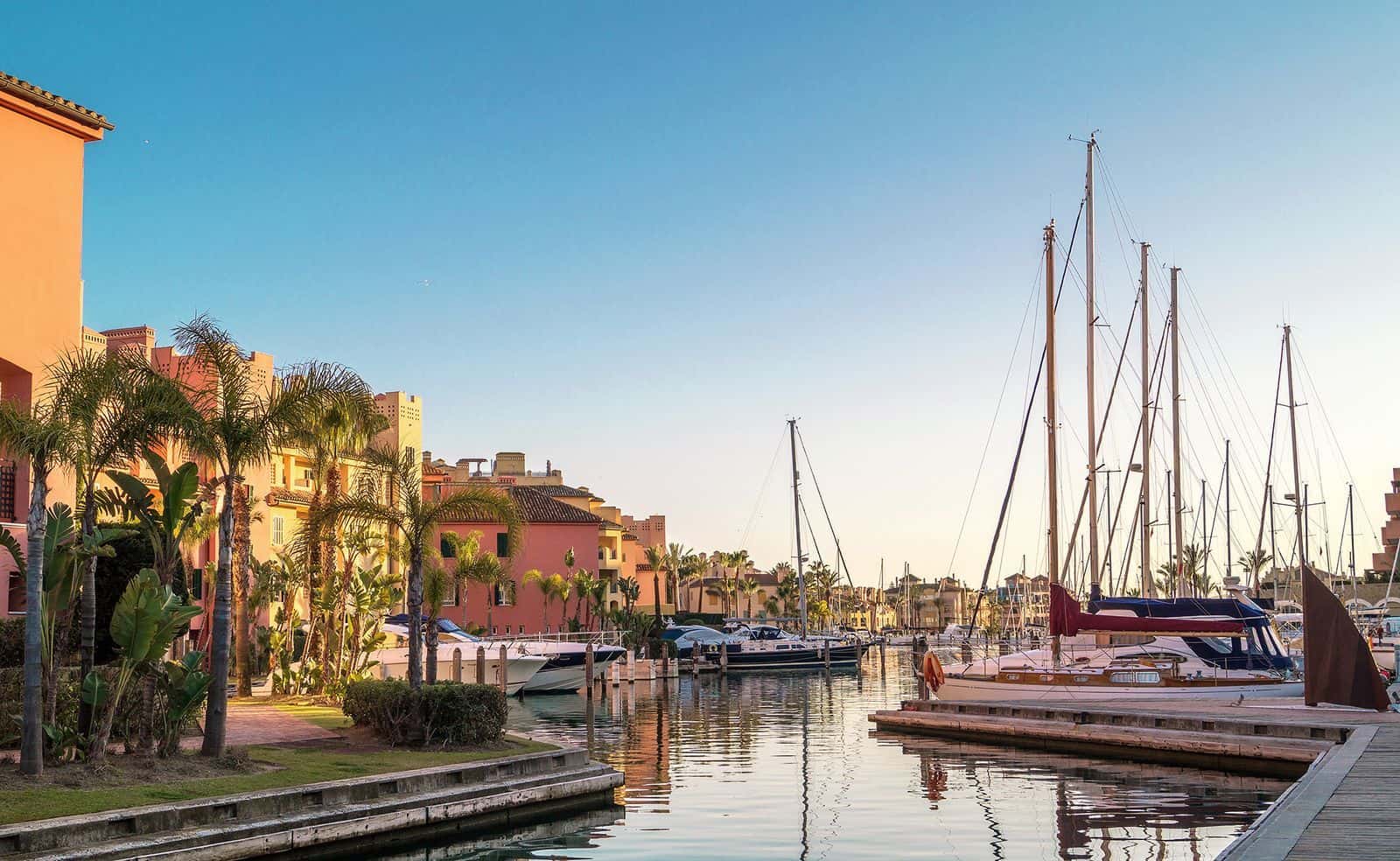
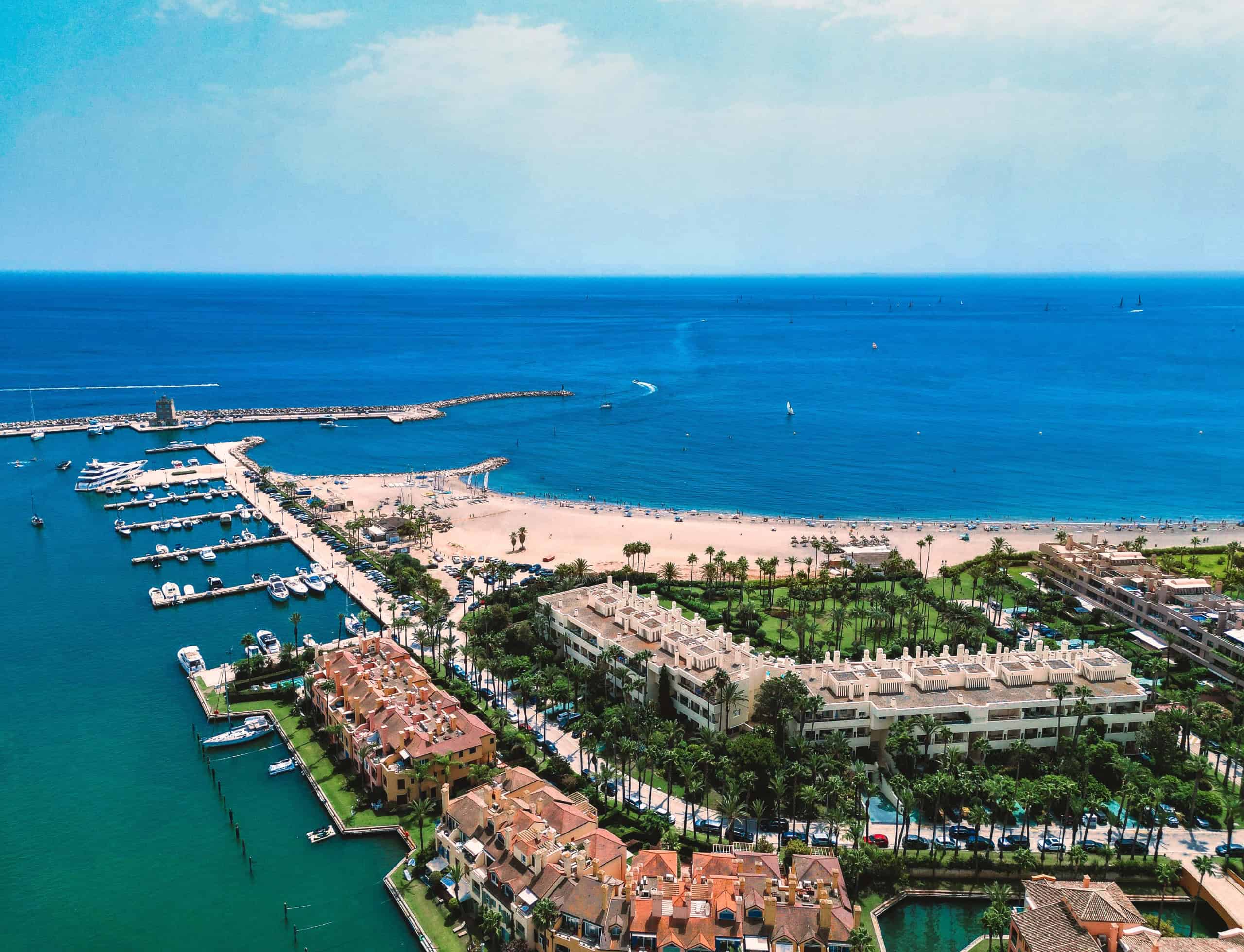
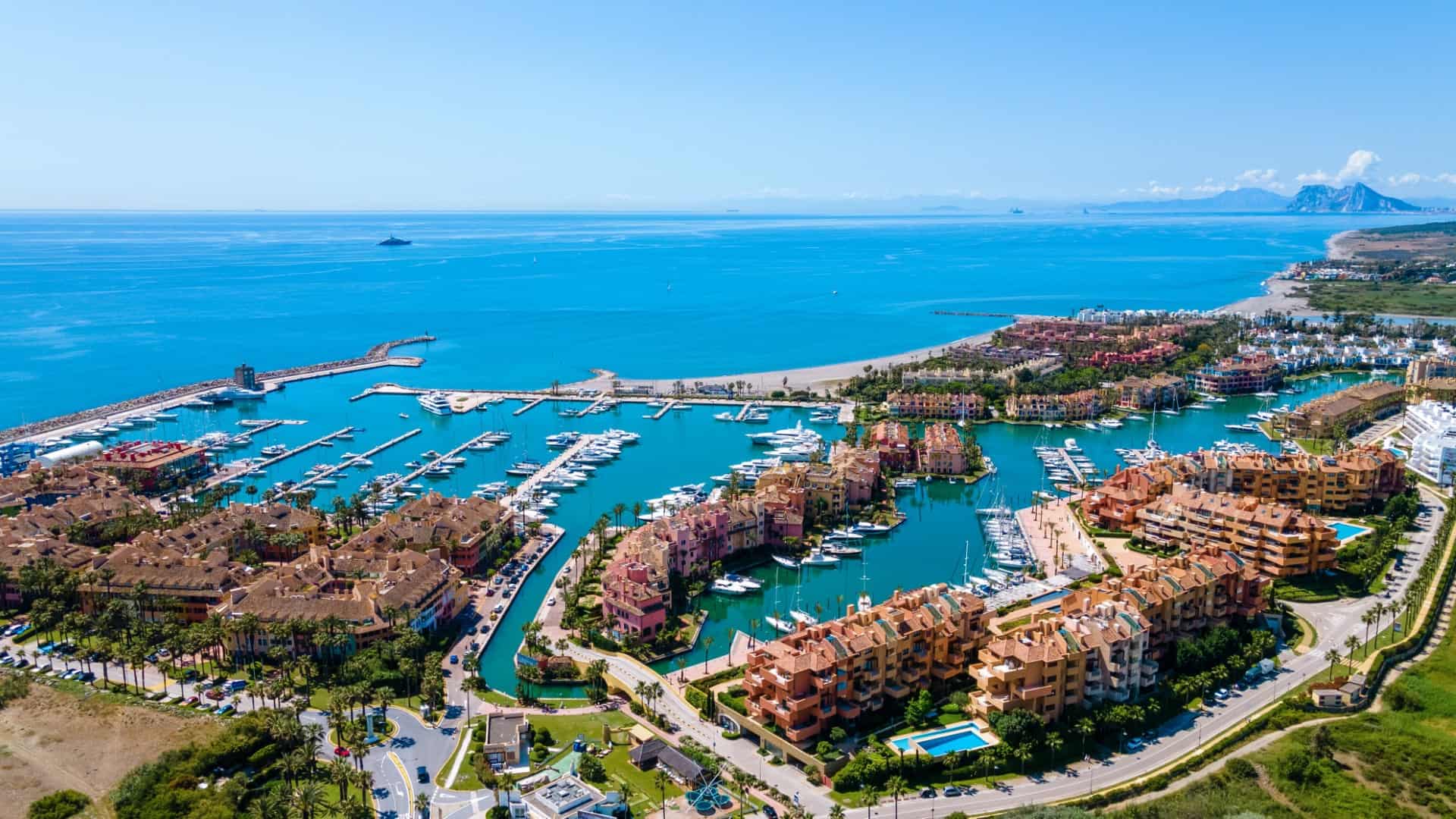
The social hub of the estate — a compact, animated zone around the marina port with apartments, restaurants, bars, boutiques and a Sunday market that draws the whole community. The marina is where the estate's social life concentrates, where the Saturday morning coffee crowd gathers, and where the polo and golf seasons spill over into evening life. Property here is predominantly apartments and is the most affordable entry point into the Sotogrande address.

La Reserva
The newest and most actively developed zone, in the western part of the estate. Home to La Reserva Club, the Tom Fazio-designed golf course, the famous Beach at La Reserva, the Racquet Centre and the Sotogrande International School. La Reserva represents the current growth edge of the estate — contemporary architecture, new-build villas and apartment developments, world-class leisure infrastructure, and a younger buyer demographic than the more established Costa and Alto zones.

Torreguadiaro
The small village immediately adjacent to the Sotogrande estate, with a local beach, restaurants, a weekly market and an authentic Spanish character that contrasts pleasantly with the manicured privacy of the estate itself. Many Sotogrande residents use Torreguadiaro for daily errands, local dining and a dose of genuine Andalucian village life.

06

Property Types

Sotogrande's property stock reflects the breadth and age of the estate — from substantial 1960s and 1970s villas in the original Costa zones to entirely contemporary new-build developments in La Reserva, with every decade of residential construction represented in between. The range of property types available, and the price points they span, is wider than most comparable luxury addresses in southern Spain.

Detached villas are the defining typology of the estate, particularly in Sotogrande Costa and Sotogrande Alto. The original villas — built in the 1960s through 1980s on generous plots with mature gardens — have a particular architectural character that is distinctly Sotogrande: clean lines, good proportions, quality materials, an easy relationship between indoor and outdoor living. Many have been significantly renovated in recent years; others retain their original character and represent renovation opportunities for buyers who understand the value of plot size and position over immediate turn-key condition. Contemporary new-build villas in La Reserva and Alto represent the current high end of the market in terms of specification.

Apartments and townhouses are concentrated around the marina and in the newer La Reserva developments. Marina apartments offer the most accessible entry point into Sotogrande ownership and enjoy proximity to the estate's social hub. La Reserva townhouses and apartments in contemporary gated complexes appeal to buyers who want the Sotogrande lifestyle and address with lower maintenance obligations than a standalone villa.

Plots remain available in various zones — including La Reserva, Sotogrande Alto and some of the newer development areas — making Sotogrande one of the few established luxury addresses in southern Spain where building a custom home is still a realistic and relatively well-supported option. Plot sizes range considerably, from modest marina-adjacent positions to significant landholdings in the upper Alto zones.

07

Property Prices

From €300K

entry level (apartment)

€1M–€5M

mid-range (villa)

€15M+

top end

Sotogrande has historically offered significantly better value per square metre than comparable Marbella addresses — a fact that has been a consistent draw for buyers who understand the quality of what they are buying but are resistant to the Golden Mile price premium. That value gap has narrowed in recent years as Sotogrande's profile has risen and international demand has grown, but it remains a meaningful consideration.

Marina apartments begin from around €300,000 for older resale stock and rise to €700,000–€1.2M for well-positioned or newly renovated units. Townhouses in La Reserva and established zones typically range from €500,000 to €1.5M. Detached villas span the widest range: older properties in the Costa zones in need of modernisation can be found from around €800,000–€1.5M, well-presented mid-range villas sit between €2M and €5M, and the finest contemporary builds in La Reserva or the most prestigious Kings and Queens positions — particularly those with Valderrama frontage or significant golf views — command €8M–€15M or more.

Plots in La Reserva range broadly from €300,000 to €1.5M depending on size and position. In Sotogrande Alto, larger or more elevated plots with exceptional views can reach significantly higher. The availability of plots distinguishes Sotogrande from most other premium addresses in southern Spain and is a meaningful part of the market's appeal for buyers who want to commission a custom home.

08

Rental Market

The Sotogrande rental market is distinctly seasonal, more so than the Marbella market. The polo season — running through July and August — generates intense short-term demand, with polo players, their entourages and families renting villas, apartments and houses across the estate for weeks at a time. During the height of the polo season, well-presented villas anywhere on the estate can command premium weekly rates, and properties close to the polo fields or with easy access to the Santa Maria Polo Club are particularly sought after.

The golf season extends the rental window through spring and autumn — March to June and September to November — when international golfers visiting Valderrama, La Reserva and the other courses fill villa and apartment rentals across the estate. The combination of polo and golf seasons means that a well-managed Sotogrande property can generate meaningful short-term rental income across a six-to-seven month window each year.

Long-term rental demand is more limited than in the Marbella area but is sustained by Sotogrande International School families — both those in the process of purchasing and those who prefer the flexibility of renting — and by corporate tenants associated with the Gibraltar financial and legal sector. Monthly rents for quality villas range broadly from €3,000 to €10,000 depending on size, position and condition, with the finest properties commanding more during peak season. Standard VFT licensing conditions apply for short-term rentals within the Cádiz provincial framework.

09

Investment

Sotogrande's investment case has strengthened considerably over the past five years as the estate's international profile has risen and the value gap with Marbella has narrowed. Buyers who acquired in the Costa and Kings zones in the decade after the 2008 financial crisis at distressed or near-distressed prices have seen significant appreciation; those who bought in La Reserva's early development phases have similarly benefited from the uplift generated by La Reserva Club's completion and the opening of the Beach.

The ongoing investment in La Reserva — the Tom Fazio course, the Beach, the Racquet Centre, the school expansion — is the primary near-term value driver for the estate. Properties in La Reserva and adjacent zones that are well-positioned relative to these amenities have outperformed the wider estate in recent years and are expected to continue doing so as the development programme reaches completion. For buyers considering new-build in La Reserva, the pipeline of planned amenity development is a relevant factor in their purchase calculus.

The Kings and Queens zones of Sotogrande Costa represent a different investment proposition: scarcity, heritage, and the permanence of a position in the estate's most storied address. Properties here turn over slowly and attract buyers who are as interested in the social and historical associations of the address as in the financial return. For long-term holding in the most established parts of the estate, the value of an original Sotogrande Costa villa on a mature plot is extremely well supported.

10

Lifestyle & Character

Lifestyle in Sotogrande

The Sotogrande lifestyle is built around sport, space and the company of people who share those priorities. It is a community where the social calendar is organised around the polo season and the golf calendar rather than around restaurant openings and beach club events, and where the absence of the kind of animated nightlife that defines Puerto Banús or the Marbella marina is considered a feature rather than a deficiency.

Summer life in Sotogrande is intense and sociable in a way that is specific to the estate. The polo season brings an influx of players, trainers, owners and spectators from across the world, and the social events that surround the tournaments — at the Santa Maria Polo Club, at the marina restaurants, at private parties across the estate — create an atmosphere unlike anything else in southern Spain. For those embedded in the polo world, this is the gravitational centre of their summer; for everyone else, it is one of the most extraordinary events to experience from the proximity of a private residence.

Outside of peak season, Sotogrande settles into a pace that its permanent residents describe as one of the area's greatest assets. The estate's vast scale — 2,500 hectares — means that even at its busiest it never feels crowded, and in the quieter months the combination of beautiful landscape, excellent golf, clean beaches and a manageable community of known faces creates a quality of daily life that is genuinely difficult to replicate anywhere on the Costa del Sol.

The character of the community is defined by a particular social self-confidence that comes from six decades of accumulated identity: Sotogrande residents tend to know exactly why they chose this place and to be entirely comfortable with the fact that many people outside the estate do not fully understand it. That self-sufficiency is, in its own way, part of the appeal.

11

Golf

Golf in Sotogrande

Sotogrande is home to some of the most celebrated golf courses in Europe, and golf is woven into the estate's identity as fundamentally as polo. The combination of climate, course quality and the social culture around the clubs makes this one of the premier golfing destinations in the world — a fact recognised when Valderrama hosted the 1997 Ryder Cup, one of the most significant events in European golf history.

Real Club Valderrama is consistently ranked among the top five courses in continental Europe and is widely considered the finest on the Iberian Peninsula. Designed by Robert Trent Jones Sr. and opened in 1975, it is a par-71 course of extraordinary difficulty and beauty, known for its cork oak-lined fairways and the demanding approach to the 17th hole. Club membership is by invitation and is among the most coveted in European golf. Hosting the 1997 Ryder Cup — the first on continental European soil — placed Valderrama on the world stage in a way that no other Spanish course has matched.

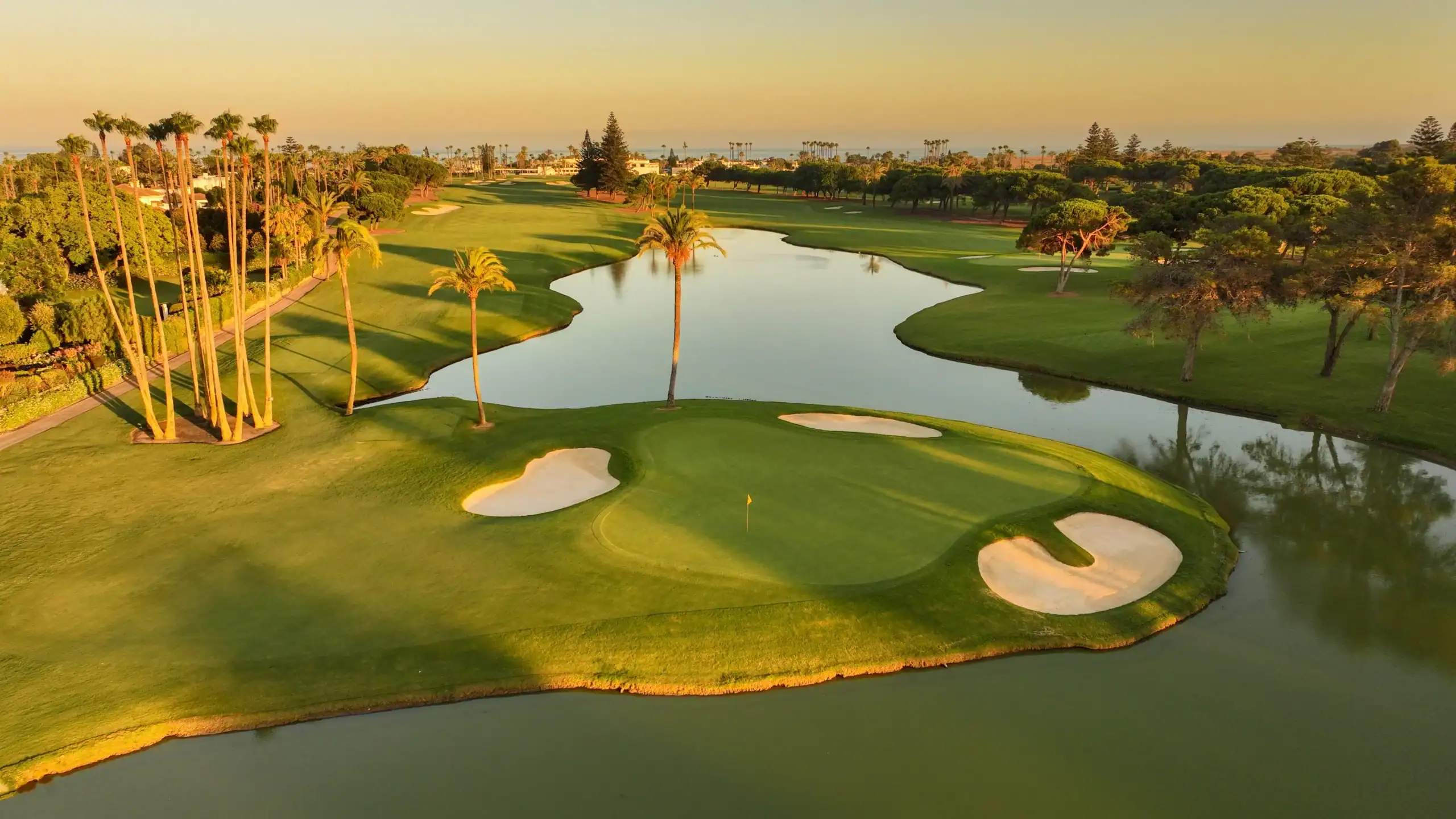
Real Club de Golf Sotogrande, also designed by Robert Trent Jones Sr. and opened in 1964, was the first course on the estate and the originating point of Sotogrande's sporting identity. A par-72 championship course of considerable quality, it occupies a beautiful coastal position and remains one of the most elegantly designed courses in the south of Spain.

La Reserva Club Golf, designed by Tom Fazio and part of the La Reserva development, represents the estate's most recent addition to the golfing offer. A par-72 course that makes exceptional use of the elevated terrain of the western estate, it has been praised for the quality of its design and its integration with the surrounding landscape. It is accessible to La Reserva Club members and their guests.

Almenara Golf, a 27-hole complex on the estate operated by the Hotel Almenara, provides a more accessible playing option for guests and residents who are not members of the private clubs. The three 9-hole courses can be combined in various configurations and offer a range of challenges across varied terrain.

12

Polo

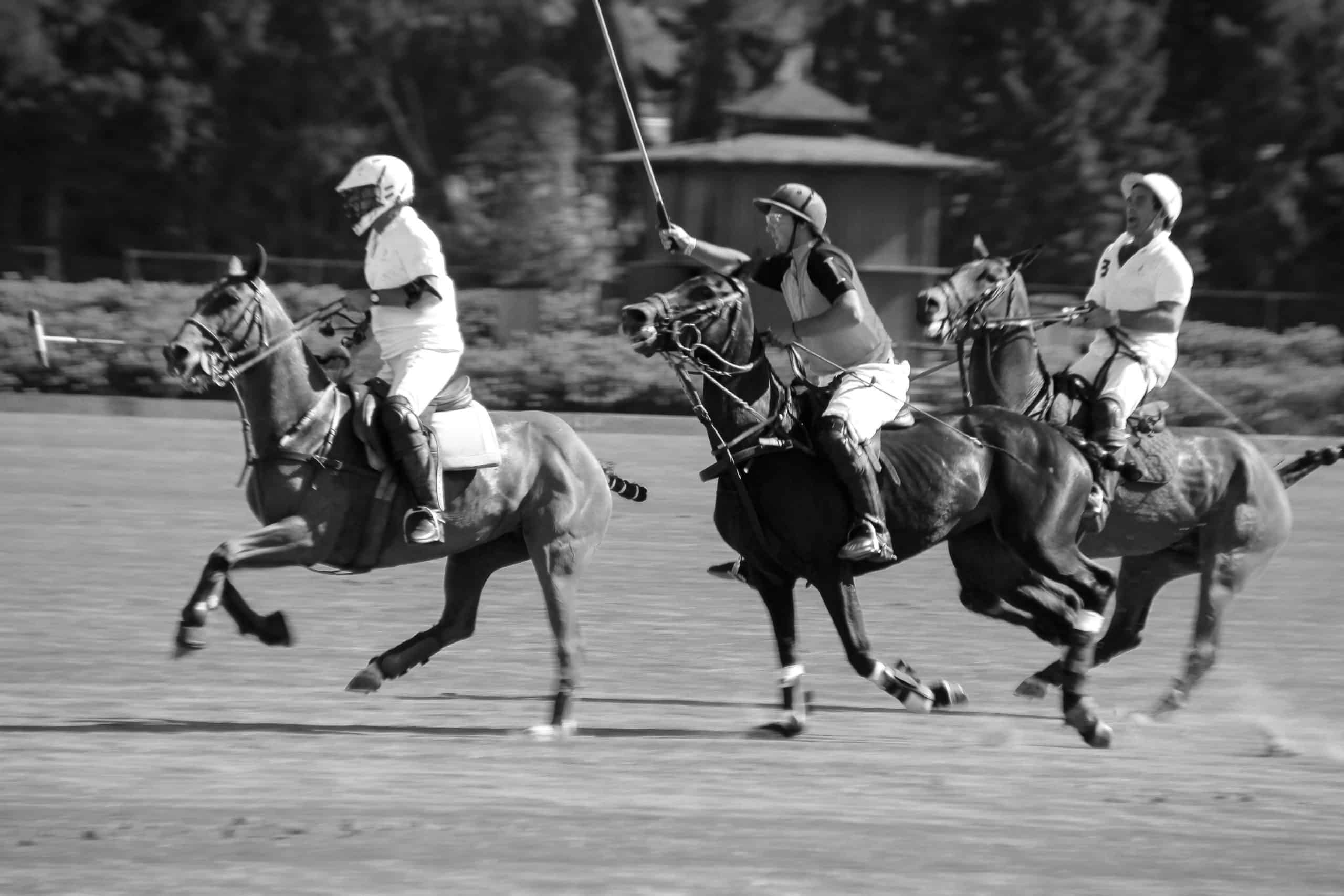
Polo is the heartbeat of Sotogrande's summer. The Santa Maria Polo Club — founded in 1965 and consistently ranked among the top polo venues in the world — hosts the prestigious Sotogrande International Polo Tournament each August, which attracts teams and players from Argentina, the United Kingdom, continental Europe, India and the wider international polo circuit. The tournament draws audiences from across the world and is one of the most anticipated events on the European equestrian calendar.

The club operates eleven polo fields and has stabling for hundreds of horses across the estate during the season. The social programme around the tournament — including the Gold Cup final and the supporting charity events, parties and dinners — creates the most animated and internationally social period of the Sotogrande calendar, transforming the estate for six weeks in July and August into a world that operates on its own terms and on an extraordinary scale.

Beyond the tournament, the polo club is active throughout a longer season and offers riding and polo academies for all ages and abilities. For families with children interested in horses, the combination of the polo club, the Sotogrande Hipica equestrian centre in La Reserva, and the Sotogrande International School's riding programme creates one of the most complete equestrian environments available to a residential community anywhere in Europe.

13

The Marina

Sotogrande marina

The Sotogrande Marina is the estate's social centre of gravity — the one place where the various communities of the estate converge naturally, where Sunday mornings produce their own particular magic, and where the feeling of being part of a community rather than merely a neighbourhood is most immediately experienced.

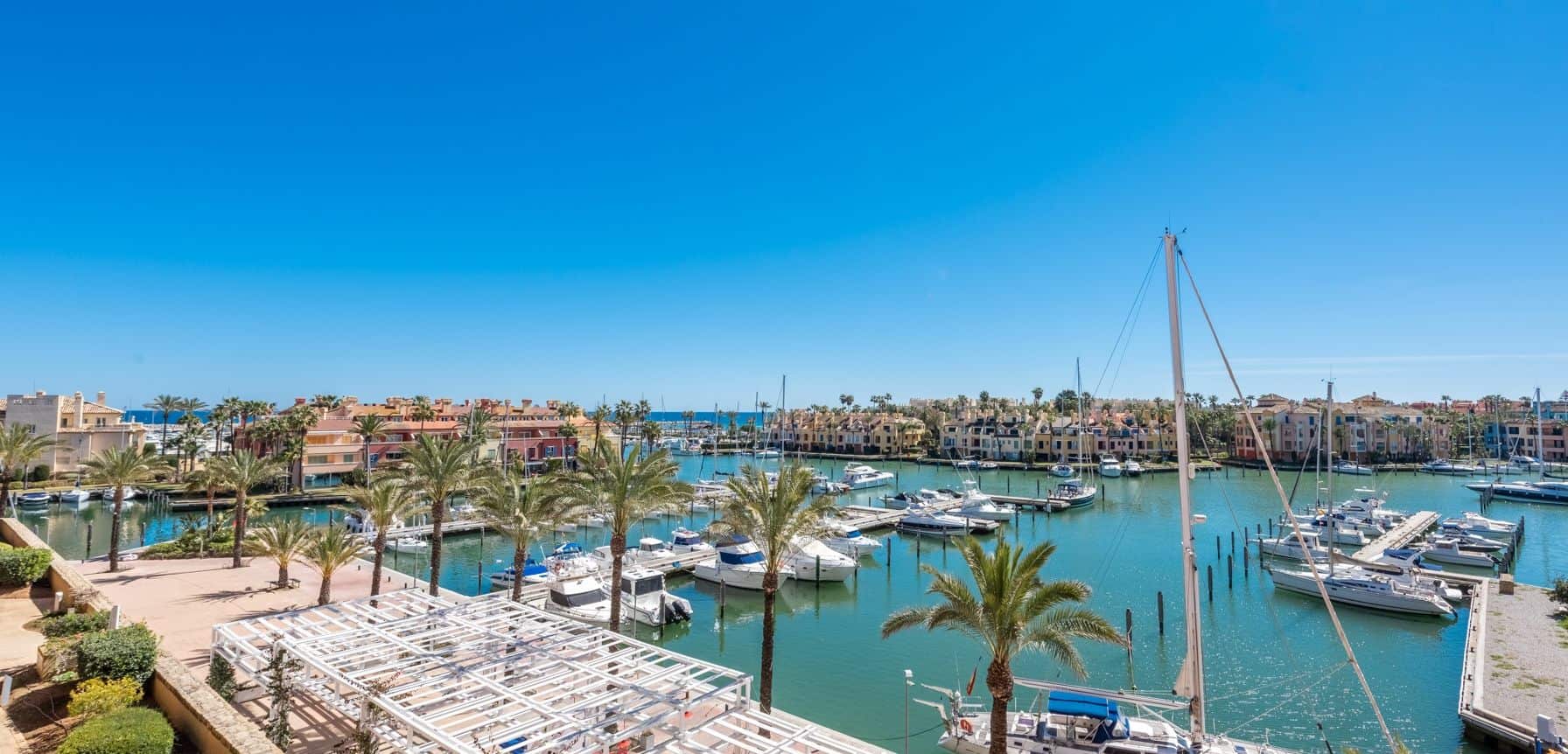
The marina itself berths private yachts across a wide range of sizes, from small sailing boats to substantial motor yachts, and the quayside walkway around the port provides the setting for the Sunday market that has been a fixture of Sotogrande life for decades. The market — fresh produce, plants, crafts, clothing — draws residents from across the estate and from the surrounding villages, and its weekly rhythm is for many people the most consistently social event of the Sotogrande calendar.

The restaurants and bars around the marina range from relaxed chiringuito-style seafood restaurants on the water's edge to more formal dining rooms serving international cuisine. The atmosphere is determinedly unpretentious — this is not a port trying to rival Puerto Banús — and the social mix of international residents, local Spanish families and visiting yachtsmen gives the marina a genuinely animated and varied character that feels authentic rather than curated.

The newer Ribera del Marlin development adjacent to the original marina has added a further cluster of restaurants, boutiques and apartments to the marina zone, expanding its offer and providing a more contemporary architectural setting alongside the older marina infrastructure.

14

Sports & Leisure

Tennis & Padel
The Racquet Centre at La Reserva Club is the estate's flagship racquet sports facility — a state-of-the-art complex with multiple courts across indoor and outdoor surfaces, professional coaching, a junior programme and a social membership that has become one of the more popular points of entry into La Reserva Club life. Several other tennis clubs and padel courts are distributed across the estate's various residential zones.

Water Sports & Sailing
The marina provides the base for water sports — sailing, jet skiing, paddleboarding, fishing — and the Strait of Gibraltar's proximity means that some of the most interesting sailing waters in the Mediterranean are within very easy reach. The currents and conditions in the Strait attract experienced sailors, and the marine life visible from the Sotogrande coast — including dolphins and occasional whales on passage — adds a natural dimension to time on the water that the more enclosed eastern Mediterranean cannot offer.

The Beach at La Reserva
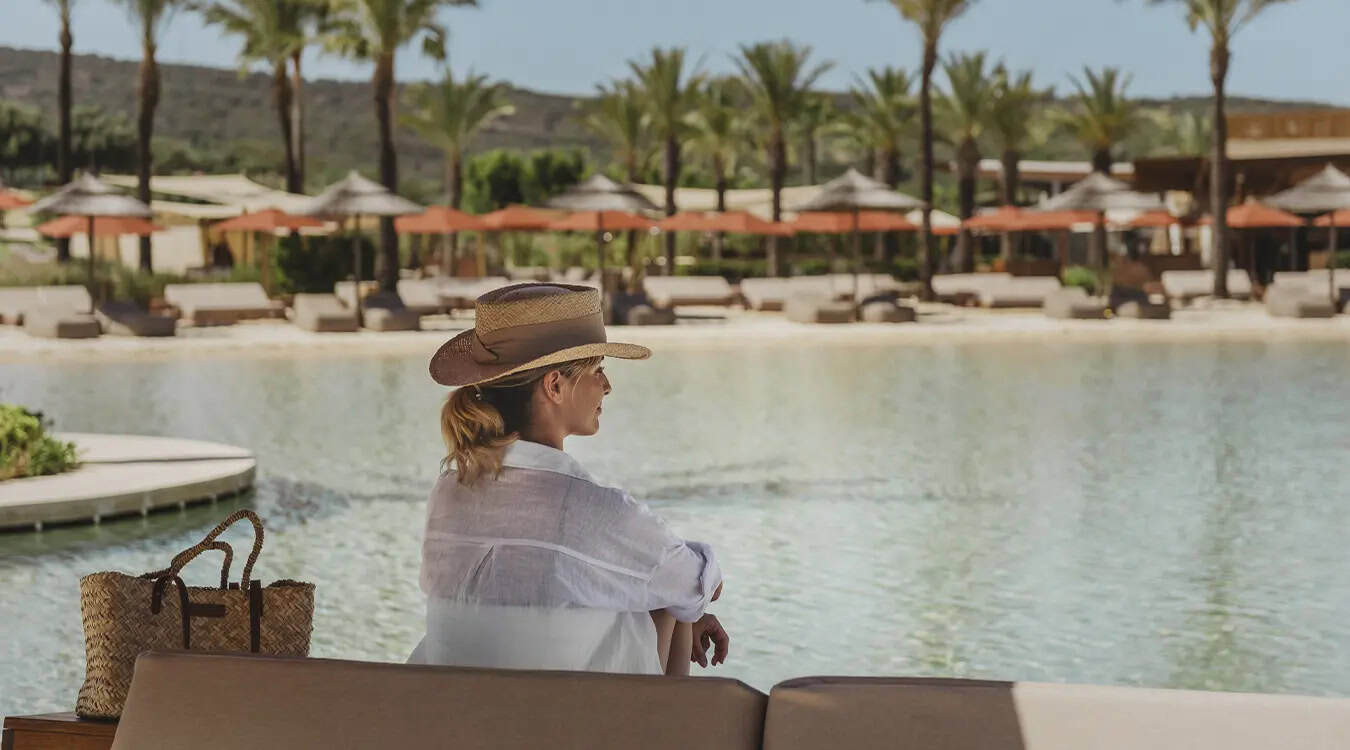
One of the more remarkable recent additions to the estate: a man-made freshwater lagoon and beach in the heart of La Reserva Club, providing a tropical beach experience without the need to leave the estate. The Beach has become one of Sotogrande's most distinctive amenities and a significant draw for La Reserva Club members, particularly families with children.

Horse Riding & Equestrian
Beyond the polo club, the Sotogrande Hipica equestrian centre in La Reserva provides riding facilities, lessons and competitions for all ages. The combination of facilities across the estate makes Sotogrande arguably the finest equestrian environment of any residential community in Spain.

Cycling & Walking
The estate's extensive road network and relatively gentle terrain make it well suited to cycling, and the natural landscape of the surrounding cork oak forests and river valleys provides excellent walking country. The proximity of the Alcornocales Natural Park — a vast expanse of ancient cork oak forest immediately to the north — gives residents access to some of the most unspoilt natural terrain in southern Spain.

15

Beaches & Nature

Sotogrande's beaches are long, sandy and comparatively uncrowded — a function of the estate's private character and the relative lack of tourism infrastructure along this stretch of the Cádiz coast. The main beach runs for several kilometres along the estate's southern edge, with beach clubs and chiringuitos providing food and drink service, and the summer polo season crowd adding animation during July and August. The water here is Atlantic rather than fully Mediterranean in character, which means it can be cooler and more dynamic than the calmer waters further east — a quality that appeals to swimmers, windsurfers and kitesurfers, and that keeps the beaches from becoming overheated even in the height of summer.

The surrounding natural environment is exceptional. The Alcornocales Natural Park — one of the largest expanses of cork oak forest in Europe — lies immediately to the north and provides a vast, accessible wilderness for hiking, mountain biking and nature observation. The park is home to remarkable birdlife, including large raptors, and its river valleys and limestone gorges are among the most dramatic landscapes in Andalucía. The combination of beach, estate and wilderness within a short radius is one of Sotogrande's least-discussed but most genuine natural assets.

The Río Palmones estuary and the wider coastal zone around Algeciras Bay — visible from higher points within the estate — support important migratory bird populations, and the Strait of Gibraltar itself is one of Europe's premier cetacean watching locations. Boat trips from Gibraltar and the local ports regularly encounter common dolphins, striped dolphins, and in summer months sperm whales and pilot whales on passage through the Strait.

16

Dining & Shopping

Sotogrande's dining scene is concentrated around the marina and, increasingly, La Reserva Club. The marina restaurants cover a range of formats — from Spanish seafood and tapas to international cuisine, beach-side casual to more formal dinner settings — and the Sunday market provides a weekly injection of communal life. El Trasmallo de Agustino, long established on the marina, is among the most celebrated local addresses for fresh fish and seafood. Several other marina restaurants have developed strong reputations over the years, and the opening of La Reserva Club's food and beverage programme has added higher-end options within the western estate.

The nearby village of Torreguadiaro provides authentic Spanish dining at local prices — a complement to the estate's own offer that residents value for its unpretentious quality and genuine local character. For a wider range of dining, San Roque and La Línea are short drives away, and Marbella's full restaurant scene is under an hour on the motorway.

Shopping within Sotogrande is limited to practical essentials — the Blue Sotogrande and Supercor commercial centres provide supermarkets, pharmacies and everyday services. For serious retail, Gibraltar is 20 minutes away and has its own particular offer (duty-free luxury goods, British high street brands) that residents use regularly. Marbella and Puerto Banús provide the full luxury retail experience for those making the 45-minute journey.

17

Schools & Education

Sotogrande International School (SIS) is one of the most academically distinguished international schools in Spain and a primary reason why many families choose the estate as a base. Founded in 1978 and situated within the La Reserva zone, SIS offers the International Baccalaureate curriculum across all age groups — PYP, MYP and the full Diploma Programme — to a student body that is genuinely international in composition. The school has a strong track record of IB results and university placement, and its boarding programme makes it relevant not only to resident families but also to those based elsewhere in Spain or internationally who want their children within a high-quality boarding environment.

The boarding offer in particular distinguishes SIS from most comparable international schools on the Costa del Sol. For parents who travel extensively or who are considering Sotogrande as a base for a child while living elsewhere, the school's residential programme provides continuity and community that is otherwise difficult to replicate. The school's equestrian programme, polo involvement and range of sporting activities reflect and reinforce the character of the estate in which it is set.

For families based in Sotogrande whose children attend SIS, the school-to-home journey is among the most convenient of any international school on the southern coast — the estate's scale means that most residents are within 10–15 minutes of the campus. For post-secondary education, Gibraltar's university facilities and the universities of Cádiz, Málaga and Sevilla are all accessible within a manageable range.

18

Healthcare

Healthcare provision in and around Sotogrande draws on both the Spanish and Gibraltarian systems. Within the estate and the immediately adjacent area, there are private medical centres and GP practices serving the resident community for routine consultations, specialist referrals and minor treatments. The Hospital Universitario de La Línea de la Concepción is the nearest significant public hospital, around 15 minutes to the south.

Many Sotogrande residents use the healthcare system in Gibraltar — approximately 20–25 minutes away — which operates on the NHS model and provides a high standard of primary and secondary care. The St. Bernard's Hospital in Gibraltar handles emergency and surgical needs for the surrounding community and is the natural first port of call for British residents accustomed to the NHS framework. Private medical providers in Gibraltar supplement the public offer for specialist consultations.

For more complex specialist treatment, the private hospitals of Marbella — Hospital Ochoa and Hospital Quirón Salud — are under an hour away by motorway and are widely used by Sotogrande residents with private health insurance. The combination of Gibraltarian public healthcare and Spanish private provision gives residents a broader and more flexible healthcare framework than most comparable addresses in southern Spain.

19

Who Lives Here

Sotogrande's resident community is one of the most consistently characterful of any luxury address in southern Spain — shaped by the specific attractions of polo, golf, the school and the particular social world that has built up around those things over six decades. It is not a place that attracts buyers looking for the most famous address or the highest-profile social scene. It attracts people who value sport, family life, privacy and the company of others who share those priorities.

British families have been the dominant expatriate group since the estate's earliest decades, drawn both by the proximity to Gibraltar and by SIS's boarding offer. Many have been here for two or three generations, and the generational continuity of Sotogrande families is one of its most distinctive social qualities — children who grew up spending summers here returning as adults to buy their own homes, often on the same roads their parents occupied. This depth of social history creates a community warmth that newer developments cannot manufacture.

Spanish buyers — particularly from Madrid and Sevilla — have always been present and have grown as a proportion of the community in recent years. International polo families arrive each summer from Argentina, the United Kingdom, Germany, Switzerland and India, and a significant proportion of those families eventually acquire property rather than continue renting. The Gibraltar financial and legal sector contributes a professional population that lives in Sotogrande and commutes across the border. And a growing cohort of remote workers and location-independent entrepreneurs has discovered in recent years that Sotogrande's infrastructure, pace of life and pricing make it an extremely compelling base for year-round living.

20

Family Life

Sotogrande may be the finest family environment of any address covered in these guides. The combination of elements it offers — an exceptional school with a boarding option, extraordinary sporting infrastructure across golf, polo and equestrian, safe low-traffic roads, a private beach and the Beach at La Reserva, a community of families with deep shared roots — creates a childhood and family life that is difficult to match anywhere in southern Europe.

Children who grow up in Sotogrande tend to have an unusual range of experiences available to them as a matter of course: playing polo, learning to sail in the Strait, riding at the Hipica, competing in IB sport at SIS, watching the Gold Cup from the polo club members' area. The sporting breadth and ambition of the estate's family offer is a direct reflection of the founding vision — an environment where sport is central to life rather than an add-on to it.

The safety and space of the estate gives younger children a freedom of movement that urban environments cannot offer. The wide roads, the lack of through-traffic and the general security of a managed private estate mean that children can cycle, walk and socialise within the community with a degree of independence that many parents moving from cities find unexpectedly transformative. The density of children's friendships through SIS, the polo club academies and the various sports programmes creates a social fabric for family life that, for many Sotogrande parents, is the single most valued aspect of the choice they made.

21

Buying in Sotogrande

Buying in Sotogrande involves navigating a market with some specific characteristics that distinguish it from the Marbella area. The estate falls within the municipality of San Roque in the province of Cádiz — not Málaga — and this has practical implications: the legal and planning framework is administered by the Junta de Andalucía but the specific municipal context is different from Marbella, and buyers should ensure their legal representation has direct experience of the San Roque and Cádiz provincial system rather than simply general Costa del Sol experience.

The estate's community governance structure is more complex than a typical Spanish urbanisation. Sotogrande SA, the company that owns and manages the estate's common infrastructure, collects community fees and manages the roads, green spaces, security and shared facilities. These fees are a material ongoing cost of ownership and vary considerably between zones — La Reserva fees, reflecting the level of club infrastructure, are substantially higher than those in the older Costa zones. Understanding what is and is not included in the community fee for any specific property is important due diligence.

The property market in Sotogrande turns over more slowly than the Marbella area, and the finest properties in the Kings and Queens zones in particular can take time to reach the open market — many trade through the network of local agents who have been operating in the estate for decades and who have established vendor relationships. Patience and the right agent relationships are more important here than in higher-volume markets.

Purchase costs follow the standard Andalucían framework: 7% transfer tax on resale properties, 10% VAT on new build (note: Cádiz province has periodically applied different ITP rates — confirm the current rate with your lawyer), plus notary, land registry and legal fees totalling approximately 10–12% of the purchase price. Non-resident buyers require a NIE before completion. We are happy to guide you through every stage of the process.

Current properties available in Sotogrande:

Showing 37 properties

Verdin Property

Interested in Sotogrande? Let's talk.

Get in touch